Crease Pattern Challenge 015

Crease Pattern Challenge, Origami

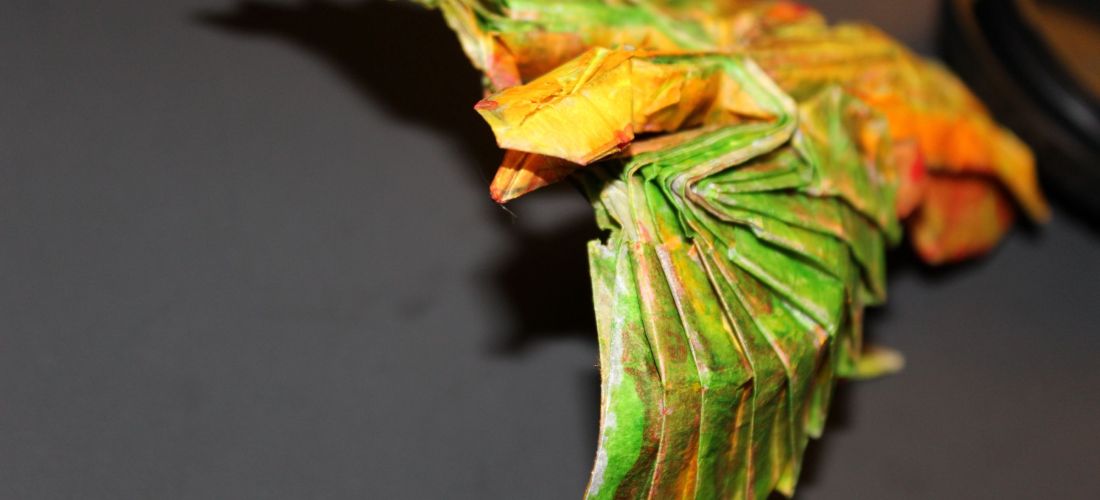
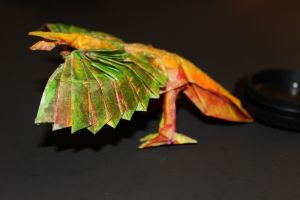
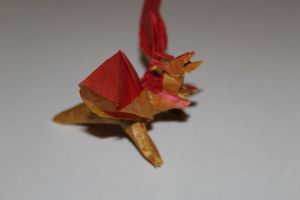
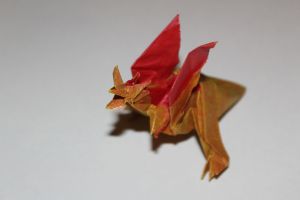
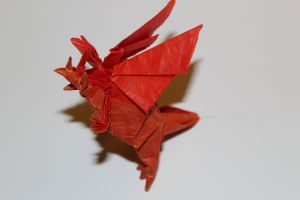
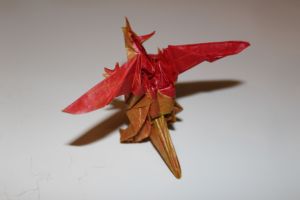
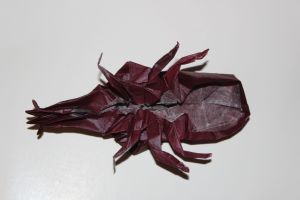
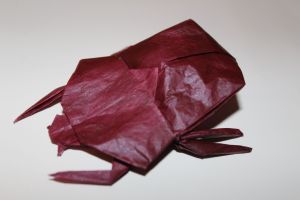
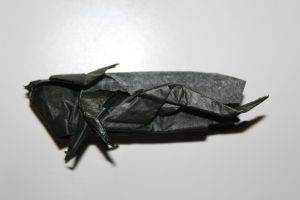
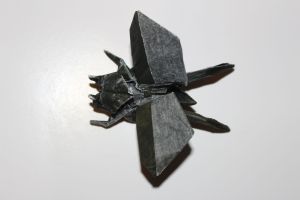
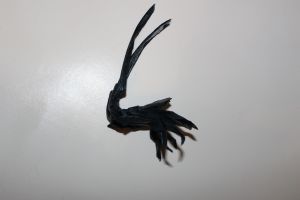
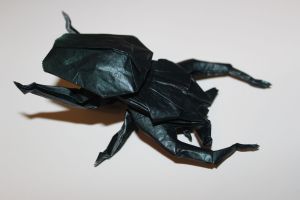
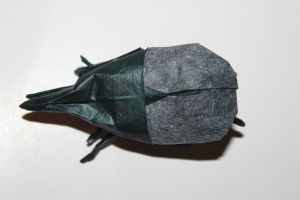
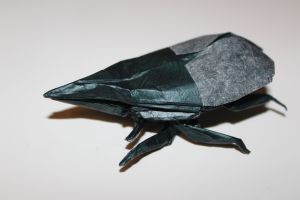
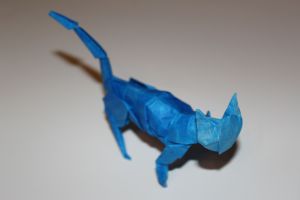
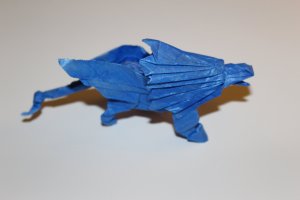
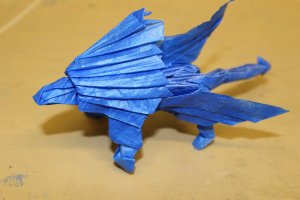
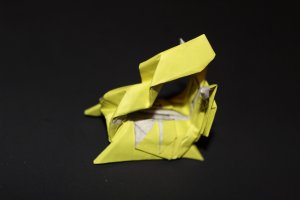
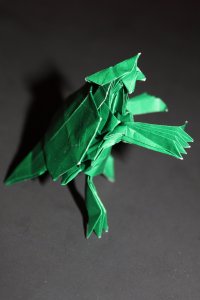
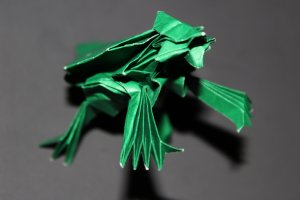
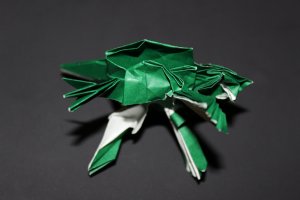
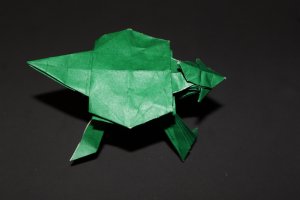
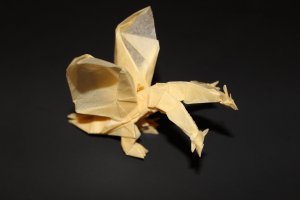
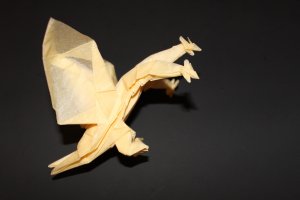
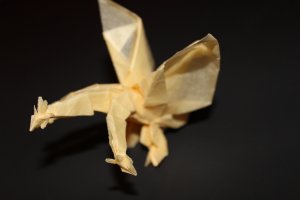
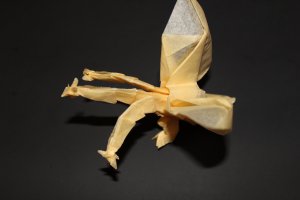
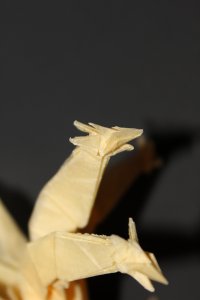
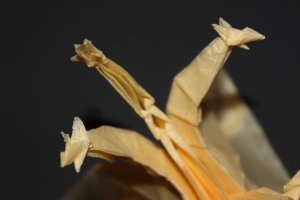
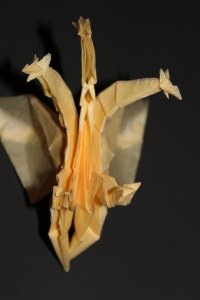
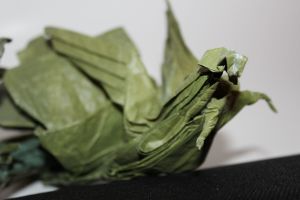
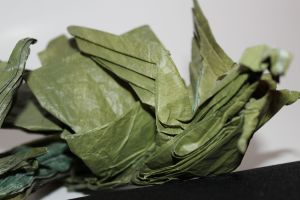
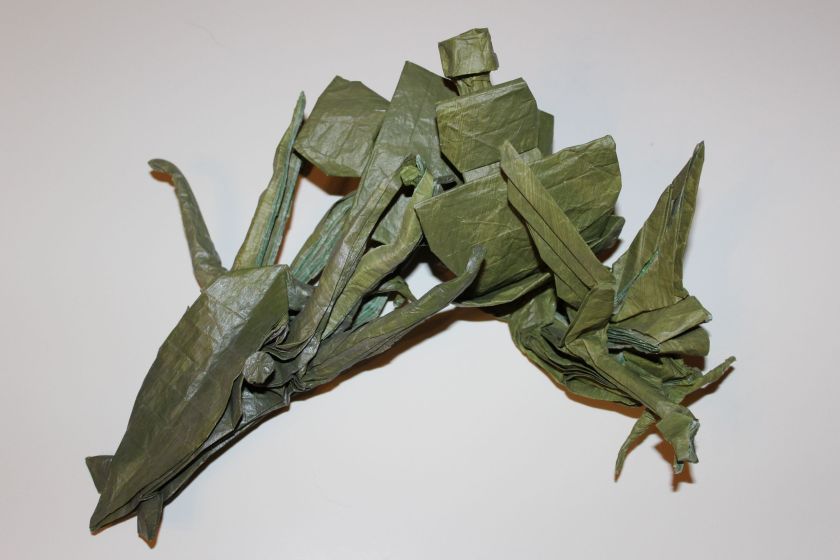
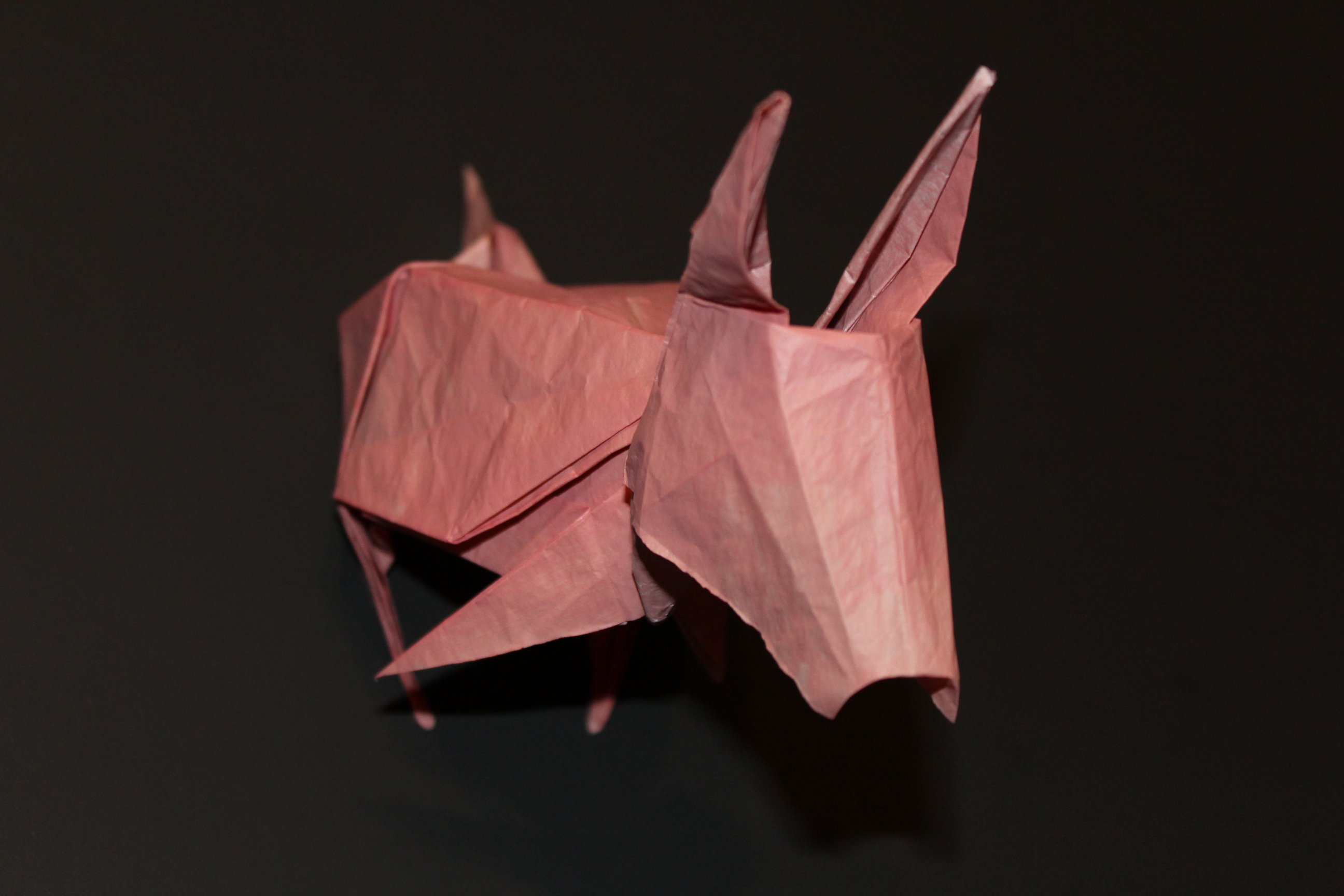
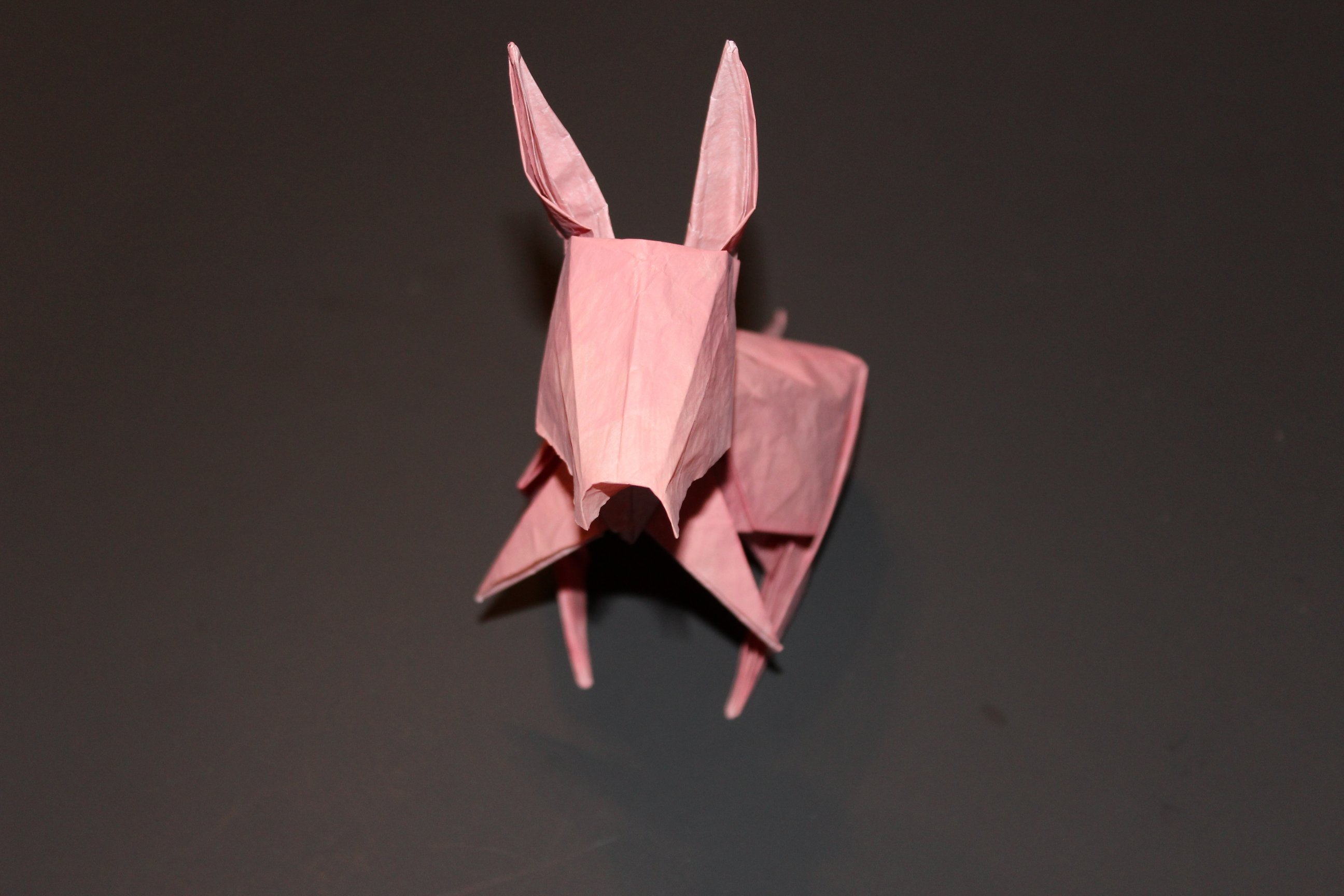
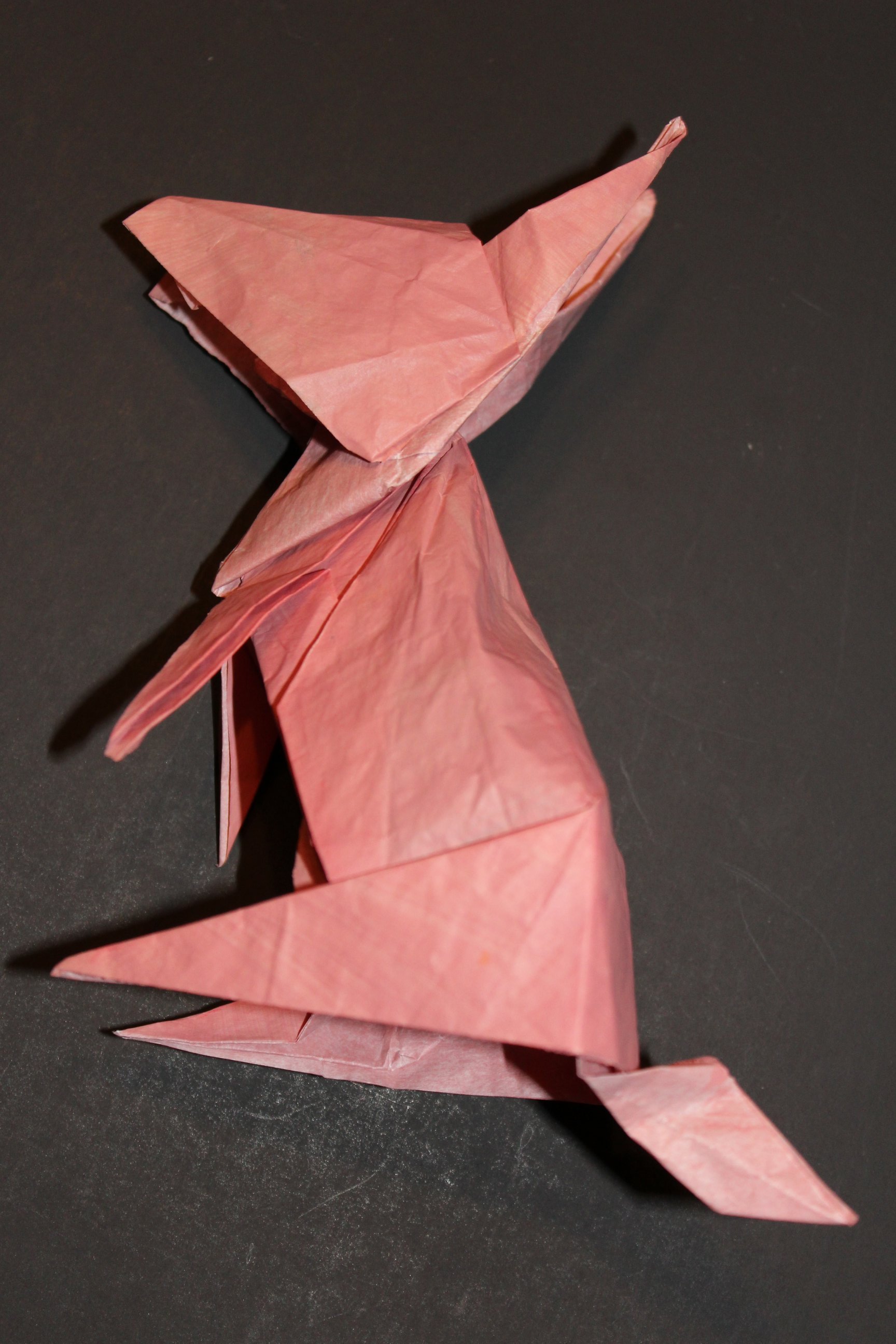
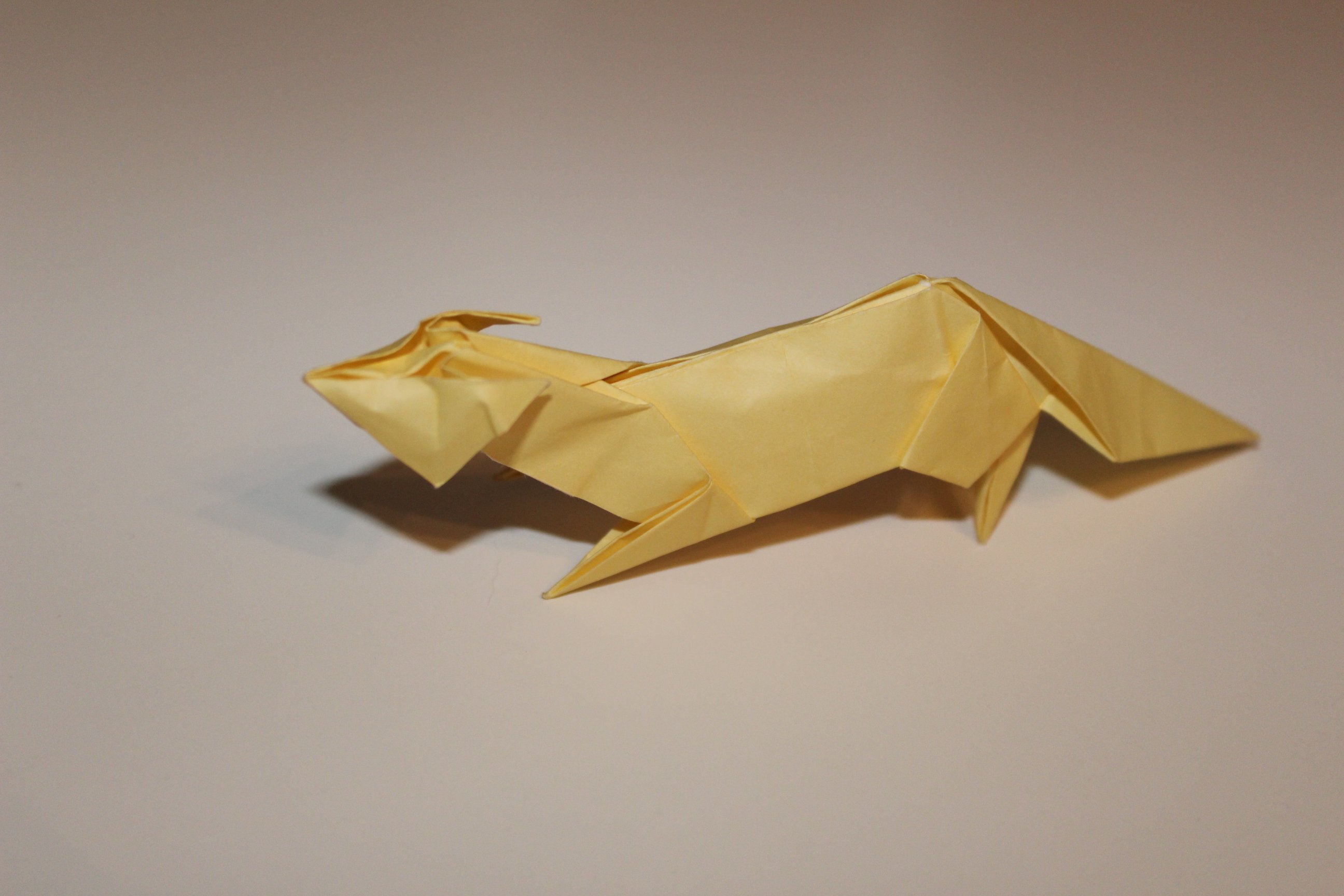
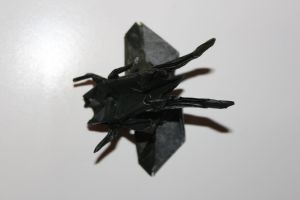
Origami Tanteidan’s 15th Crease Pattern Challenge in issue #69 is Satoshi Kamiya’s Archaeopteryx. It’s a fun model to fold, and another I like to make a lot. It does tend to be top heavy though (which is why its tail is pinned down in the pictures).

OTMCP_015- ARCHAEOPTERYX - KAMIYA (1) OTMCP_015- ARCHAEOPTERYX - KAMIYA (2) OTMCP_015- ARCHAEOPTERYX - KAMIYA (3)

I mentioned before that Satoshi Kamiya has a really nice website, but the Archaeopteryx isn’t in his gallery (it’s only found buried in his bibliography page). I’m pretty sure this is an oversight, but I kind of wonder if Origami Tanteidan has some sort of exclusive (they have a page for his archaeopteryx here).

He also has a page of random crease patterns. A fairly long time ago (back when his website looked completely different), I noticed something pretty cool about the patterns here. Some of them are already associated with models. If you use “Copy Image Location”, the web address you get is similar to his gallery pages, just with “_c.jpg” at the end of the model number. If you delete that part, some (not all) will lead you to the gallery page of the model. For instance, the first one is his Unicorn 2.0.

I also found that this can work both ways. For instance, his Caribus (2.1 and 2.2) have the crease patterns stored at his website. You can find them by going to those pages, deleting “.html”, and adding “_c” to the end of the address (you don’t need the “.jpg”, which is good, because some of the crease patterns are saved as pngs).

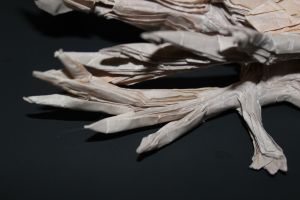
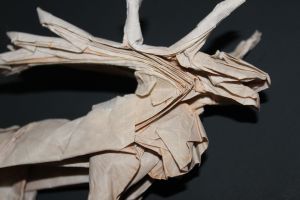
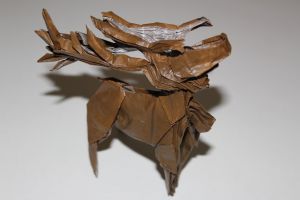
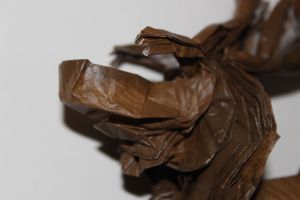
I tried the 2.2 Caribu a while ago. I had some problems with the face, but I think the hooves and antlers came out pretty good.

KAMIYA - CARIBU 2-2 (104) KAMIYA - CARIBU 2-2 (106) KAMIYA - CARIBU 2-2 (108) KAMIYA - CARIBU 2-2 (107)

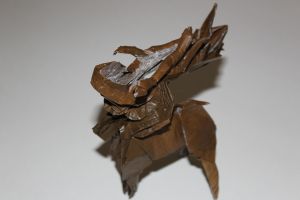
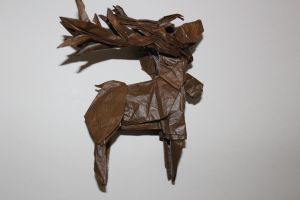
I just recently tried the 2.1 Caribu, which also yielded odd results. I think I somehow flipped the head, or something. But there were parts I already liked that I had done, so I just improvised.

KAMIYA - CARIBU 2-1 (102) KAMIYA - CARIBU 2-1 (104) KAMIYA - CARIBU 2-1 (103) KAMIYA - CARIBU 2-1 (107) KAMIYA - CARIBU 2-1 (111) KAMIYA - CARIBU 2-1 (109)

He got a much dopier head and nose, then a bigger body because I liked how he had kind of cascading fur, and finally the hooves got axed as they would have shortened the legs too much with the bigger body.

Also, this web logging thing is pretty interesting. I just figured out the “set featured image” thing and went back doing that a bit. Yay! I still can’t get the pictures in this post to arrange well with the different dimensions. Oh well.


Crease Pattern Challenge 014

Crease Pattern Challenge, Origami

The Dragon by Seiji Nishikawa is Tanteidan’s Crease Pattern Challenge #14. You might be thinking, “Wasn’t that challenge #6?#6 was “Ryuu” (龍), an eastern style dragon with the Japanese word for dragon, and this one is “Dragon” (doragon/ドラゴン)  , to indicate a more western style. He is also more of a cartoon dragon, because he stands upright, like Charizards, Great Dragons, or Ice Dragons.

This crease pattern actually leaves out quite a few details, but that’s kind of a necessity because the folds double back quite a lot. That is, with all the details it would be a tangled mess to figure out, but, after folding the crease pattern for the initial shape, it should be easy enough to figure out with the final picture. Naturally, I first folded this without looking at the picture.

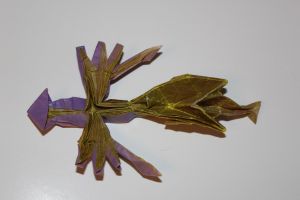
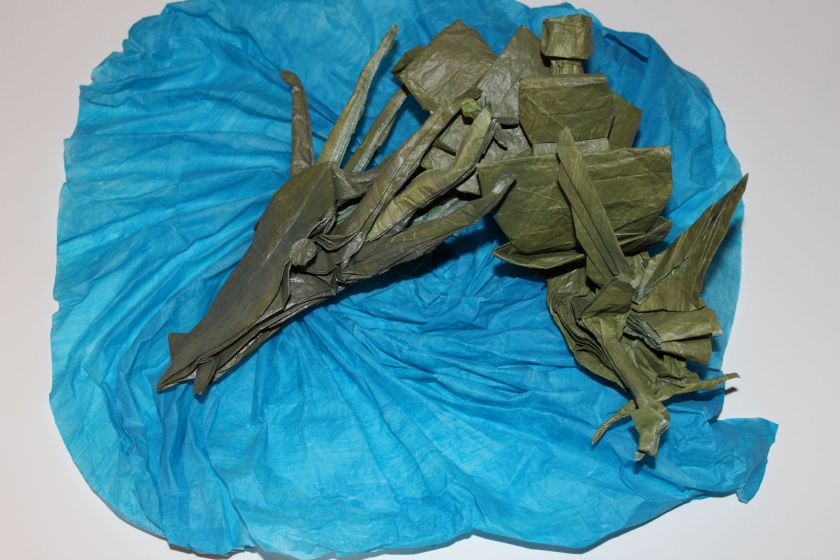
OTMCP_014 - DRAGON - NISHIKAWA (103) OTMCP_014 - DRAGON - NISHIKAWA (104) OTMCP_014 - DRAGON - NISHIKAWA (105)

He came out longer and more wyvernish than the original. While looking back at the final model during folding, I got:

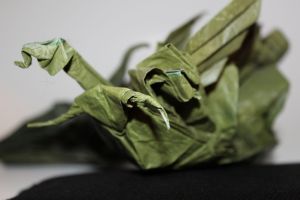
OTMCP_014 - DRAGON - NISHIKAWA (106) OTMCP_014 - DRAGON - NISHIKAWA (107) OTMCP_014 - DRAGON - NISHIKAWA (108) OTMCP_014 - DRAGON - NISHIKAWA (109)

These make his body look more like the wyvern, but that’s only because the legs keep spreading from the center. Most of the features are very different, especially the head, which has eyes and a horn now. In any case, this illustrates the stylistic range you can get out of this crease pattern, and that’s pretty cool.

I also folded this one from diagrams in Works of Seiji Nishikawa, but that was a while ago. I have one that’s red (but only pictures) and one painted like the crease pattern ones. I wasn’t sure these were this dragon until I folded the crease pattern one. This is because of the tiny arms. I’m not a fan of these arms. T-rexes have bigger arms.

OTMCP_014 - DRAGON - NISHIKAWA (101) NISHIKAWA - DRAGON - WORKS OF(102) NISHIKAWA - DRAGON - WORKS OF(101) NISHIKAWA - DRAGON - WORKS OF(103)

For some other Nishikawa models, I thought it would be neat to do some other fantasy creatures, like his Pegasus, or Godzilla. But, since I already did that with the last Nishikawa crease pattern, I’m just going to do his half of Origami Insects Vol. 1.

Fumiaki Kawahata did the first half of this book’s models, and Nishikawa did the second. There are 8 total, so I’m just going to list them and show them in order.

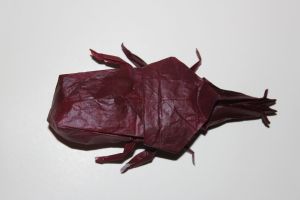
Japanese Horned Beetle – Male

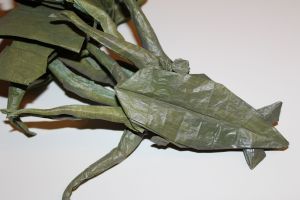
OI1_10 (101) OI1_10 (103) OI1_10 (104)

Japanese Horned Beetle – Female

OI1_11 (102) OI1_11 (103) OI1_11 (104)

Asiatic Locust

OI1_12 (101) OI1_12 (102)

Flying Asiatic Locust

OI1_13 (101) OI1_13 (102) OI1_13 (105)

Long-Horned Beetle

OI1_14 (101) OI1_14 (102) OI1_14 (104)

Lucanus Stag Beetle

OI1_15 (101) OI1_15 (103) OI1_15 (105)

Goliath Horned Flower Beetle

OI1_16 (104) OI1_16 (101) OI1_16 (103)

Hercules Giant Beetle

OI1_17 (101) OI1_17 (103) OI1_17 (104)

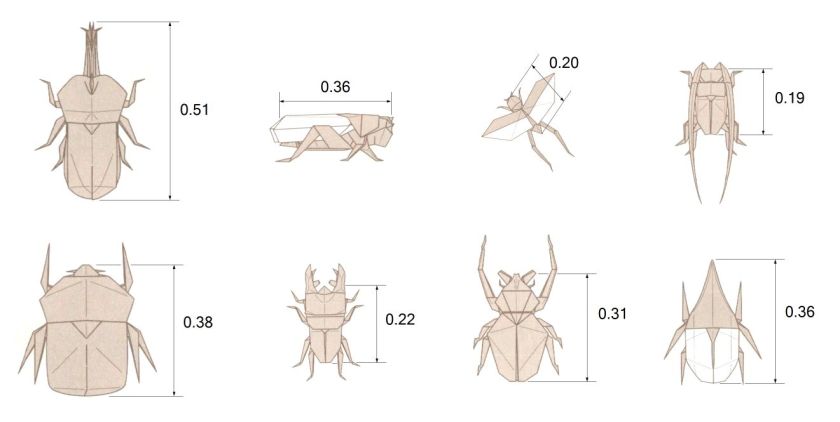
Additionally, Kawahata did something pretty cool with his models that weren’t included on Nishikawa’s. Taking the edge of a square as length 1.0, he showed each model next to a scale as a fraction of this. That way, you’ll know the size of insect you’ll end up with. Similarly, I took end model scans of each Nishikawa insect to show the scales of the models I got below.

OI1_SN_10-17

Crease Pattern Challenge 013

Crease Pattern Challenge, Origami

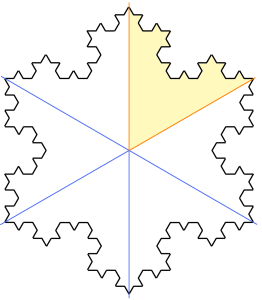
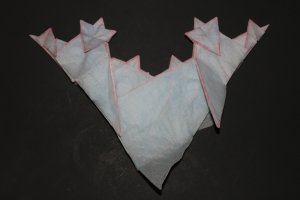
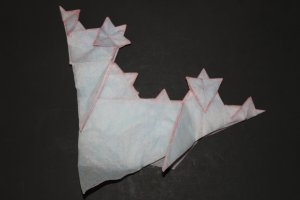
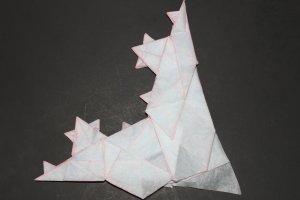
Koch’s Snowflake is a fractal curve and the third iteration is the 13th Crease Pattern Challenge, designed by Ushio Ikegami. This one gave me a lot of trouble, but I wasn’t sure why. There are some tricky points, but it’s pretty straightforward overall. It is simply too intricate for me to fold at the scale I was trying. Instead, I ended up folding just the crease pattern presented, which is only 1/6th of the snowflake.

koch snowflake (108) - Copy OTMCP_013 - KOCH SNOFLAKE - IKEGAMI (1)

OTMCP_013 - KOCH SNOFLAKE - IKEGAMI (2) OTMCP_013 - KOCH SNOFLAKE - IKEGAMI (3)

This one has me on the fence, because I like a more spectacular result with this much effort. On the other hand, fractals are cool, and his inner detailing of triangles makes this a really elegant model. Anyway, the other 5 sixths are all identical (and so have no additional details), so I’m counting this as done. I will talk about this fractal tho.

A fractal is something with a pattern that repeats as you zoom in. An example of a 3D fractal is a Menger sponge, where you divide a cube into 27 equal sub-cubes, remove the center cube and middle cube of each face, and repeat on all the remaining cubes. Taken to infinity, this has infinite surface area and no volume. Also, the first iteration looks the same as a void cube puzzle and was featured in a Pokemon game.

menger0123

To construct the Koch’s curve, we take a line (of a triangle for the snowflake). For the first iteration, you divide the line into 1/3rds, remove the middle 1/3rd, and replace it with the other two sides of an equilateral triangle it would have been a part of (going out in the snowflake form). Every subsequent iteration takes each remaining straight line and repeats the process on all of them.

koch2.gif

koch snowflake (108).png

The whole snowflake starts as a triangle. I’m not animating it too tho.

Crease Pattern Challenge 012

Crease Pattern Challenge, Origami

The next Crease Pattern Challenge is Noboru Miyajima’s Propeller Plane. I’m a big fan of his models but not so much his crease patterns. His previous Crease Pattern Challenge, “Knight on a Pegasus”, was a little vague, so I had to fold it from the diagrams given in a later Tanteidan Magazine then go back and finish the details on the crease pattern one. His website has a lot of crease patterns, but the ones I’ve tried similarly don’t have many details.

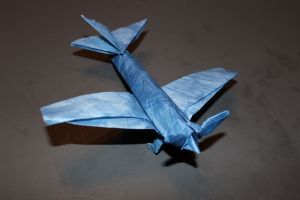
OTMCP_012 - PROPELLER PLANE - MIYAJIMA (4) OTMCP_012 - PROPELLER PLANE - MIYAJIMA (5)

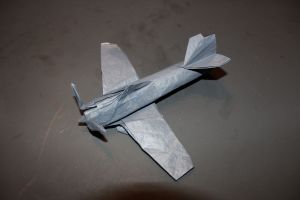
I finished the propeller plane without much trouble, but it looked a little different than the pictures. So I found the diagrammed model in Tanteidan Convention Book 7, folded it, and then compared it. Apparently, I did all right; I just shaved off the back fin. The crease pattern on is in blue, and the diagrammed on is grey.

OTMCP_012 - PROPELLER PLANE - MIYAJIMA (2) OTMCP_012 - PROPELLER PLANE - MIYAJIMA (3) OTMCP_012 - PROPELLER PLANE - MIYAJIMA (1)

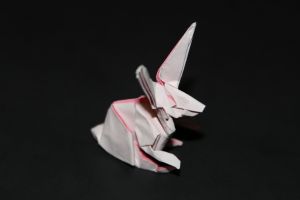
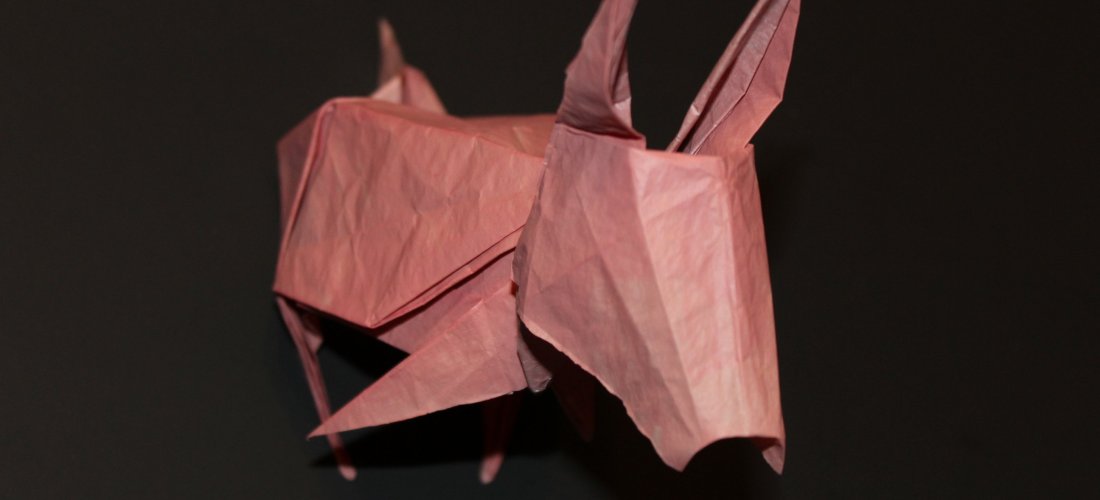
I looked up some of his other models to include here. I’ve got a Rabbit from Tanteidan Magazine 53, and a Cat from Tanteidan Convention Book 8 below.

MIYAJIMA - RABBIT (2) MIYAJIMA - RABBIT (3) MIYAJIMA - RABBIT (1) MIYAJIMA - CAT (3) MIYAJIMA - CAT (2) MIYAJIMA - CAT (1)

I’m having trouble with the next Crease Pattern Challenge, “Koch’s Snowflake”. I wonder if maybe I should just skip around. I do have some of the other ones done already.

Crease Pattern Challenge 011

Crease Pattern Challenge, Origami

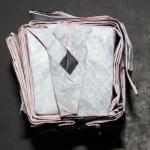
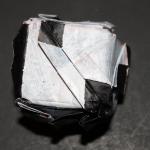
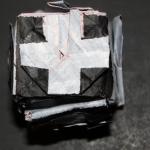
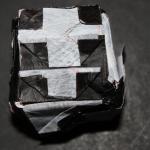
Challenge 11 is a Dice by Masashi Tanaka. It’s a very interesting model, with each face marked from 1 to 6.

OTMCP_011 - DICE - TANAKA (2) OTMCP_011 - DICE - TANAKA (3)

OTMCP_011 - DICE - TANAKA (9) OTMCP_011 - DICE - TANAKA (4) OTMCP_011 - DICE - TANAKA (5)

OTMCP_011 - DICE - TANAKA (7) OTMCP_011 - DICE - TANAKA (6) OTMCP_011 - DICE - TANAKA (8)

I used too thick of paper and kind of messed up the #1 face’s square. I didn’t put as much effort into it as some of the other models because, while I like the design, I’m just not that interested in owning the model. It’s a little hard to say. I like having dragons and animals and other things lying around in origami, but I just don’t care to have a dice. Once I figured out the crease pattern for this one, I kind of lost interest in finishing it.

This model does make me think of a couple of other interesting things. A few months back, a friend of mine brought up “The Monty Hall” problem after seeing a TV show it was in. Monty Hall hosted TV game shows in (mainly) the 1960’s and 1970’s. The most famous one he hosted was “Let’s Make a Deal”, in which he would choose a ridiculously dressed audience member, give them something, then try to “make a deal” with them for a mystery prize that may be better or worse than what they started with. Worthless prizes were called “zonks”.

The Monty Hall problem has a player buy one of three curtains or doors, with one having a prize behind it and the other two having zonks. I think the TV show considering this had a car and two goats, so we’ll use those. The problem is: You choose one of the three curtains; Monty Hall reveals one curtain has a goat, and you now have the choice to keep your initial curtain or switch to the remaining one. Do either of these choices have better odds of having a car?

This may be less intuitive than it seems. We’ll label the curtains A, B, and C. Also, for this, we’re going to say the car is behind curtain A. We could pick any curtain to put the car behind; it would only change the labels, not the probabilities.

car A - Copygoat Bgoat C

So, I think this is how it goes. You have your probability of picking any curtain at an even 1/3rd for each door. We’ll represent these as the door labels.

A: You choose door A. P(A) = 1/3
B: You choose door B. P(B) = 1/3
C: You choose door C. P(C) = 1/3

The final probability of your choice between initial and remaining curtains is the product of your choice’s probability and the probability of what Monty Hall does.

X: Monty Hall opens door A.
Y: Monty Hall opens door B.
Z: Monty Hall opens door C.

Each of his probabilities is conditional: what does he do given your choice of door? Conditional probabilities are shown as P(scenario|event), probability of a scenario given an event. Since the car is behind door A, the probability of Monty Hall opening curtain A, scenario X, is always 0, regardless of your choice (P(X|any choice)=0). This gives us two options if we’ve chosen correctly and one for each wrong guess:

If we’ve chosen door A, Monty Hall might open either door with equal probability:

P(Y|A)=1/2;  P(Z|A)=1/2
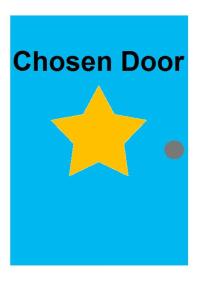
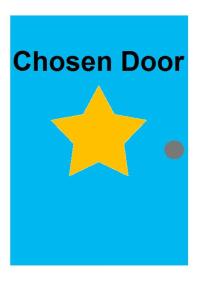
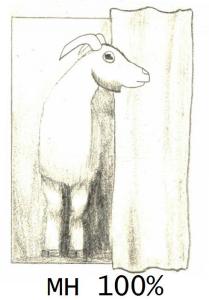
chosen doorgoat MH1goat MH2

If we’ve chosen wrong, Monty Hall will always open the other wrong door:

P(Z|B)=1
carchosen doorgoat MH3

P(Y|C)=1
cargoat MH4chosen door

The final probabilities are the products of your and Monty Hall’s choices:

The probability that you’ve chosen correctly gives one of two scenarios:
P(A)P(Y|A)=(1/3)(1/2)=1/6
P(A)P(Z|A)=(1/3)(1/2)=1/6

Therefore, the probability that your initial guess is correct is the sum of these (i.e. you’ve hit one of these two scenarios):
P(initially correct) = (1/6)+(1/6) = 1/3.

The probability of the incorrect scenarios and total probability of the initial guess being wrong is:
P(B)P(Z|B)=(1/3)(1)=1/3
P(C)P(Y|C)=(1/3)(1)=1/3
P(initially incorrect) = (1/3)+(1/3) = 2/3

So, if you switch from your initial guess, you actually have a 2/3rds chance of getting a car, as opposed to a 1/3rd chance if you stick with it.

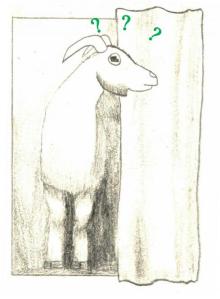
Of course, there is a more intuitive way of thinking of this problem (I just kind of wanted to draw a goat). That’s that your initial guess has only 1/3rd chance of being right and 2/3rds chance to be wrong. When one of the three is eliminated, there is 100% chance the eliminated door is a wrong door. If you had a larger chance of initially being wrong, switching can only improve your odds.

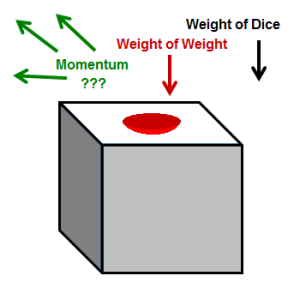
The other thing I thought of has more to do with the crease pattern. This origami dice is not weighted evenly, so I started wondering about probabilities in weighted dice. Online, most info is about distribution functions for sums of a loaded dice and an evenly weighted one, but I was wondering just about the probabilities for each side. They used an assumed probability of the side opposing the weight being increased with all the other sides being the same (say the increased face occurs 1 in 2, while the others all have a 1 in 10 chance). But would that really be true? The four faces on the sides should all have the same chance, but what about the opposing side, with the weight?
dice1

Would the weight with the momentum cause it to topple to one of the sides more often, or would the increased weight moving from an unweighted side to the weighted end cancel the force, causing the opposing face to also be more likely than the sides? How much does the direction of force matter? Would all these factors cancel, giving the other 5 faces all the same probability? I figure I’d have to get a weighted dice and throw it 1000 or so times to actually figure this out, but I’m probably not going to do that. Neat to think about though.
goat mystery

Crease Pattern Challenge 010

Crease Pattern Challenge, Origami

Challenge 10 is Keiichi Kozasa’s Winged Lion. I’m a big fan of Kozasa for a particular reason. He made the best model I’ve ever seen of my favorite Godzilla monster, Angiras (I’m using the Japanese spelling, as there are differing translations). If anyone knows where I can get a crease pattern or diagrams for his Angiras, please let me know.

Back to the lion; I wasn’t partial to the angry face so much. So, I changed that a bit and also ended up making his mane a bit different. I think it looks futuristic, maybe like a robot lion.

OTMCP_010 - WINGED LION - KOZASA (2) OTMCP_010 - WINGED LION - KOZASA (3) OTMCP_010 - WINGED LION - KOZASA (5)

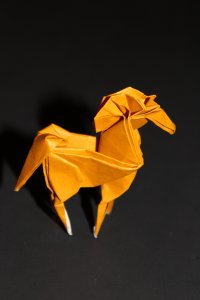
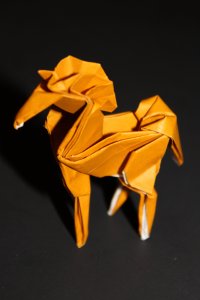
Here are some more good Kozasa models, which I think are all from out of print Tanteidan Convention books. First, his Horse is fabulous, as you can see from its hair.

KOZASA - HORSE (101) KOZASA - HORSE (102)

KOZASA - PIKACHU (101) KOZASA - PIKACHU (104) KOZASA - PIKACHU (102) KOZASA - PIKACHU (103)

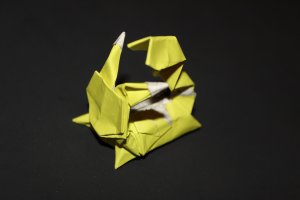
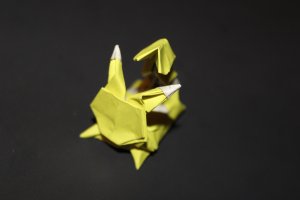
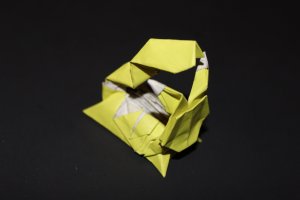
His Pikachu is pretty nice too. I only had yellow and white paper, so I couldn’t really do him justice.

He also has other Kaiju. I probably should have used bigger paper for his Gamera. I had to leave the shell a little larger than the original because of it.

KOZASA - GAMERA (101) KOZASA - GAMERA (102) KOZASA - GAMERA (103) KOZASA - GAMERA (104)

His other Kaiju (that I’ve got) is King Gidora! In his first appearance, the three-headed golden dragon required Godzilla, Radon, and Mothra to team up to beat him. The paper version is a very good likeness.

KOZASA - GIDRA (105) KOZASA - GIDRA (106) KOZASA - GIDRA (104) KOZASA - GIDRA (101)

KOZASA - GIDRA (107) KOZASA - GIDRA (110)  KOZASA - GIDRA (111)

Crease Pattern Challenge 009

Crease Pattern Challenge, Origami

Sometimes, designers choose to fold two related things with one square of paper. For instance, a previous Crease Pattern Challenge was a dude on a horse made out of the same square. Brian Chan made a Kraken (squid type) eating a boat, all with the same sheet. Similarly, Challenge #9 , by Go Kinoshita, is a sperm whale fighting a giant squid, which he titles, “A Sperm Whale vs. A Giant Squid”.

OTMCP_009 - SPERM WHALE VS GIANT SQUID - KINOSHITA (1)OTMCP_009 - SPERM WHALE VS GIANT SQUID - KINOSHITA (4)

First off, I had apparently made one of these and lost it after only taking one picture. That’s the purple and blue one. I wasn’t going to put that one’s picture here, but I think it’s interesting how much differently they came out. I traced the crease pattern on that one, so it should be more accurate. The tentacles and whale’s fins are more like the original, but the whale’s missing some face.

OTMCP_009 - SPERM WHALE VS GIANT SQUID - KINOSHITA (3)OTMCP_009 - SPERM WHALE VS GIANT SQUID - KINOSHITA (5)

OTMCP_009 - SPERM WHALE VS GIANT SQUID - KINOSHITA (6)

Upside down. Also, hey! I can do captions!

The second version has the appropriate amount of whale face and the whale’s open maw that you really can’t see very well. However, it’s missing one set of tentacles and the fins are slightly different. You can also tell that I had a lot of trouble on the whale, so he looks pretty banged up. It looks more like “head on collision” than “vs.” to me.

One of Kinoshita’s other cool designs is a western style Dragon that’s diagrammed in Origami Tanteidan Convention Book 19. As usual, I didn’t use paper big enough to do it justice. He’s a pretty nice dragon, with different coloured wings and feet claws and lots of articulated features. The wings kept angling upward for mine.

CHAN - ATTACK OF THE KRAKEN (101).jpg

Also, since it was mentioned earlier, I did fold Brian Chan’s Attack of the Kraken awhile ago, from the crease pattern on his website. I used bigger paper to make sure I wouldn’t mess up too badly, but that actually made the prow too limp. Then I went off the rails a bit.

CHAN - ATTACK OF THE KRAKEN (102)CHAN - ATTACK OF THE KRAKEN (107)

CHAN - ATTACK OF THE KRAKEN (103)CHAN - ATTACK OF THE KRAKEN (104)

CHAN - ATTACK OF THE KRAKEN (105)CHAN - ATTACK OF THE KRAKEN (106)

Instead of making it a straight up spiky prow, I made it into a figurehead of the Chimera from Greek mythology, with the goat, snake, and lion heads. I don’t know why. Putting an omen of natural disasters, including specifically shipwrecks, on the prow of a ship is probably a bad idea. This ship was just asking for kraken attacks.CHAN - ATTACK OF THE KRAKEN (110).jpg

Crease Pattern Challenge 008

Crease Pattern Challenge, Origami

OTMCP_008 - RABBIT - KOMATSU (1) OTMCP_008 - RABBIT - KOMATSU (3)

Hideo Komatsu’s Rabbit is Tanteidan’s 8th Crease Pattern Challenge. It looks pretty simple, but there is a little puzzling out to get it to work. Some of the later Crease Pattern Challenges are clearly easier to fold through the crease pattern than diagrams, but the majority of these earlier ones could go either way. I like this one quite a bit, because it’s a good challenge but not so convoluted that it would be better served by diagramming.

OTMCP_008 - RABBIT - KOMATSU (4) OTMCP_008 - RABBIT - KOMATSU (2) OTMCP_008 - RABBIT - KOMATSU (5)

Like Seiji Nishikawa, Hideo Komatsu has an incredible number of models and an origamihouse book, Works of Hideo Komatsu. The following models are included in that book, as well as in several other publications.

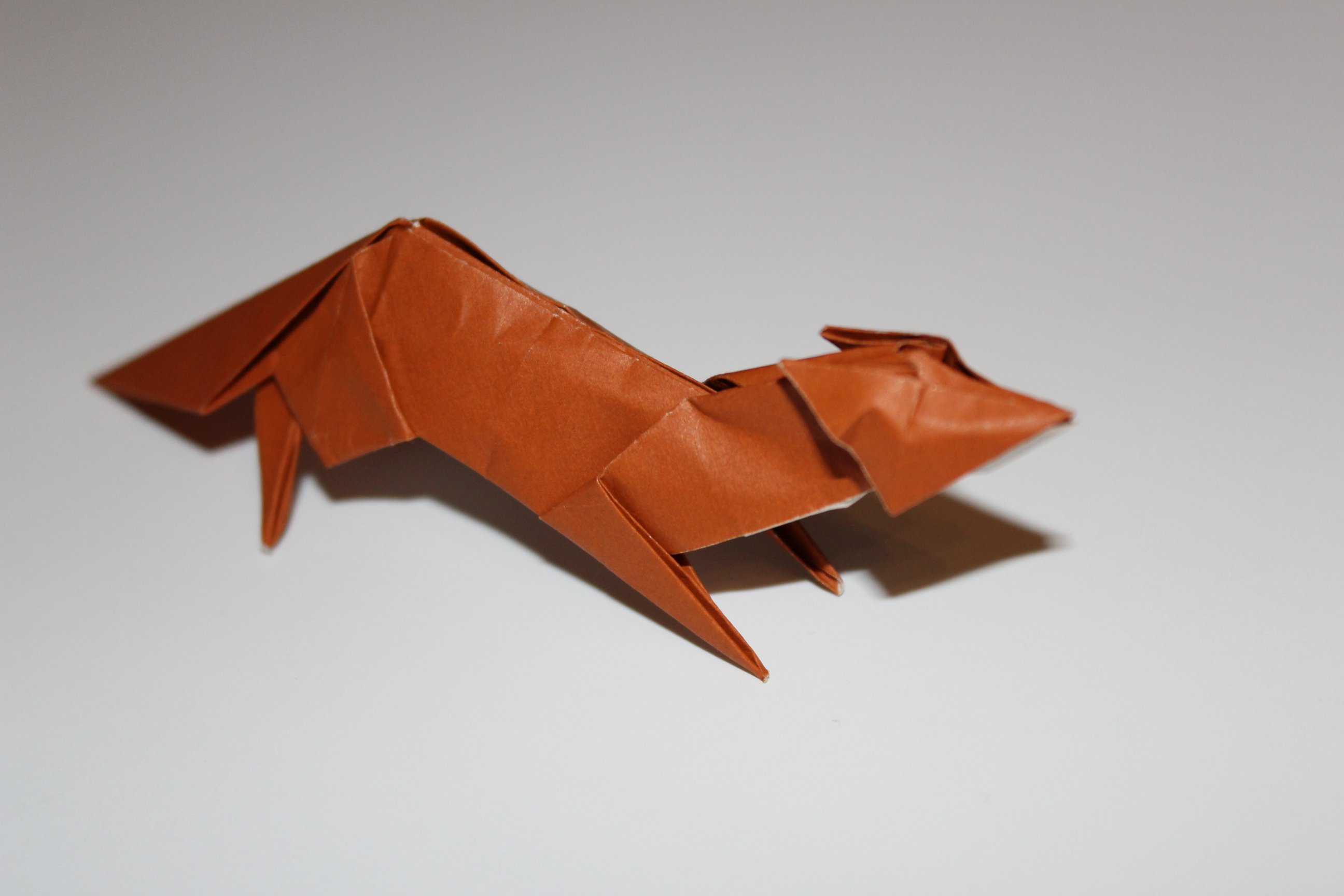
KOMATSU - FOX (2) KOMATSU - FOX (3) KOMATSU - FOX (1)

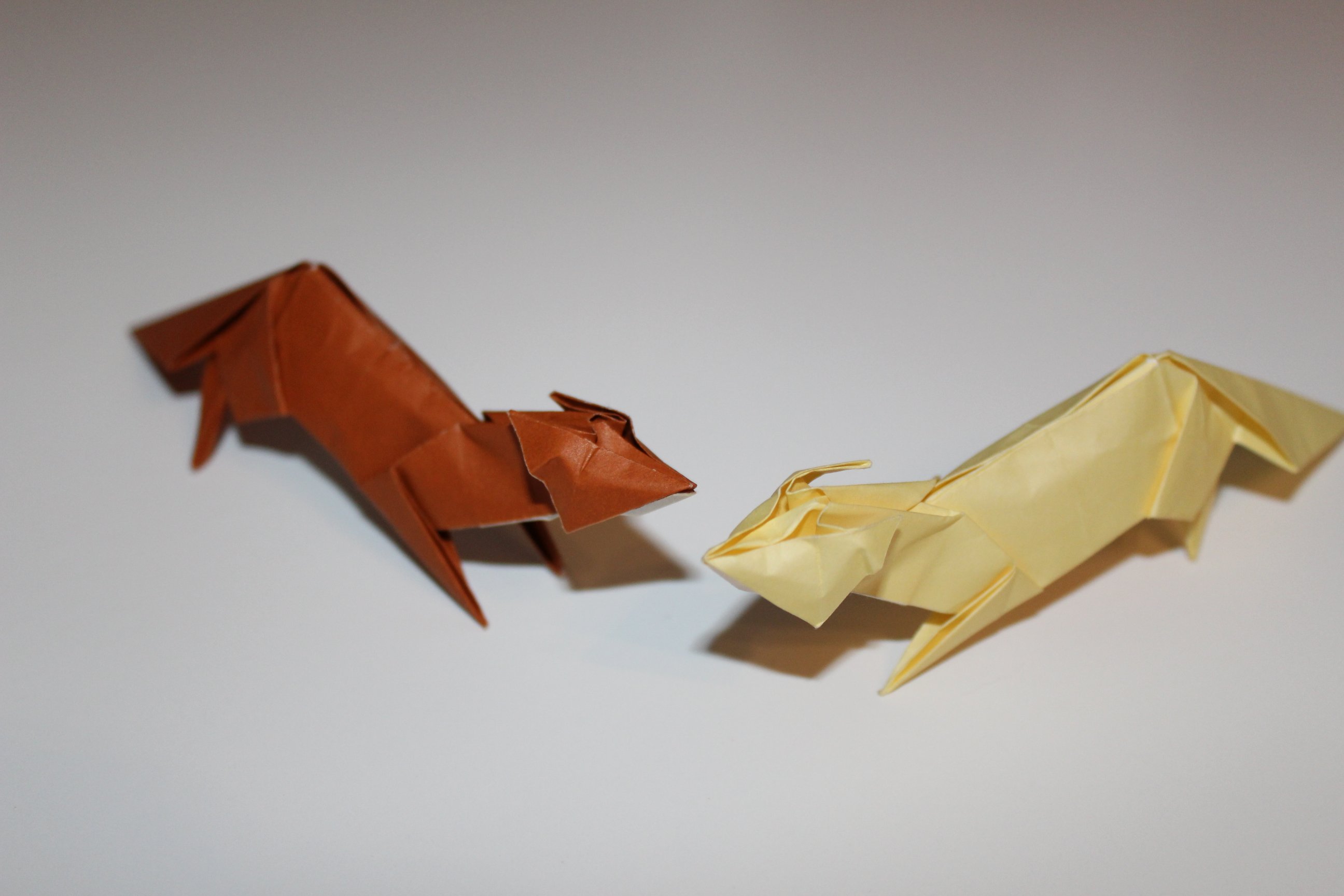
I love the shape of this Fox but couldn’t decide on a color. It doesn’t take too long to make, so I did one in brown and one in tan. I wonder which looks better.

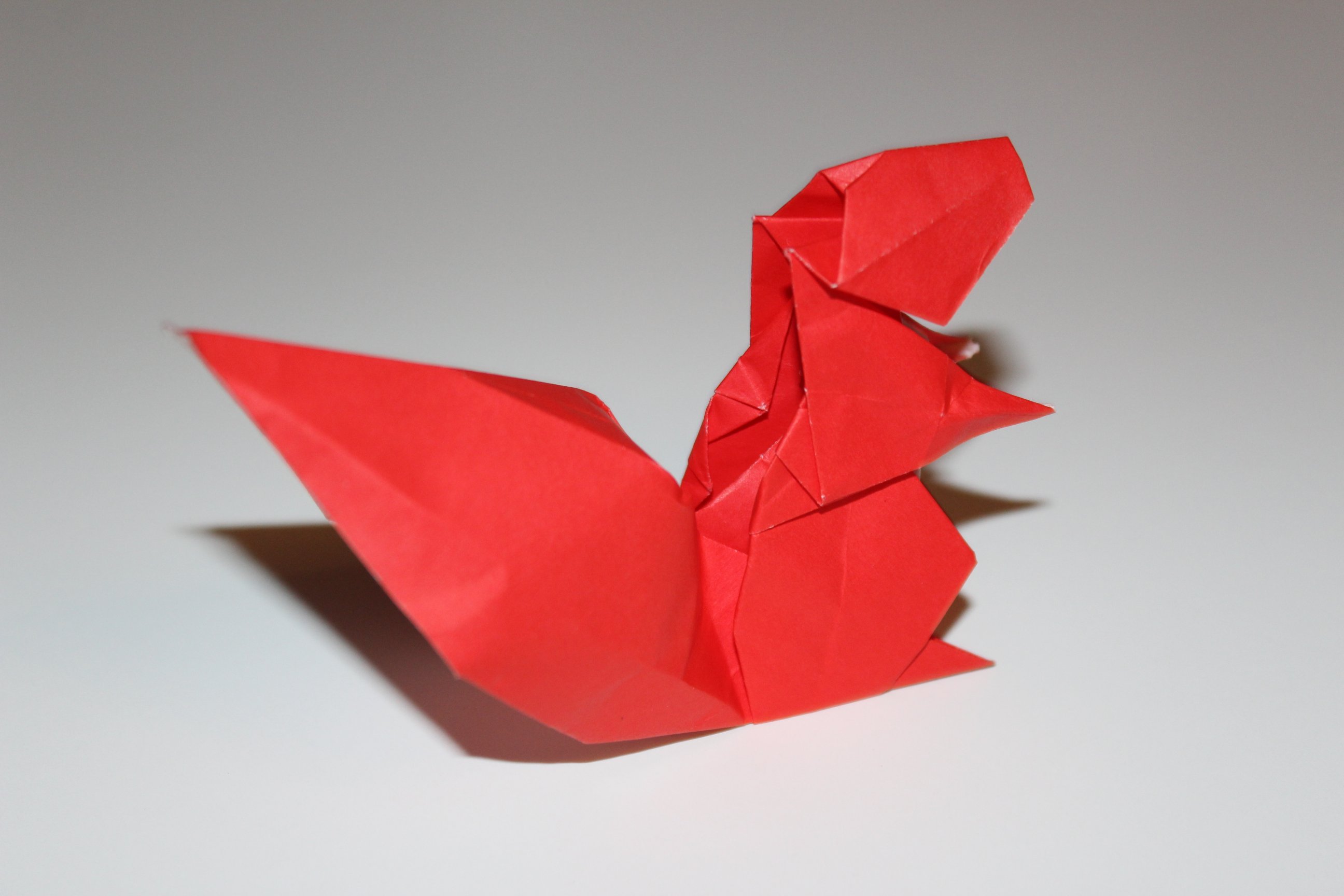
KOMATSU - SQUIRREL (1) KOMATSU - SQUIRREL (2) KOMATSU - SQUIRREL (3)

So, I didn’t match the color on the squirrel the same way. The tail has so much “pop”, I went with bright red. It also has white on its chest between his arms.

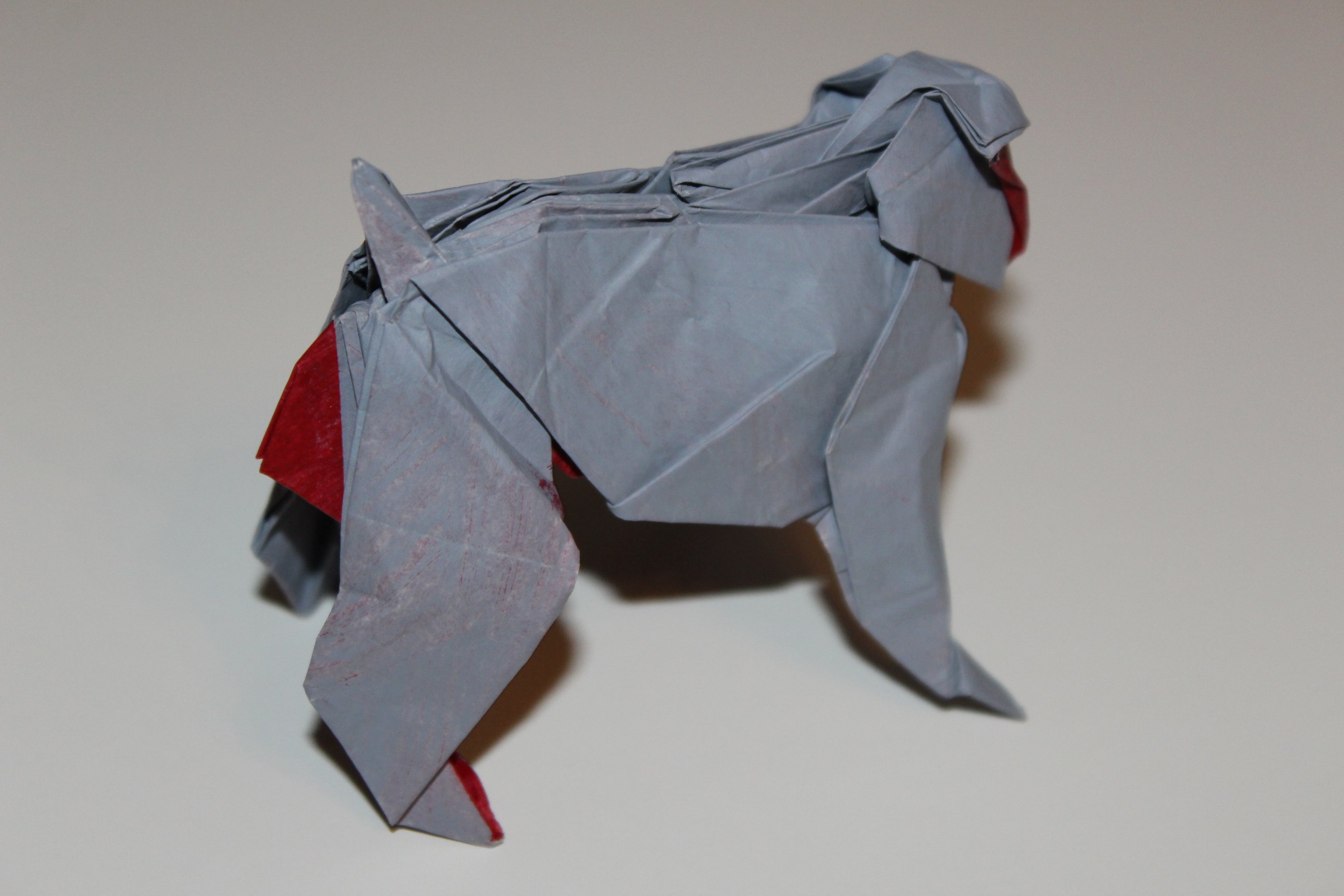
KOMATSU - MACAQUE (2) KOMATSU - MACAQUE (3) KOMATSU - MACAQUE (4) KOMATSU - MACAQUE (5)

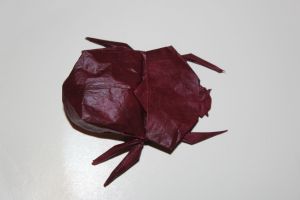
I went a little overboard on Komatsu models for this one. His Japanese Macaque is excellent, with a red face and butt created by the paper being red on one side and grey on the other.

KOMATSU - TIGER (1) KOMATSU - TIGER (2)

The final model this week is Komatsu’s Tiger. This is one of his best models, and one of the best origami tigers designed. The face alone would merit this, but the stripes are incredible. Like the Macaque, the Tiger’s color change is created with dual colored paper: black on one side and orange on the other.

KOMATSU - TIGER (5) KOMATSU - TIGER (3)

I had some trouble on the orange color, but this one takes a bit of time to make. The color’s growing on me though.
Crease Pattern Challenge 007

Crease Pattern Challenge, Origami

Challenge 7 is “Don’t Freeze” by Hiromi Ogata. It’s an adorable rockhopper penguin. It’s a really excellent design that’s 3D with a color change.

OTMCP_007 - DONT FREEZE - OGATA (3) OTMCP_007 - DONT FREEZE - OGATA (1)

Rockhopper penguins have that funny hair style. Ogata’s penguin has extra-fancy hair, even for a rockhopper. Which makes me wonder if this is based off of a movie penguin. There was a run of penguin movies a few years back. This penguin has movie personality at least.

OTMCP_007 - DONT FREEZE - OGATA (2) OTMCP_007 - DONT FREEZE - OGATA (7)

In spite of this being a very interesting and detailed design, I had trouble finding too many other designs by Hiromi Ogata.

OTM_C05 - KANGAROO - OGATA (4) OTM_C05 - KANGAROO - OGATA (1)

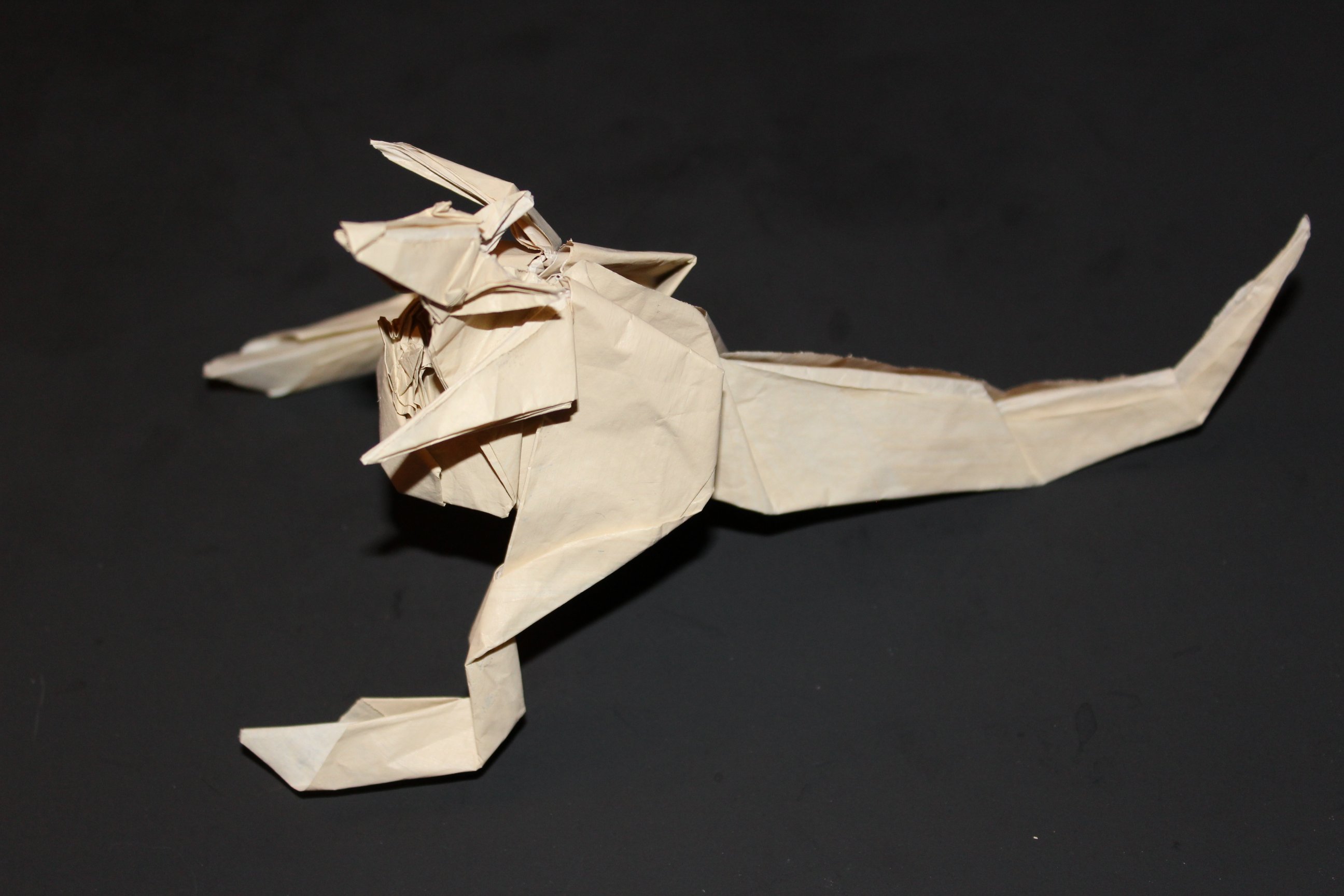
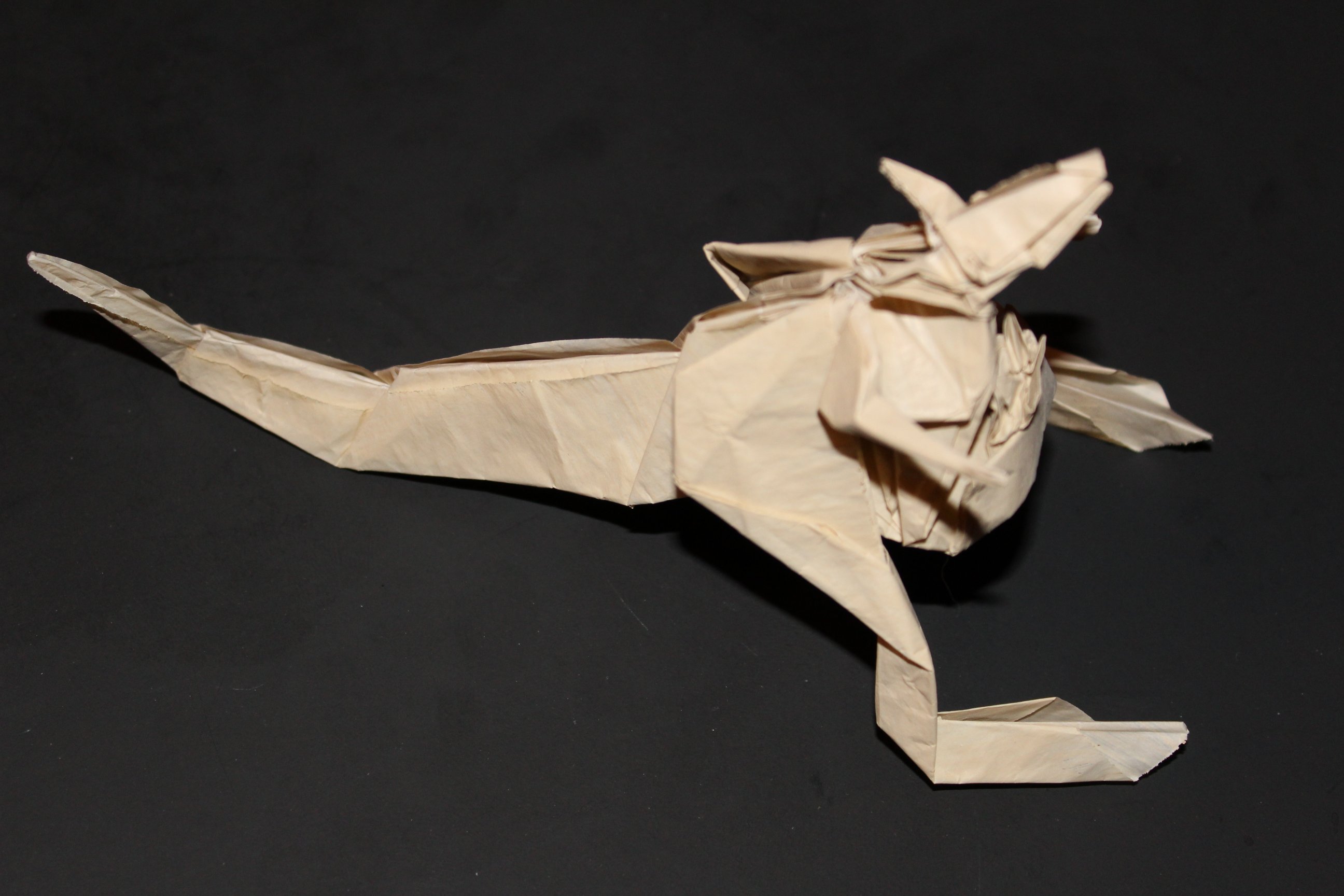
I did find this nice Kangaroo in Tanteidan Convention Book 5. It even has a tiny kangaroo in its pouch. Mine’s still a little spread out, but it’s a really nice model.
OTM_C05 - KANGAROO - OGATA (2) OTM_C05 - KANGAROO - OGATA (3)

Crease Pattern Challenge 006

Crease Pattern Challenge, Origami

I was gone last week, so I decided to do some extra this week. First up is Origami Tanteidan’s Crease Pattern Challenge #6, which is an eastern style Dragon by Seiji Nishikawa.

OTMCP_006 - RYUU - NISHIKAWA (2) OTMCP_006 - RYUU - NISHIKAWA (1)

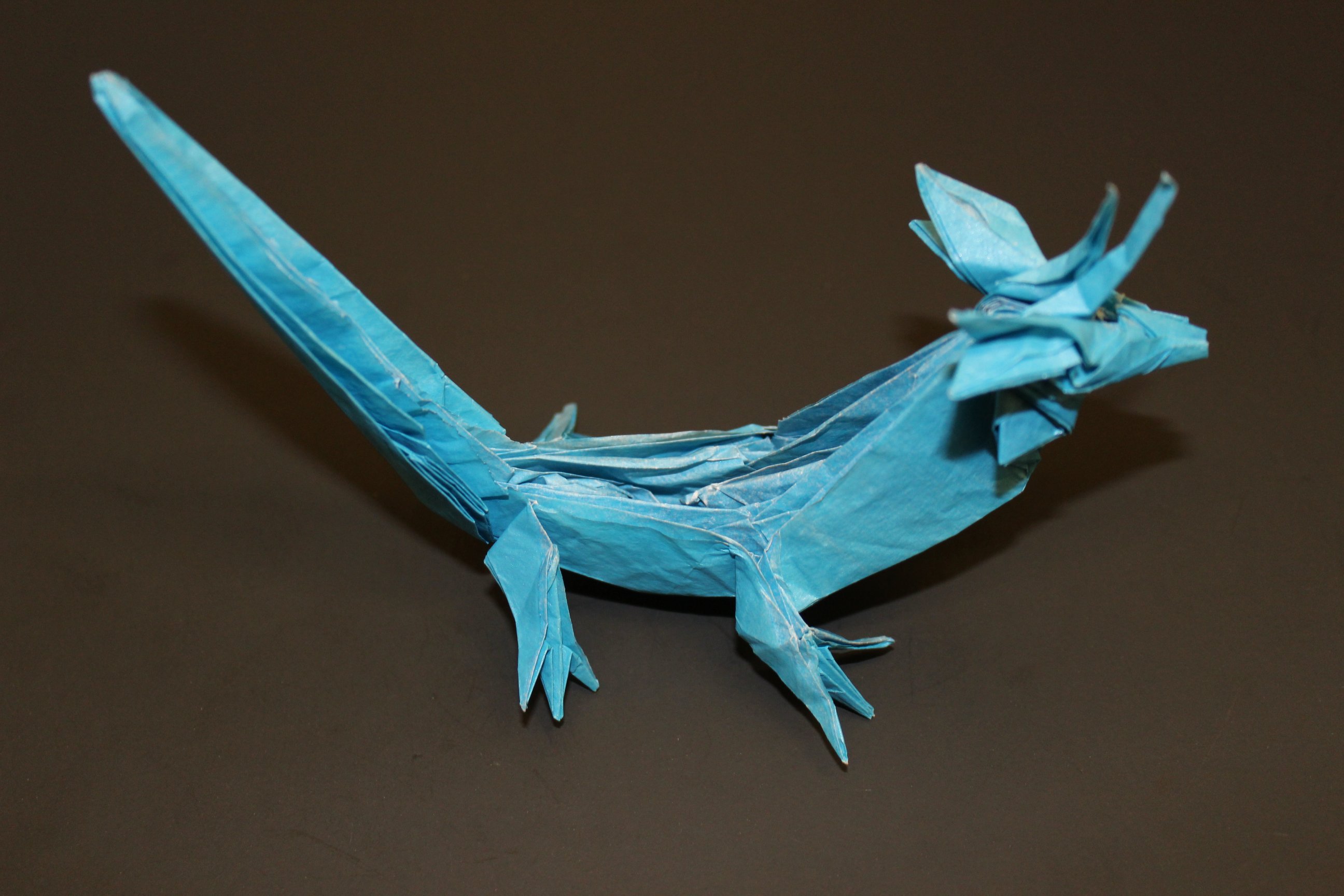
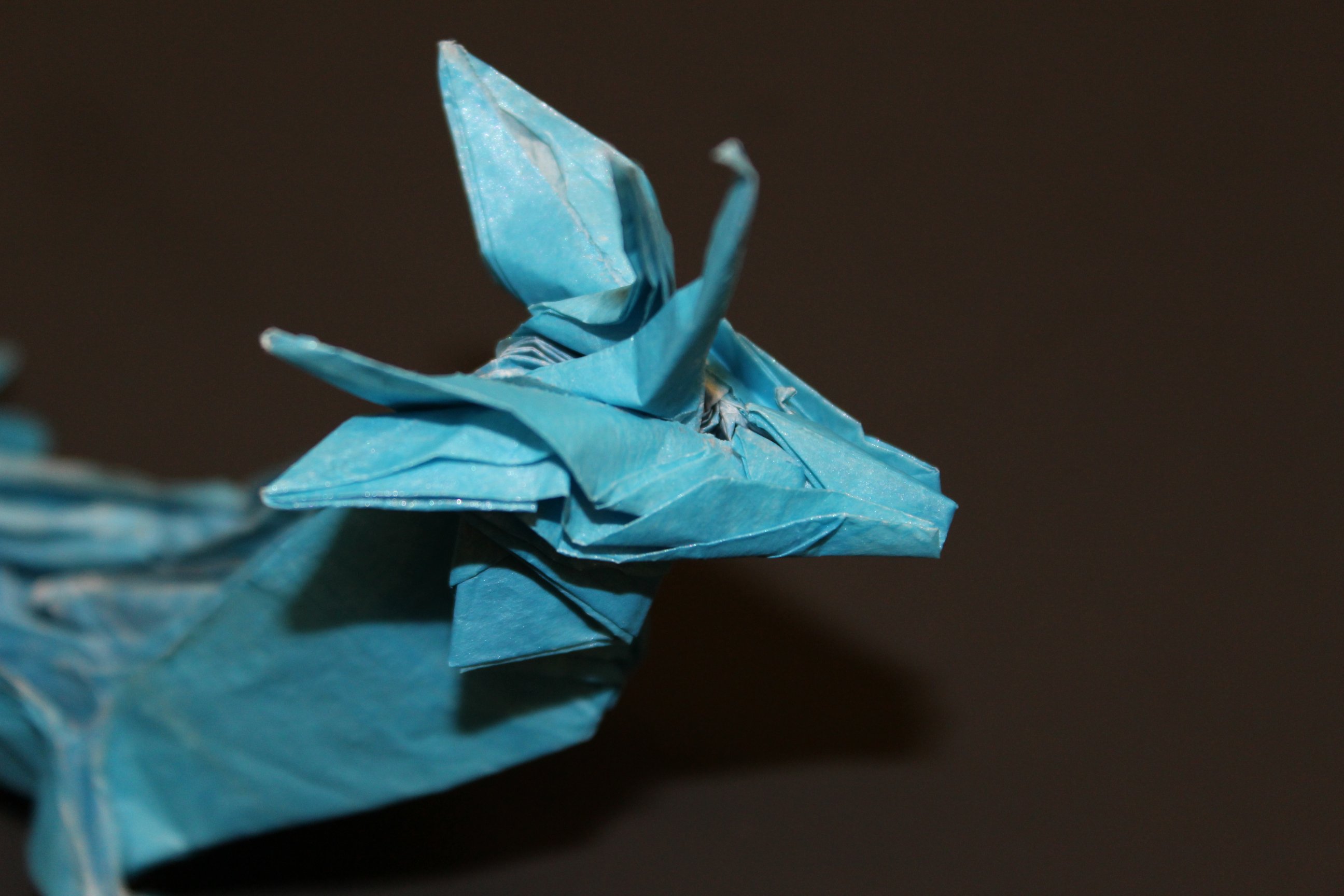
Mine came out a bit different. He’s ended up more of a plant gecko. His face has a kind of leaves on a stalk feel.

OTMCP_006 - RYUU - NISHIKAWA (5) OTMCP_006 - RYUU - NISHIKAWA (3)

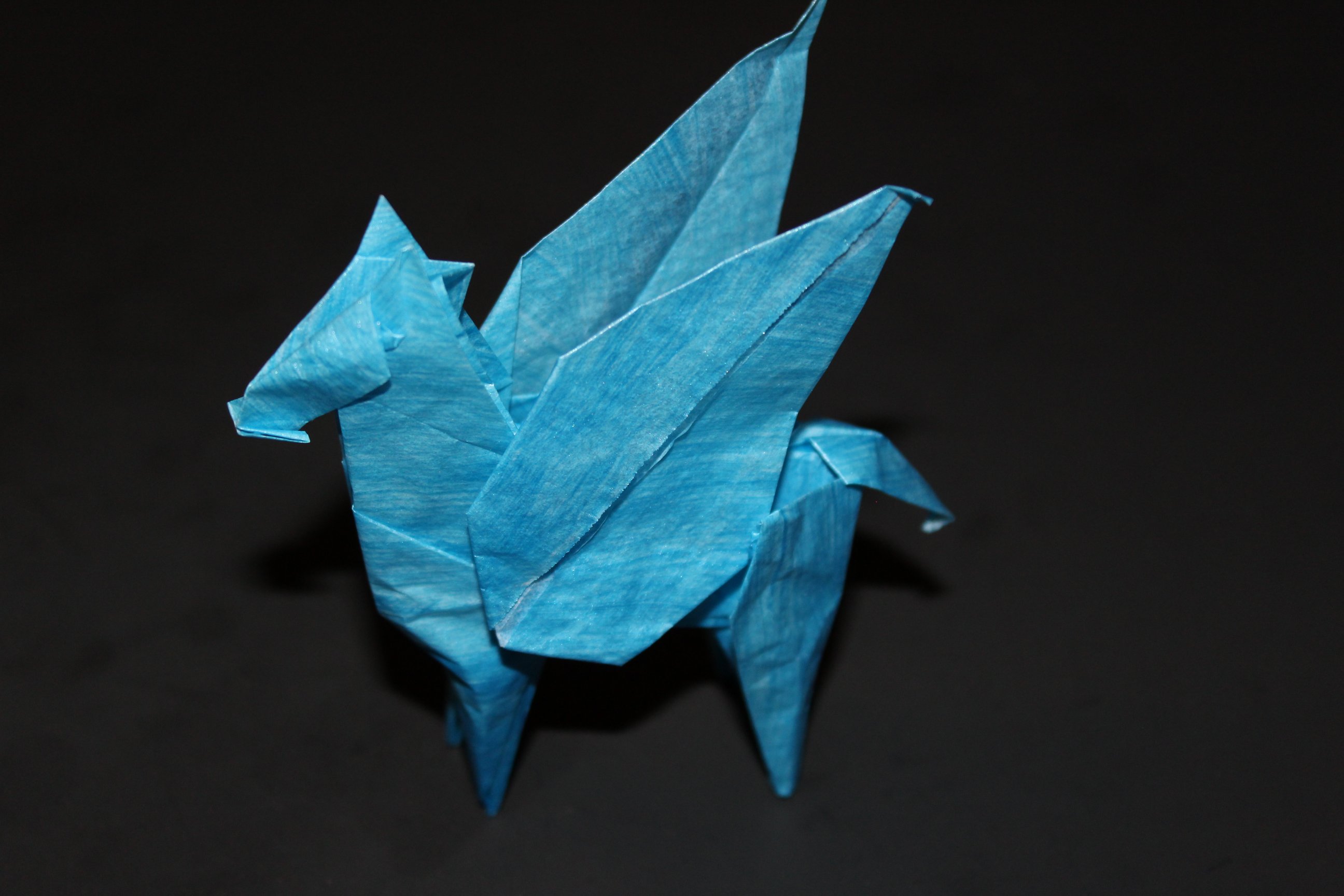
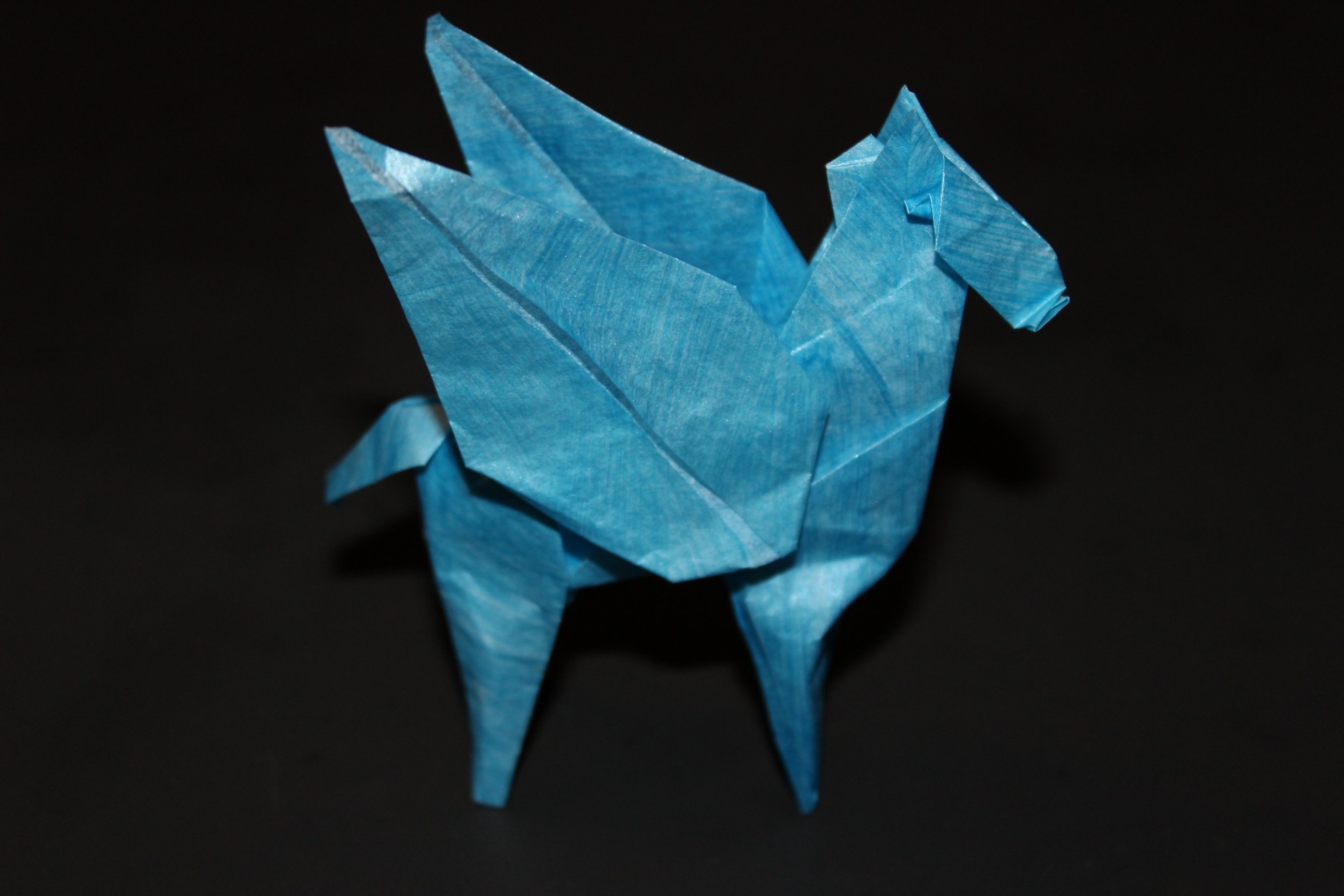
Seiji Nishikawa has a several books and hundreds of models, so I thought I’d include a few more of those here. His Pegasus is in his book and Tanteidan Convention Book 4.

OTM_C04 - NISHIKAWA - PEGASUS (1)  OTM_C04 - NISHIKAWA - PEGASUS (2)OTM_C04 - NISHIKAWA - PEGASUS (3)

It’s not as thin and fancy as a lot of pegasii out there, but I like it more for it. This Pegasus actually looks like he could circle the head of a sea monster as opposed to many other “I’m pretty!” pegasii you see.

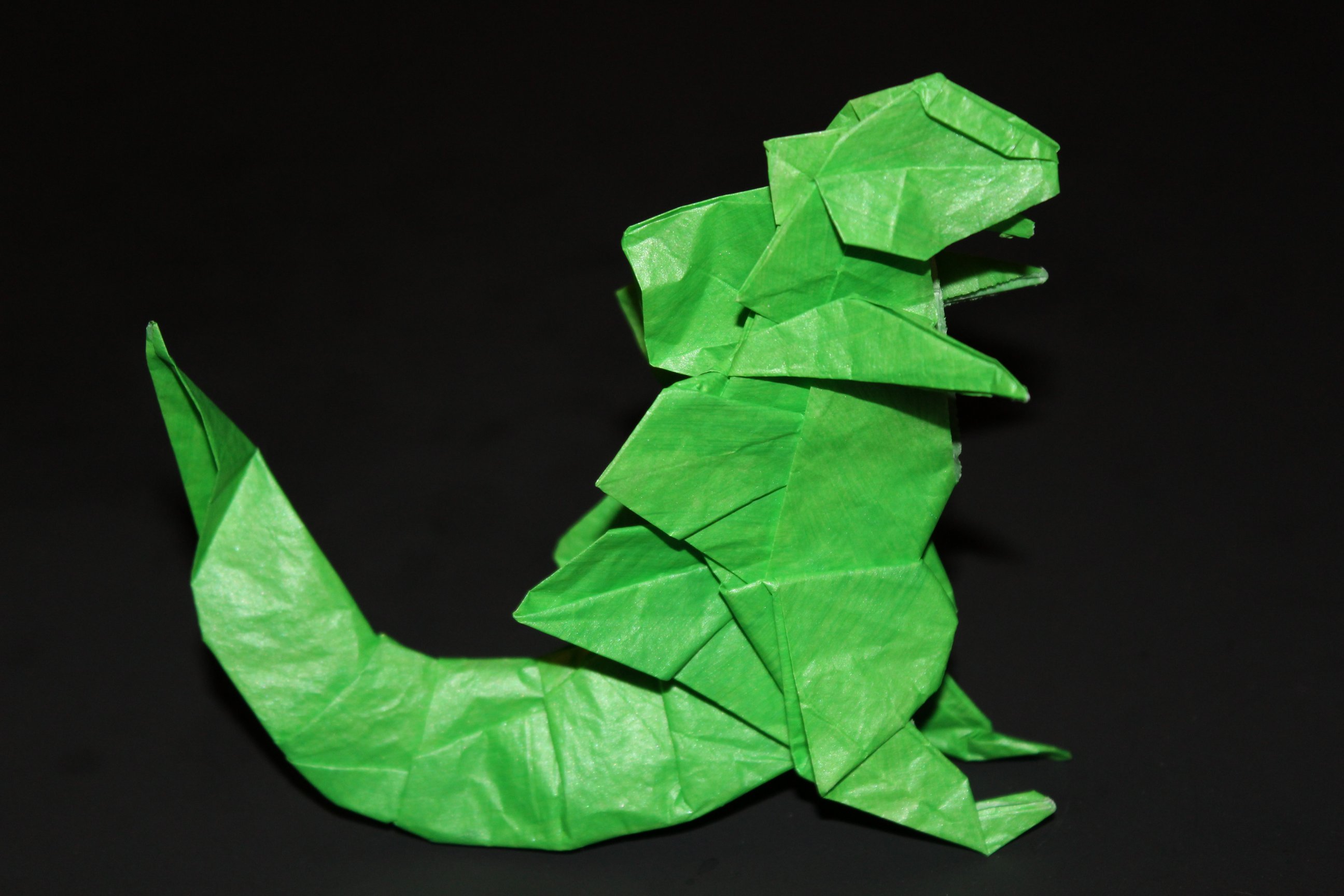
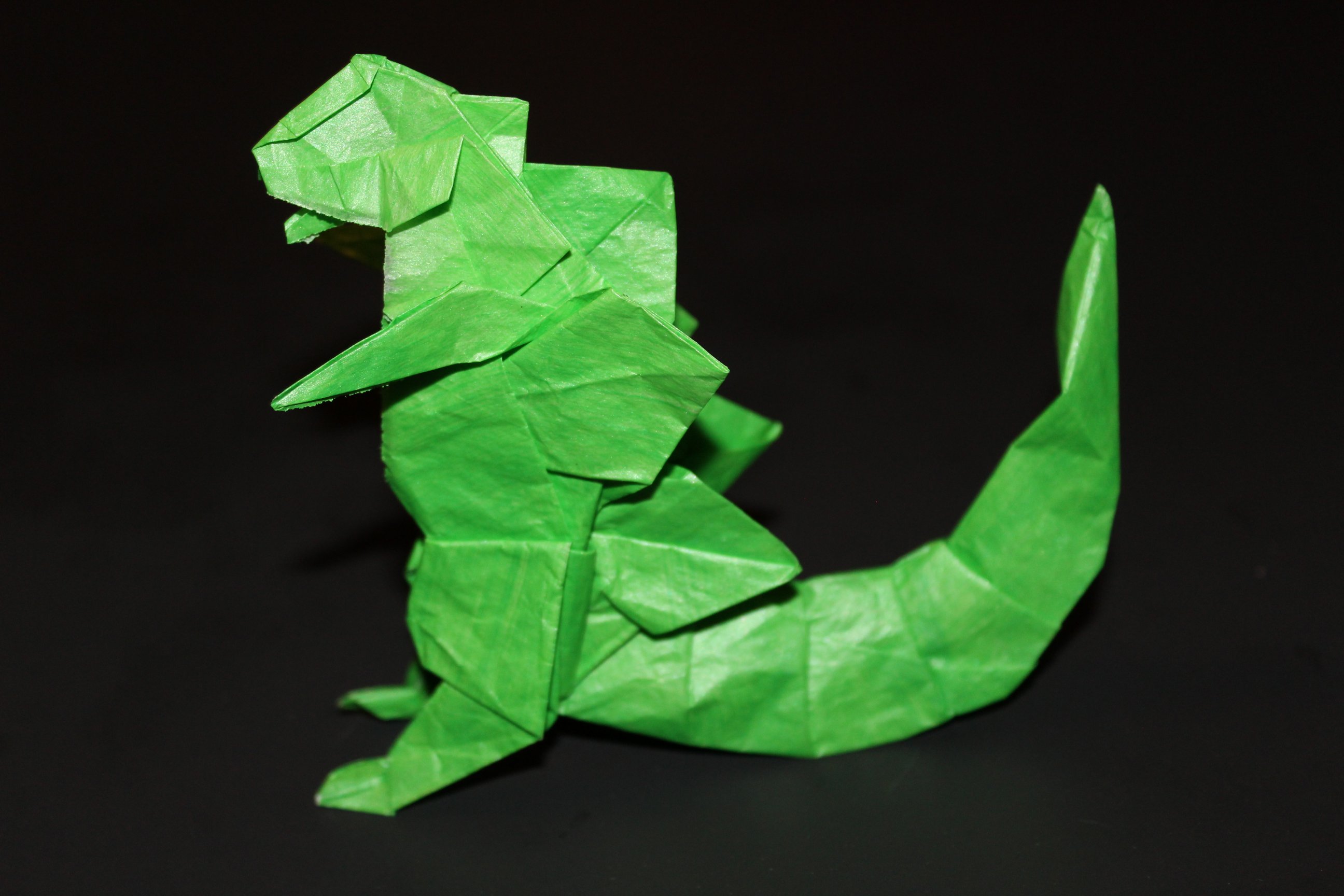
His Godzilla was diagrammed in Tanteidan Magazine 39. I dolled up the back plates a bit, but I may have overthinned him to do it.

OTM_039 - GOJIRA - NISHIKAWA (1) OTM_039 - GOJIRA - NISHIKAWA (2) OTM_039 - GOJIRA - NISHIKAWA (3)

I like him a lot, but the legs are a bit small. Nishikawa’s original has straight legs (no knees) which helps with this, but the legs look thinner that way. He does seem to get taller with every movie. He’s only attacking to keep his dancer’s legs in shape.