Crease Pattern Challenge 002

Crease Pattern Challenge, Origami

I missed one last week and have had a lot of posts of Kamiya models, so here’s another post with a different designer.

OTMCP_002 - AKUMA - MAEKAWA (1)  OTMCP_002 - AKUMA - MAEKAWA (5)

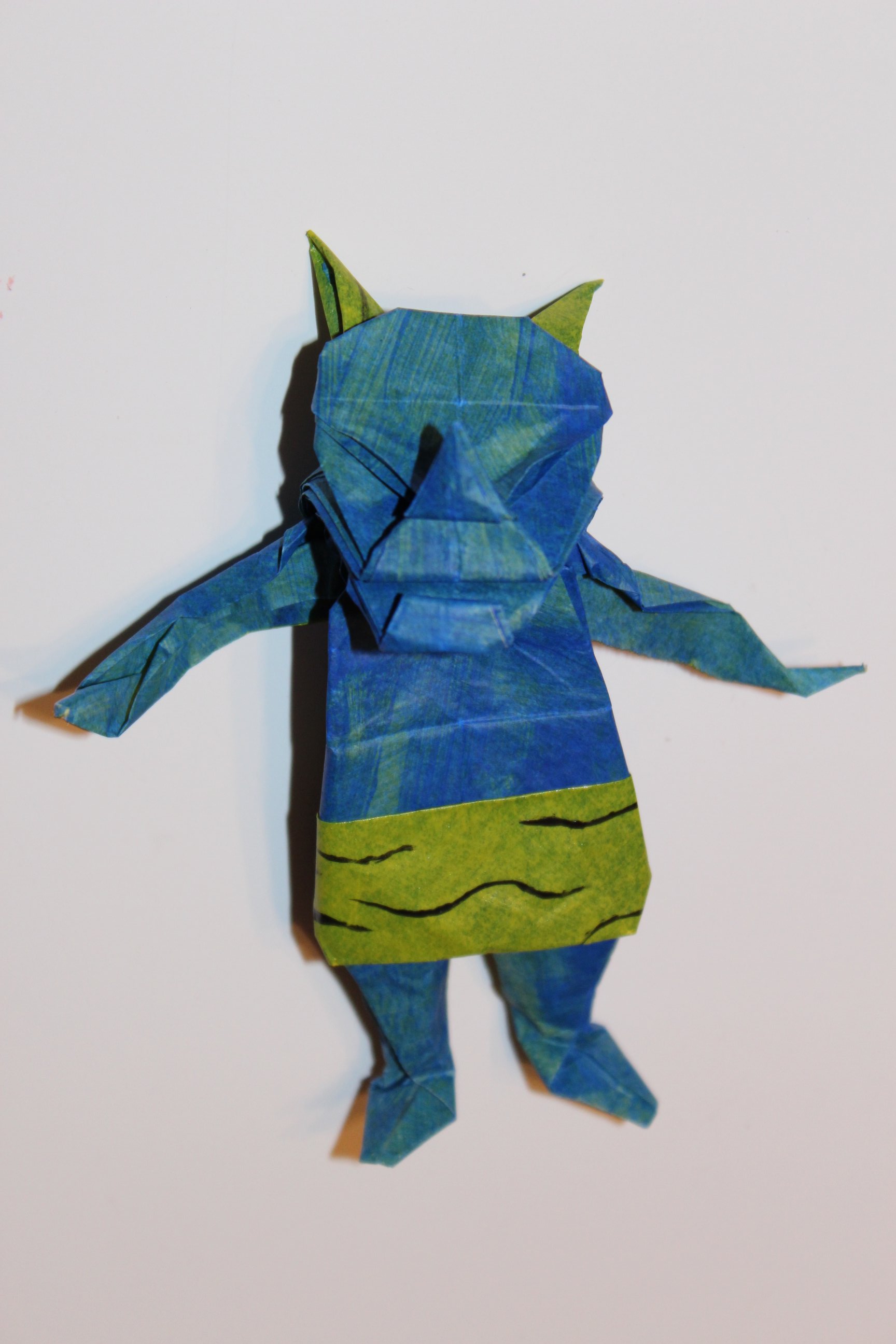
Jun Maekawa has some great (as well as famous) models and was chosen for Tanteidan’s second Crease Pattern Challenge (Issue 56). This Devil has also been diagramed in several books. I think the crease pattern version is a little more streamlined, but it may just be easier to fold than when diagramed (some models are that way you know).

OTMCP_002 - AKUMA - MAEKAWA (2)  MAEKAWA - ONI (2)

His Devil is extremely popular, with some other designers coming up with variations of it. He has some of his own variations in the book “Viva! Origami”, such as the Oni above.

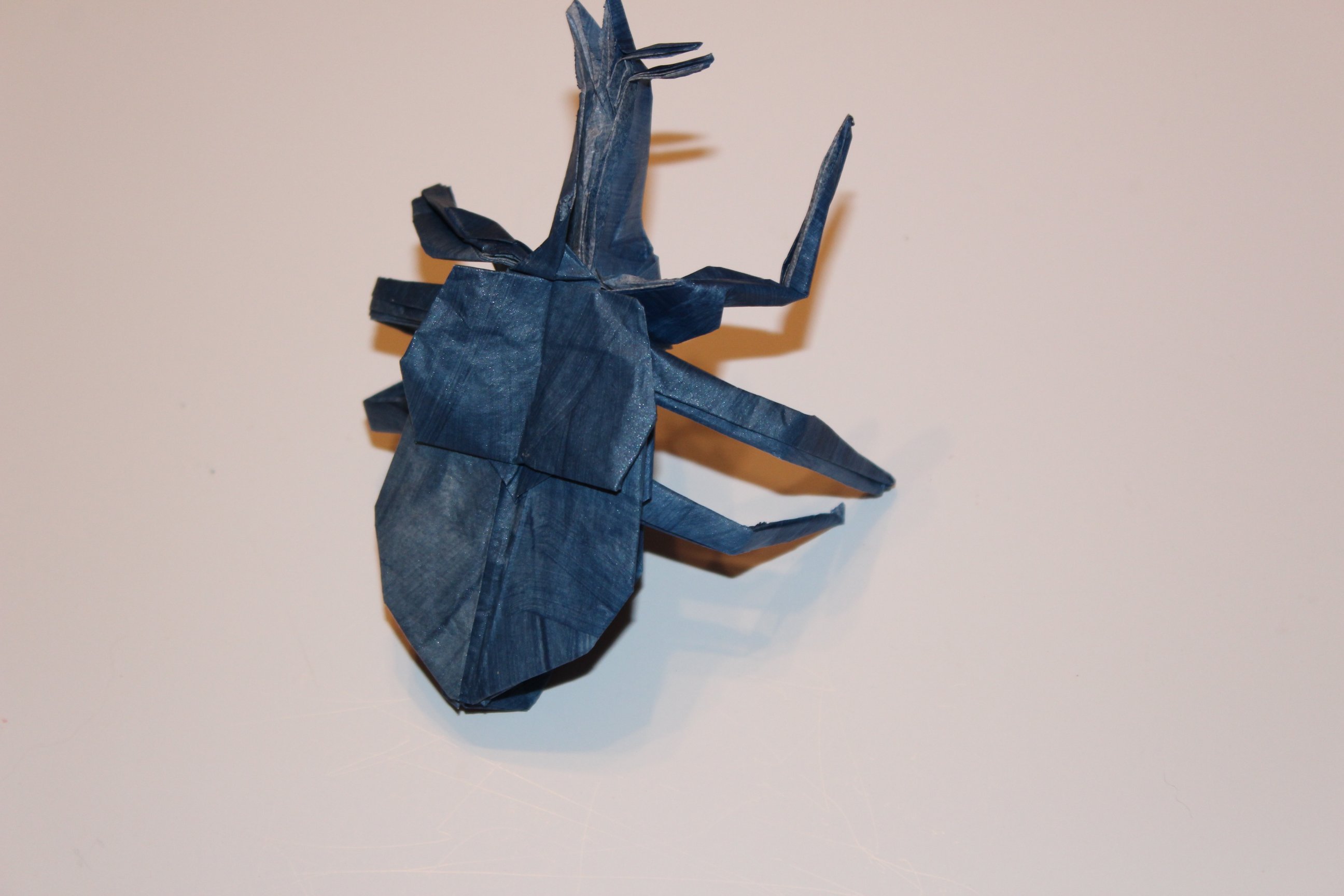
MAEKAWA - SAMURAI HELMET BEETLE (3) MAEKAWA - SAMURAI HELMET BEETLE (6) MAEKAWA - SAMURAI HELMET BEETLE (4)

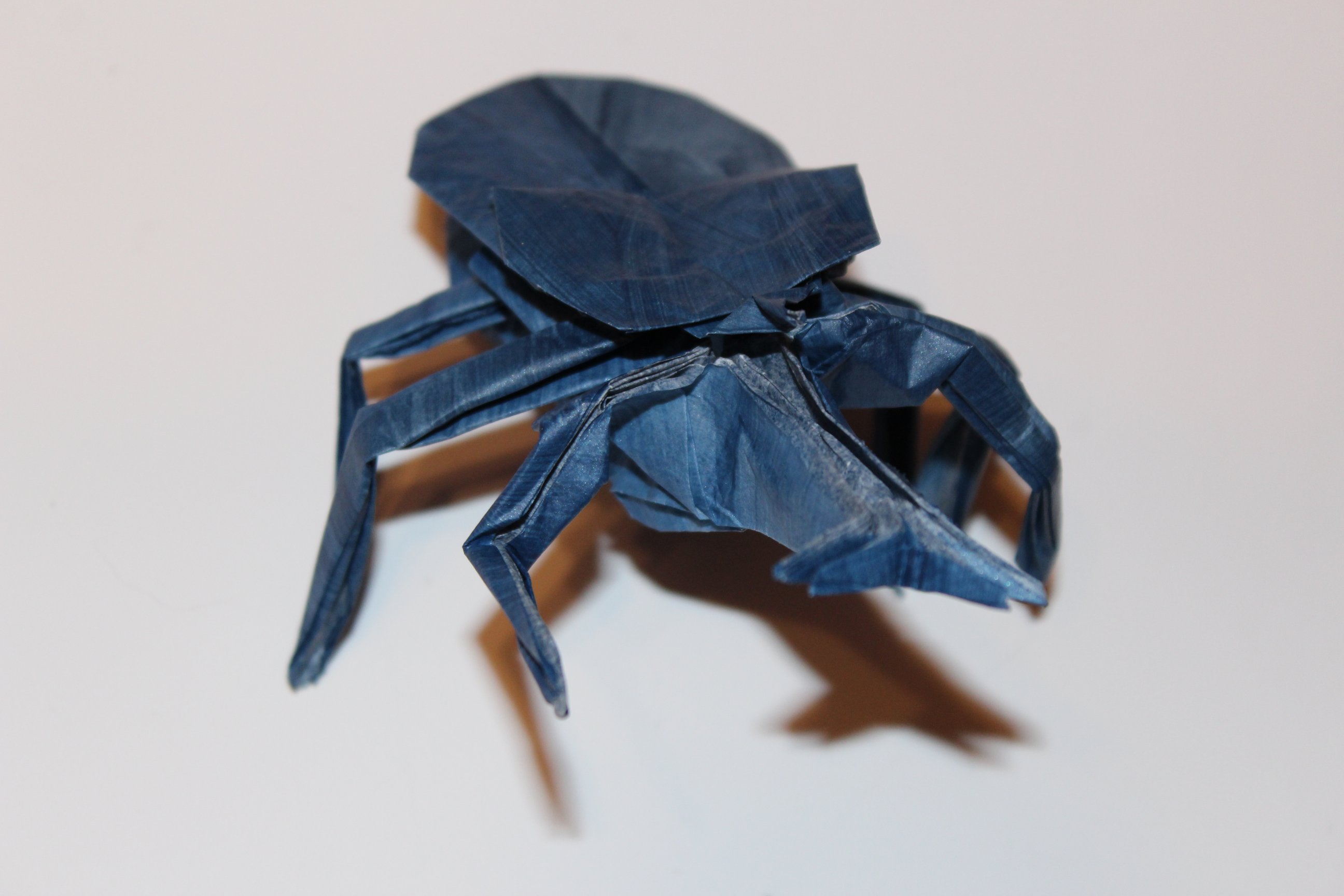
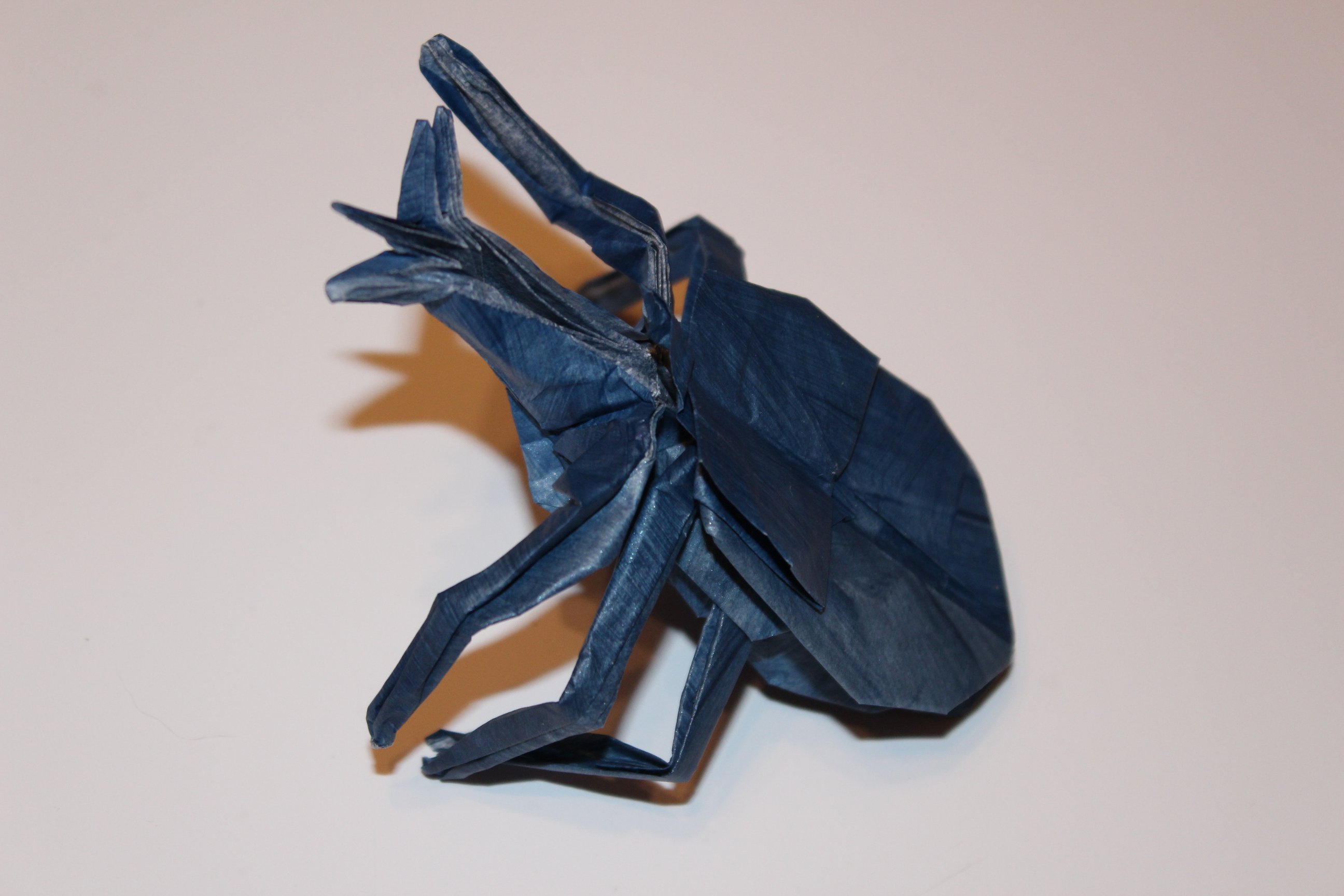
These are not from the crease pattern challenge, but I thought it might be fun to include these Samurai Helmet Beetles (which are also designed by Mr. Maekawa). The earlier one is shown above, while examples of his Flying Samurai Helmet Beetle are below. Diagrams for the flying one can be found in the book “Genuine Origami”. I really like the flying one and almost have it memorized.

MAEKAWA - SAMURAI HELMET BEETLE FLYING (2)

Scaled Works of Satoshi Kamiya 04-06

Origami, Scaled Works of Satoshi Kamiya

Here’s another set of models from the book “Works of Satoshi Kamiya 1995-2003”, all folded with the same size of paper.

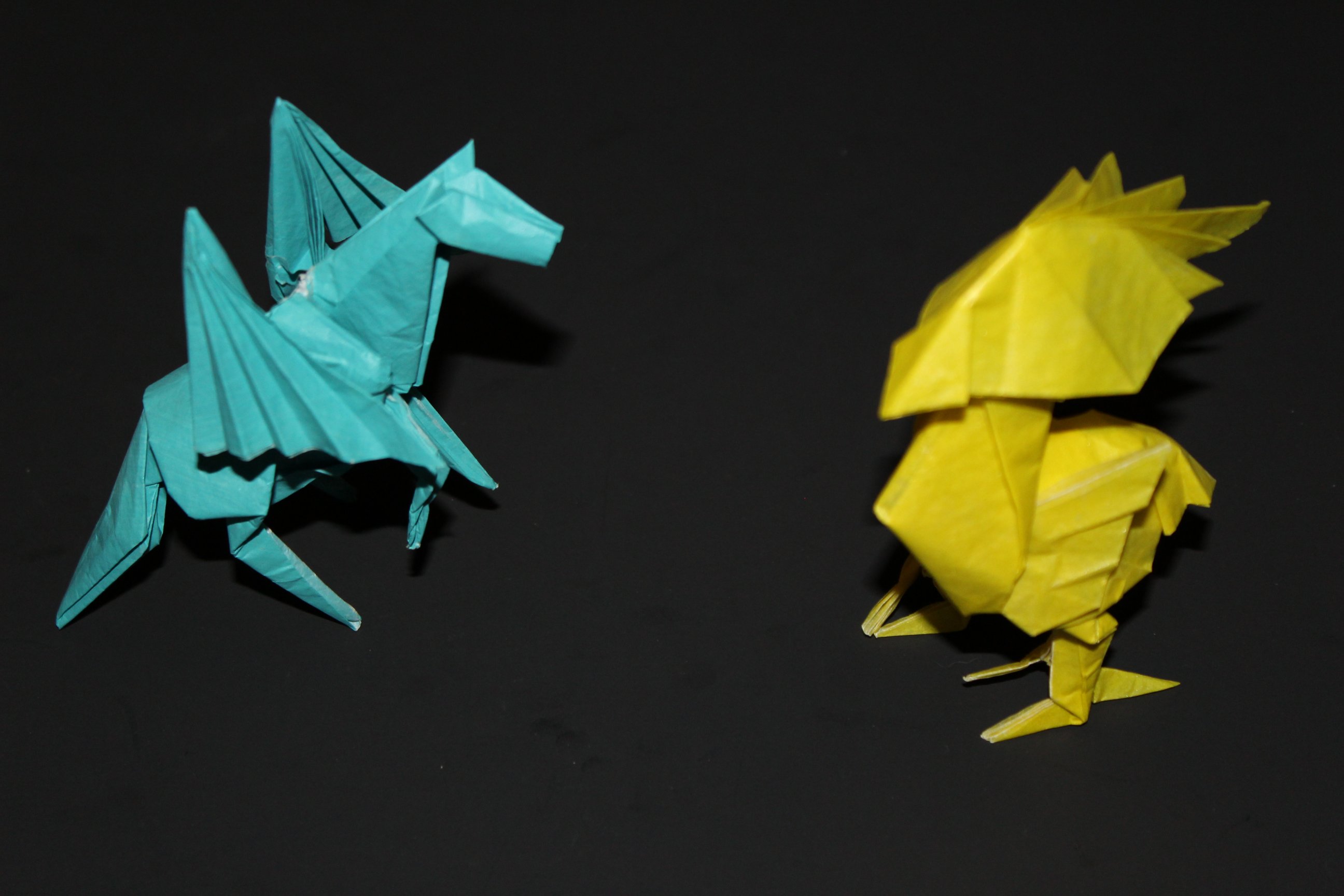
WOSK_104 - PEGASUS (1) WOSK_104 - PEGASUS (2)

I’m pretty sure this is his earliest Pegasus. He has some newer versions here and here.

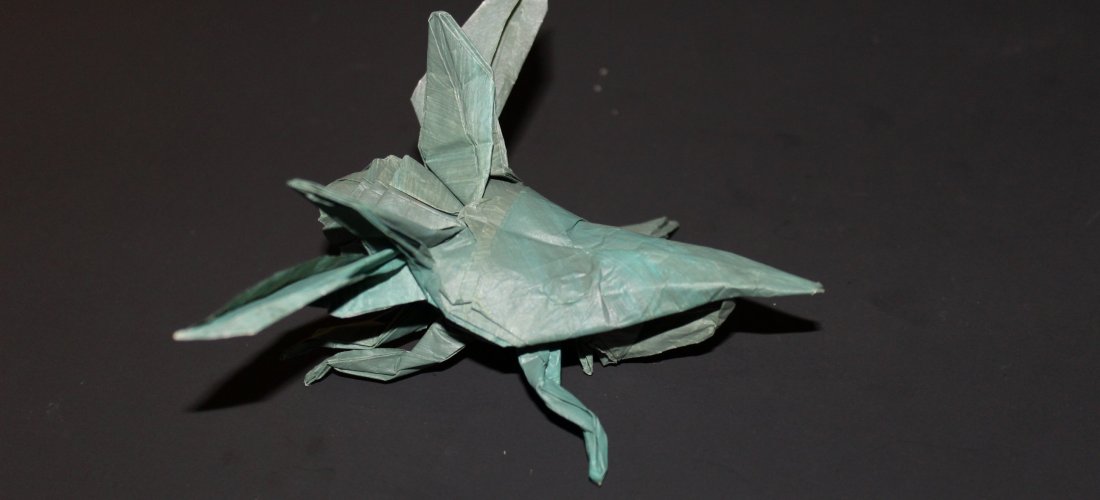
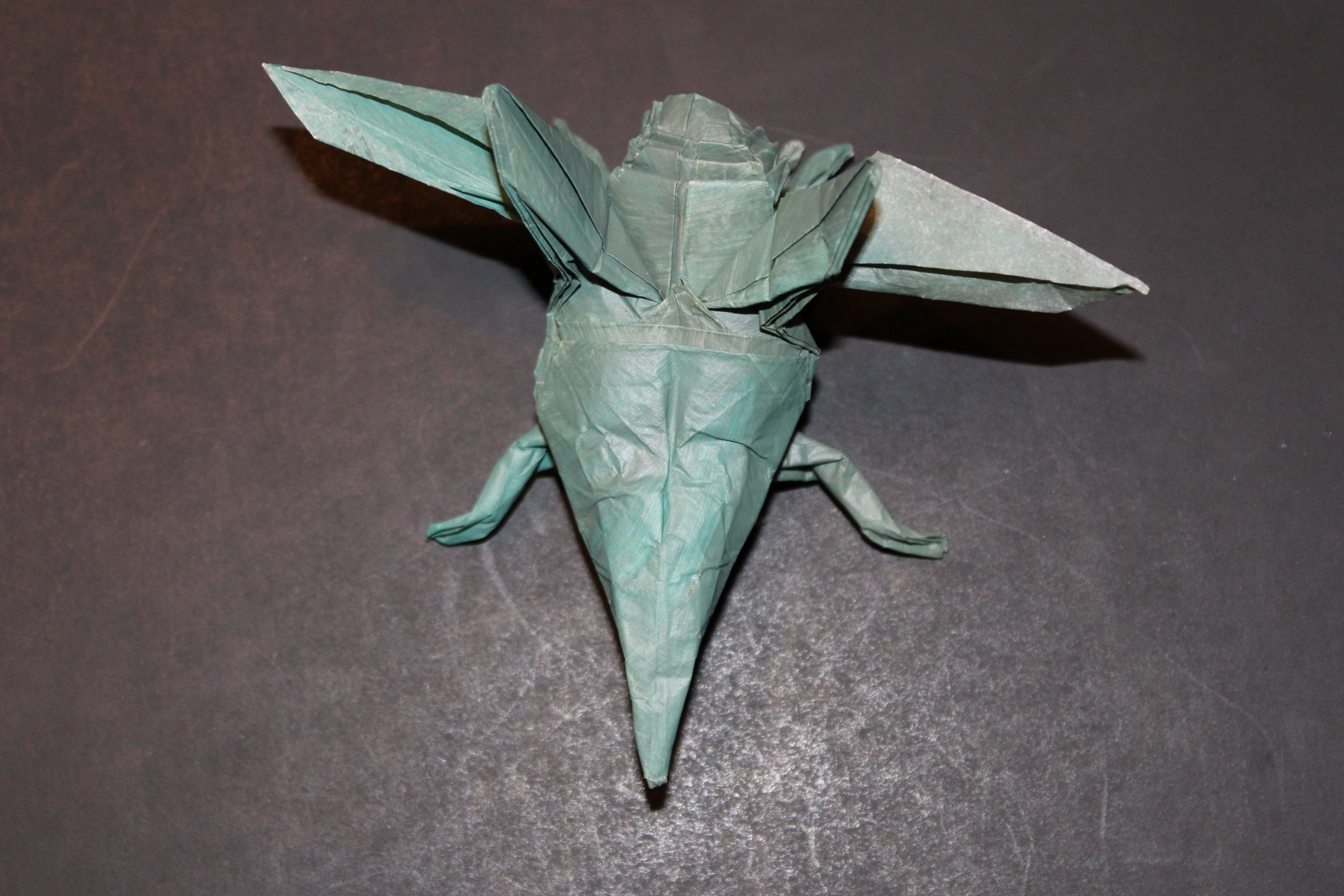
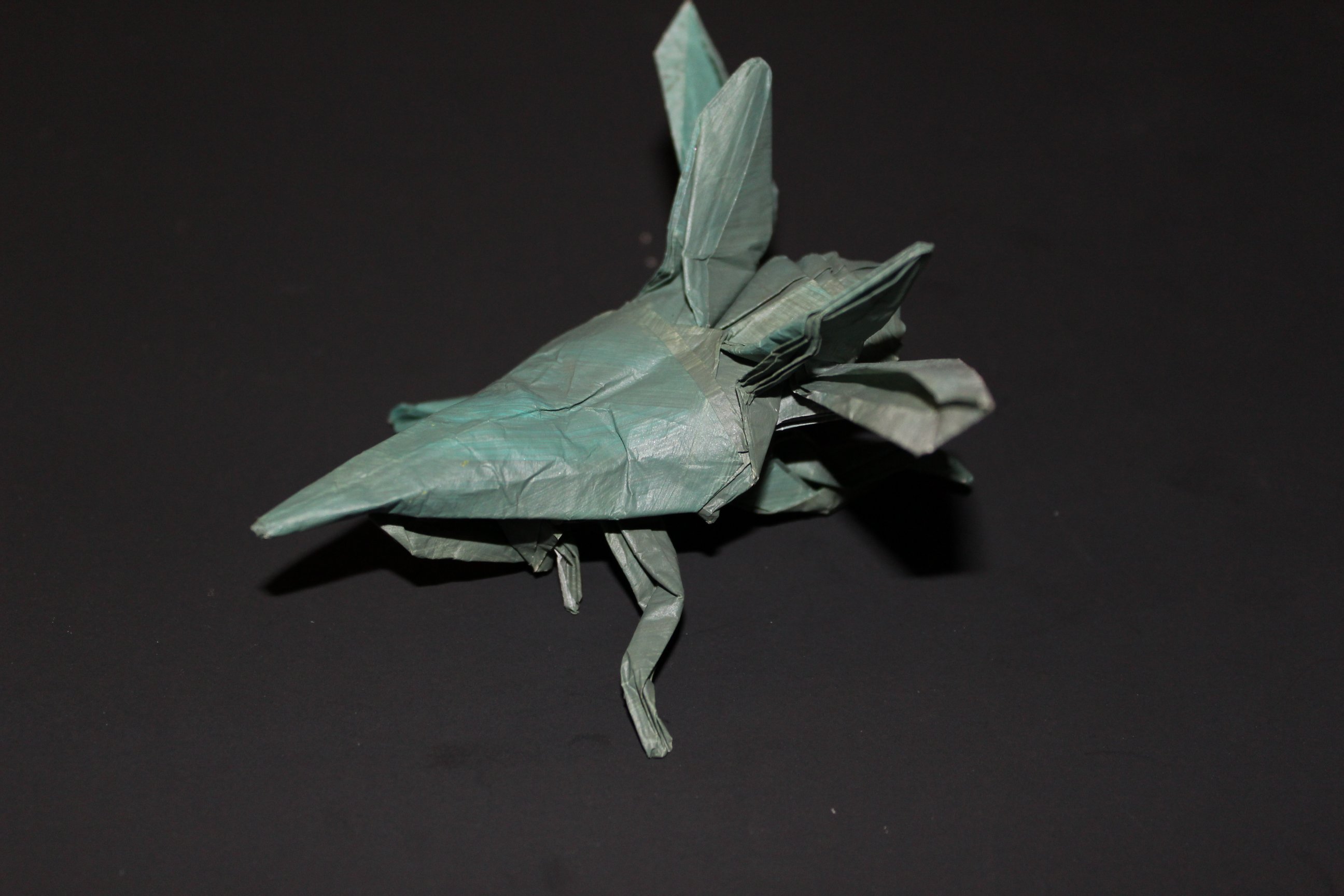
WOSK_105 - HERCULES BEETLE (3)  WOSK_105 - HERCULES BEETLE (7) WOSK_105 - HERCULES BEETLE (1) WOSK_105 - HERCULES BEETLE (6) WOSK_105 - HERCULES BEETLE (2)

I think I did ok on the Hercules Beetle, but it’s still kind of hard to see. Here’s his model, on his site.

WOSK_106 - DIVINE DRAGON (2) WOSK_106 - DIVINE DRAGON (4)WOSK_106 - DIVINE DRAGON (1)

The last one for now is #6 in the book: Divine Dragon Bahamut. He’s one of the more detailed models, so he comes out pretty tiny compared to the others.

Crease Pattern Challenge 001

Crease Pattern Challenge, Origami

The Japan Origami Academic Society puts out a magazine bimonthly. (And by that I mean once every two months. Not twice a month. It’s a terrible word. Maybe “hexaannually” would be better?) They also have yearly conventions and put out a very nice book that corresponds to each meeting.

Starting with issue 55, the magazine has had a section called “Crease Pattern Challenge”. This is only a single page with a crease pattern for people to try to fold. A crease pattern is just a square with lines on it that represent the final folds of the model. The first of these is actually the “Ancient Dragon” by Satoshi Kamiya. You already know I like his models, and this model is also in his book.

OTMCP_001 - ANCIENT DRAGON - KAMIYA

I think there are slight differences between this one and the one in his book. Since I’m going to put up the book Ancient Dragon soon anyway, I’m adding some other models here for, like, flavour, or something.

KAMIYA - BAHAMUT BL (1) KAMIYA - BAHAMUT BL (5)

Kamiya’s Ancient Dragon and Bahamut models are actually pretty similar. While the final Bahamut might not show it, Bahamut BL (or God Dragon Bahamut) looks a bit like the Ancient Dragon.

KAMIYA - BAHAMUT BL (2) KAMIYA - BAHAMUT BL (3)

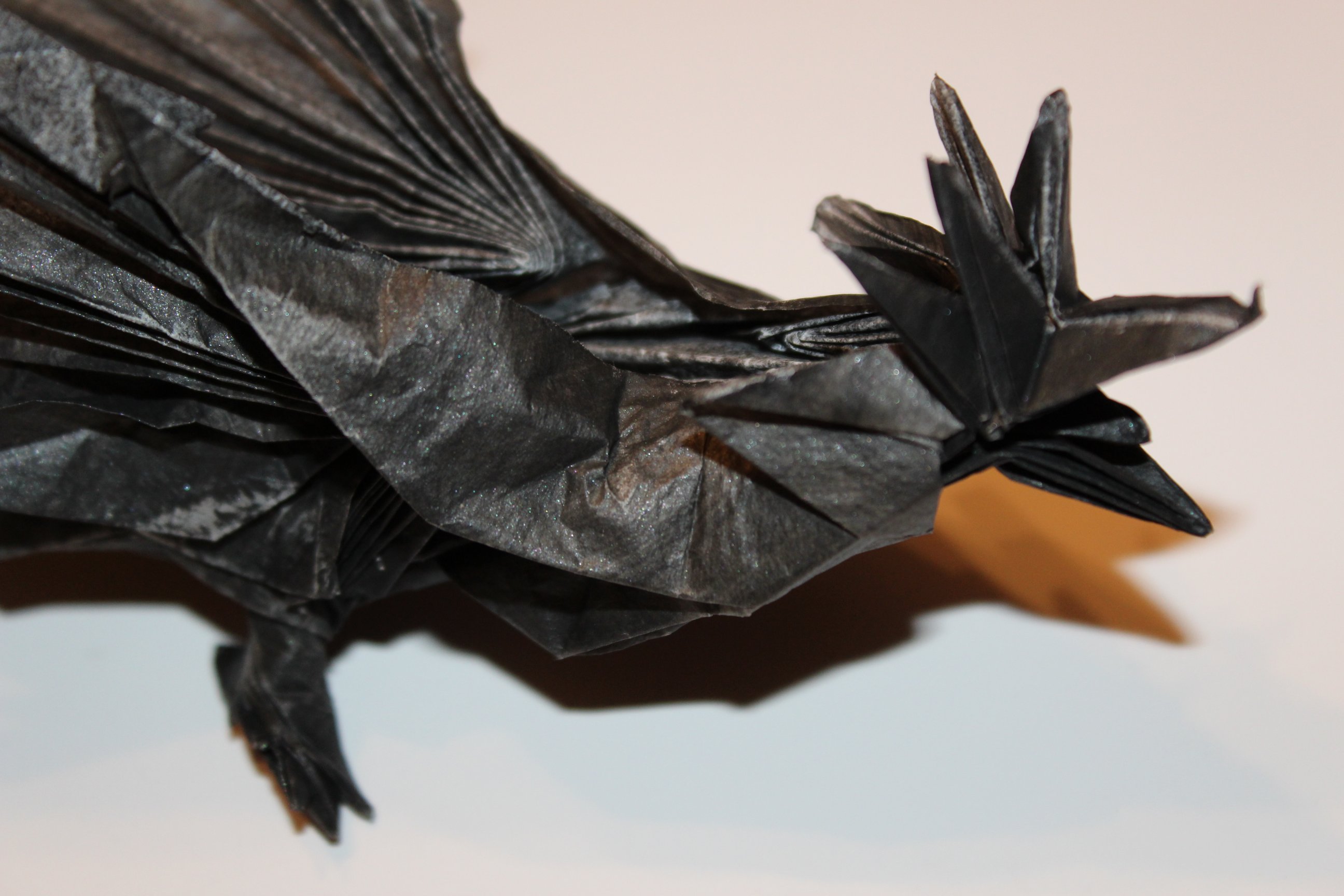
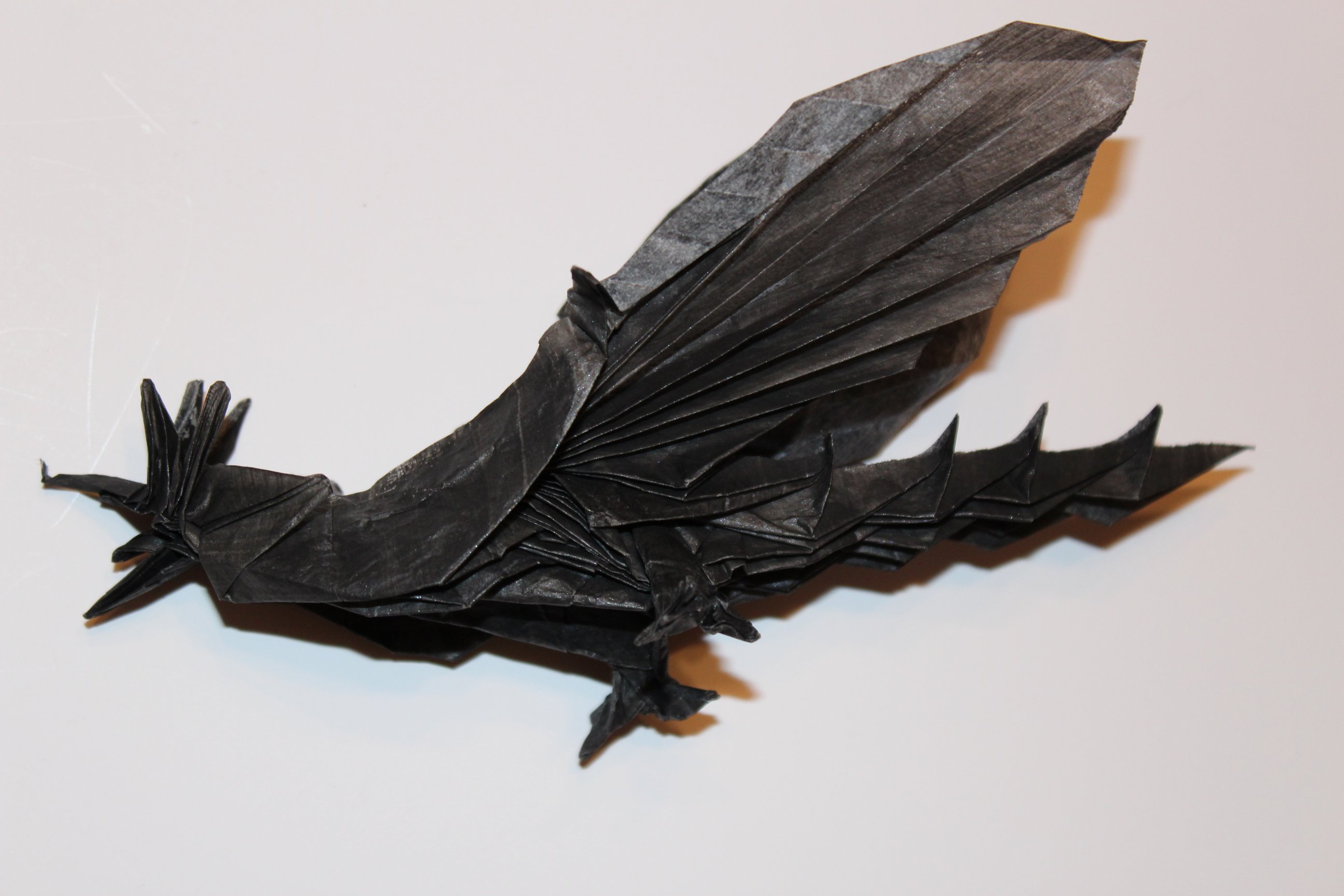
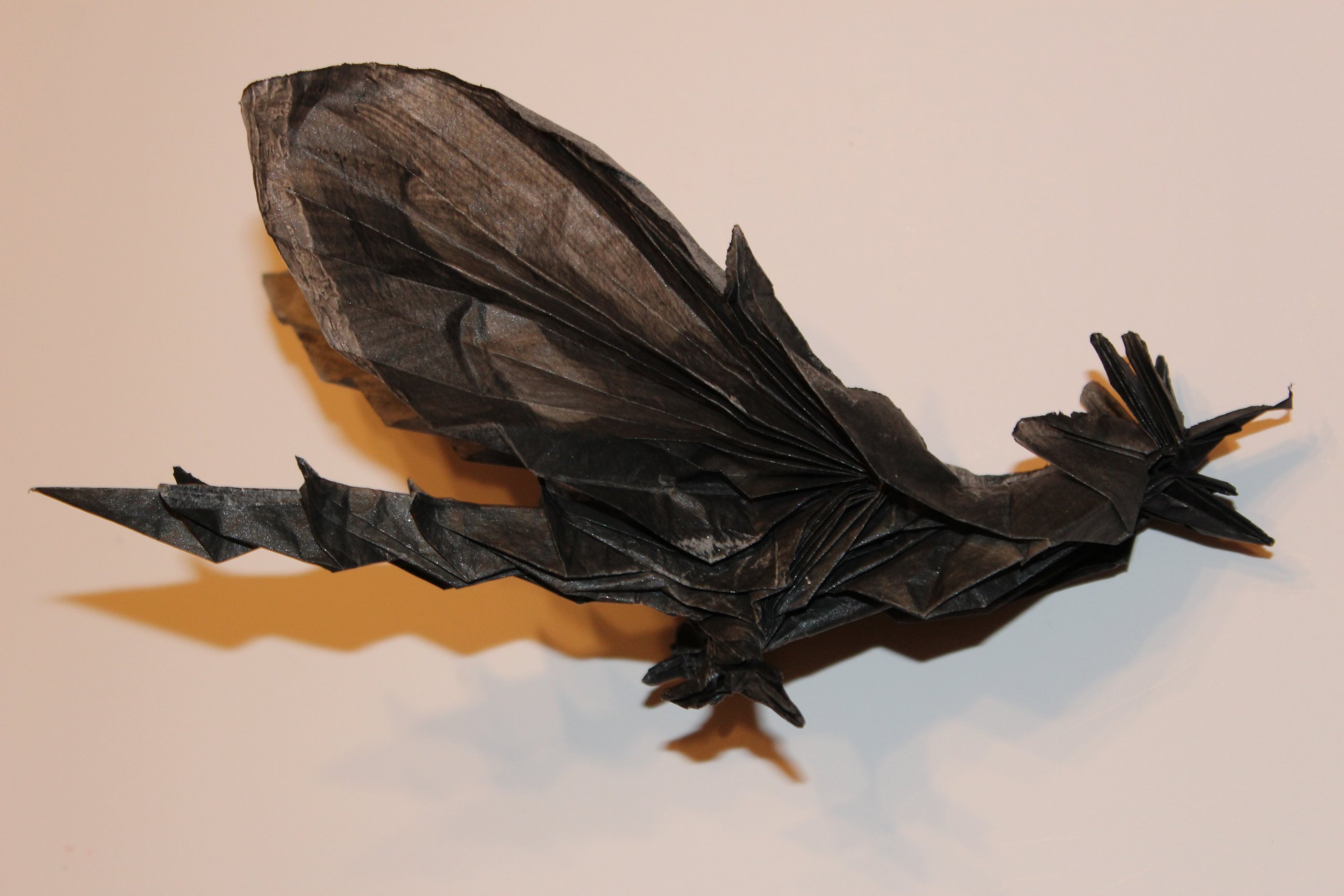
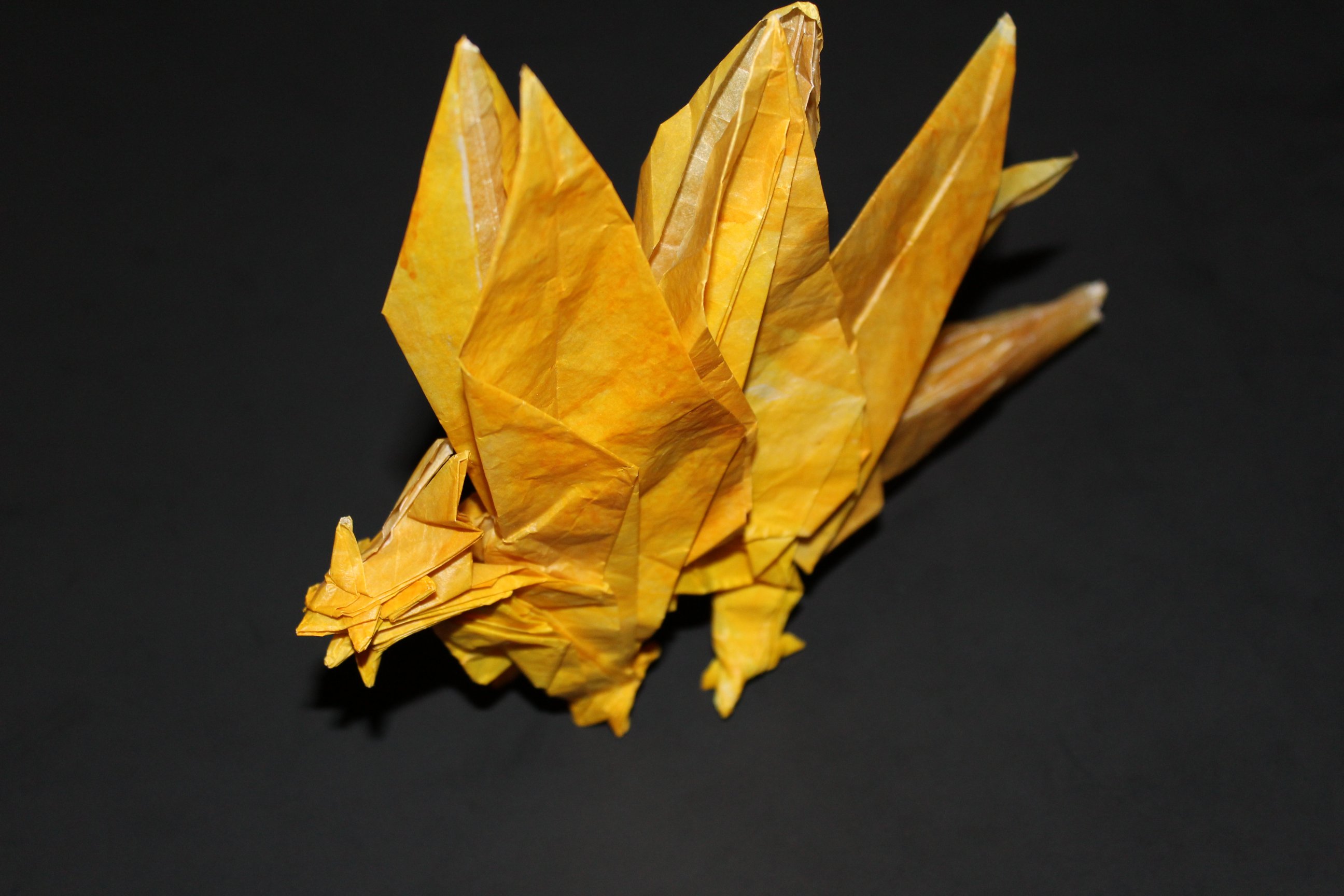
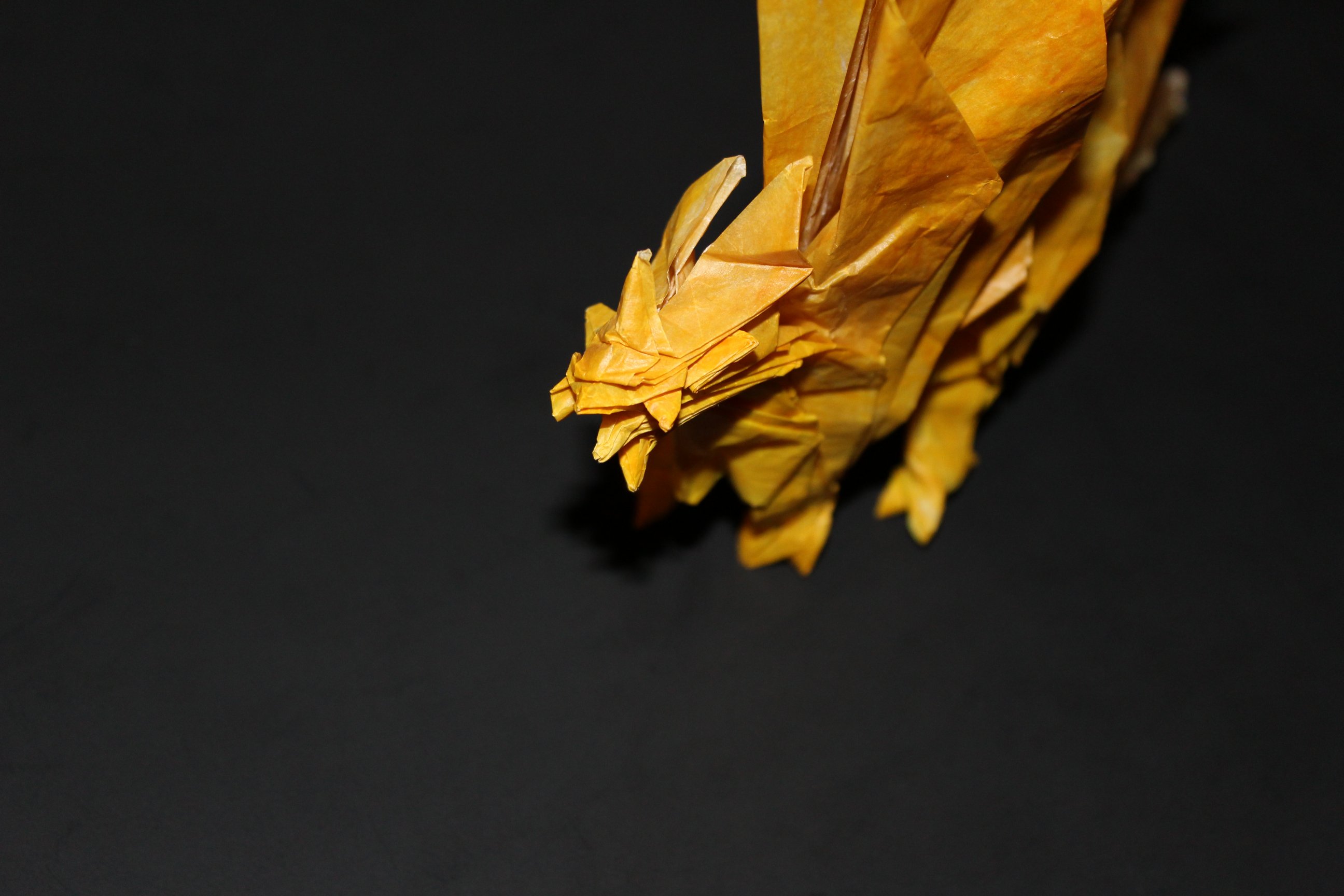
While Kamiya’s looks like the dragon it’s supposed to, mine looks more like a dragon-bird. I got kind of hung up on there only being two legs, I guess. Still, I think a dragon-raven looks pretty nice.

KAMIYA - BAHAMUT ZERO (2)

I accidentally changed Bahamut ZERO as well. As I said before, his Bahamuts have a kind of similar pattern to his Ancient Dragon. Due to that, I ended up folding the ZERO model like a dragon initially and just liked it so much I kept it that way. He’s also got some kind of insect-like mandibles or maybe side teeth. I can’t tell if that’s in the original model too; it’s so shiny.

KAMIYA - BAHAMUT ZERO (3) KAMIYA - BAHAMUT ZERO (4)

I hope to stumble through some more Crease Pattern Challenges, but some are quite difficult. So, we’ll see.

Kappa かっぱ

Origami, Original Designs

WKO_001 - KAPPA (107)

This is a design I came up with (probably my first one), but, before all that, what is a kappa?

A kappa (pronounced like pappa, Frank Zappa, or rapper; more so if you’re speaking Japanese) is a mythical water monster from Japan. It’s a lot like a turtle, but it’s bipedal (usually) and has a dish-like dent on top of its head that holds magic water which gives it power. It kills and eats swimming people by coming up under them and disemboweling them. It also likes to eat cucumbers. Supposedly, they are polite enough that they will bow to you if you bow to them first, even though they then spill their magic water and become weak and manageable. For extra info and pictures:

Kappa on Wikipedia
Kappa on Japanese Buddhist Statuary

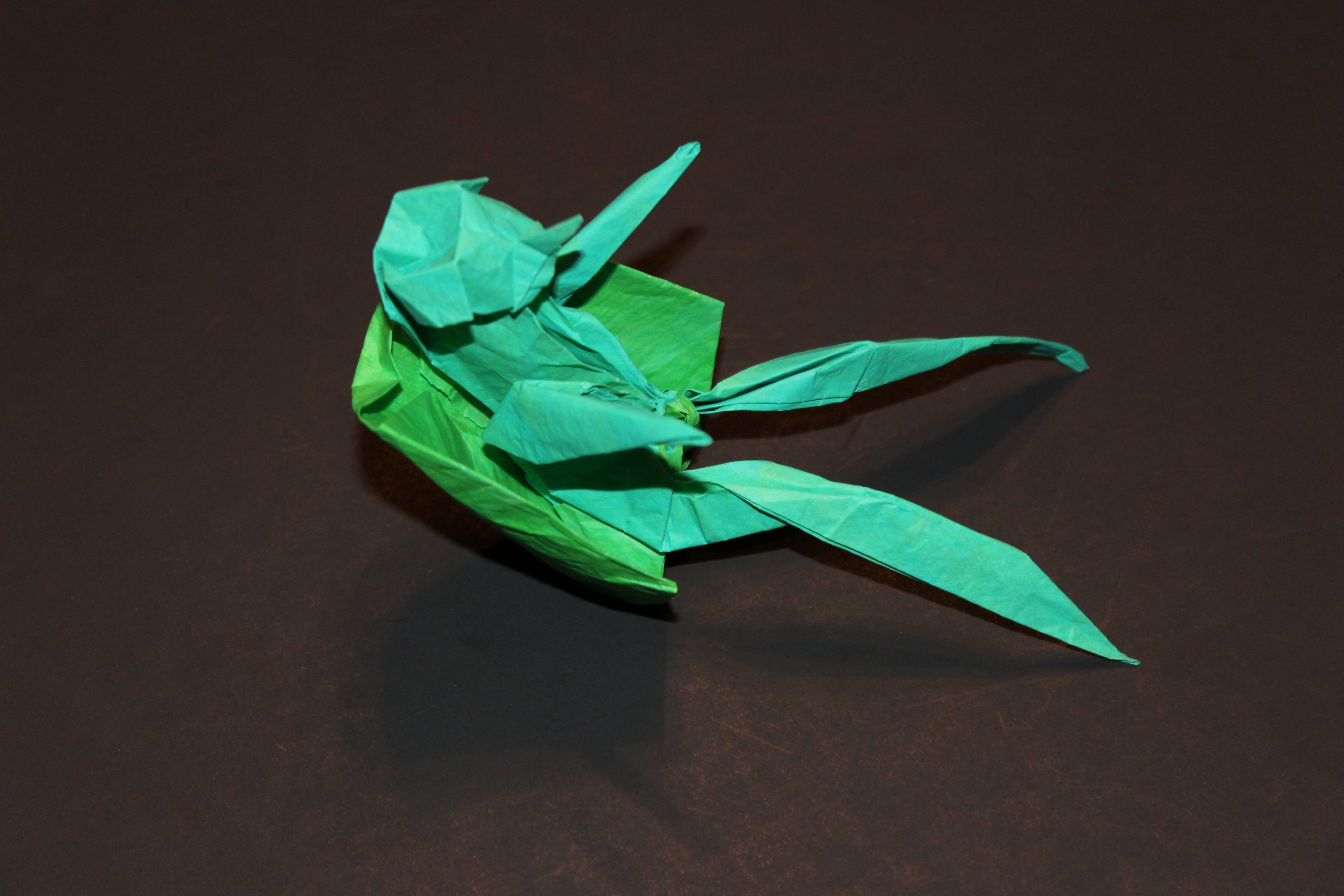
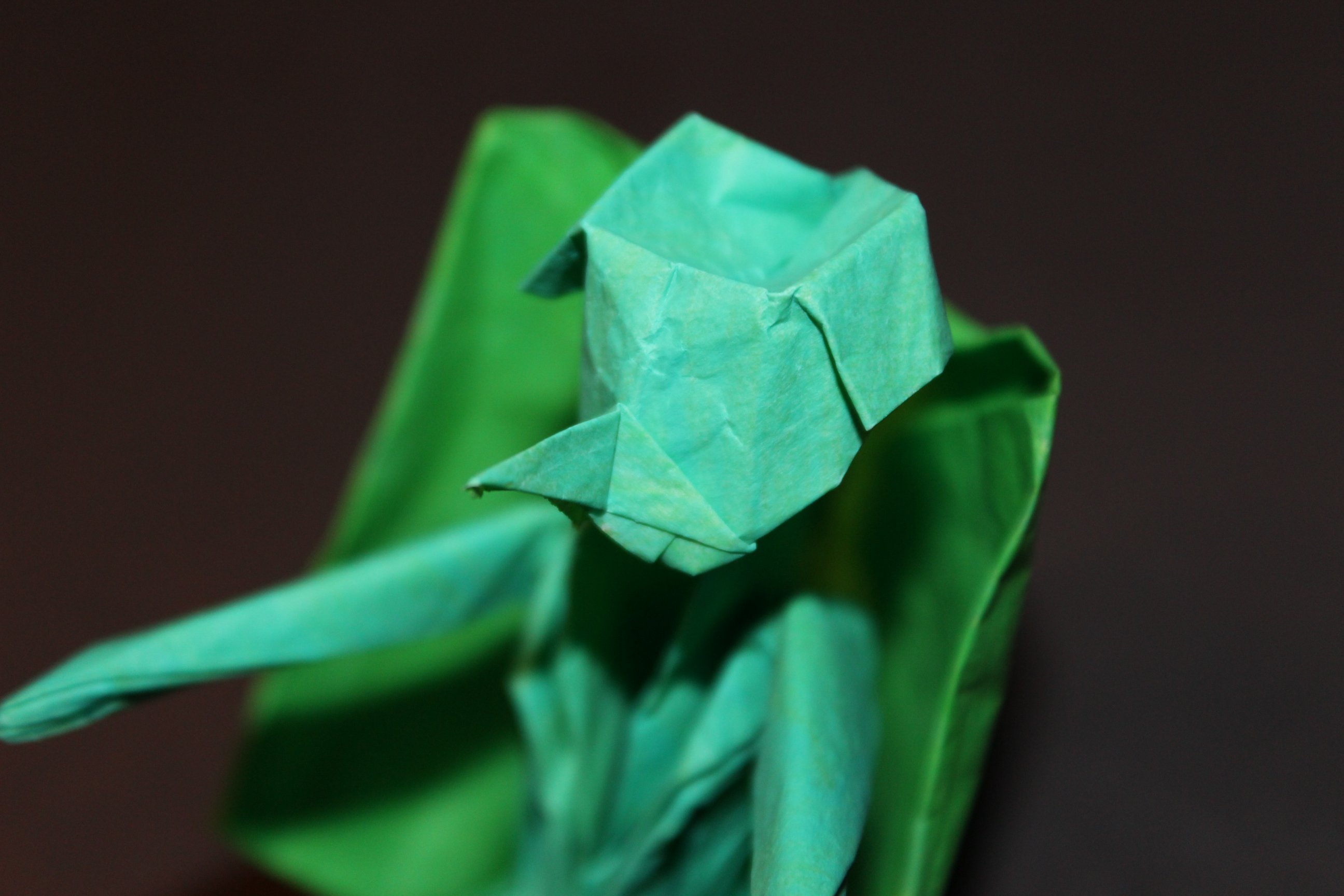
My origami kappa is pretty simple, but I’m quite proud of the color change. Paper that is different colors on each side will make the kappa one color and its shell the other color.

WKO_001 - KAPPA (108) WKO_001 - KAPPA (109)

He also has a turtle beak and an indent on the top of his head for water. You can’t really put water in it though. I mean, you can, but it’s paper, so it’s not a good idea. The dent is more for show.

WKO_001 - KAPPA (111)

I came up with this before I was really designing things. I just sort of fell into it by luck. It probably came about from my folding John Montroll’s Cerberus (from Mythological Creatures and the Chinese Zodiac in Origami) so much. It’s not all that similar, but it has a similar start. I figure I found the kappa while playing around making so many Cereberii.

Scaled Works of Satoshi Kaimya 01-03

Origami, Scaled Works of Satoshi Kamiya

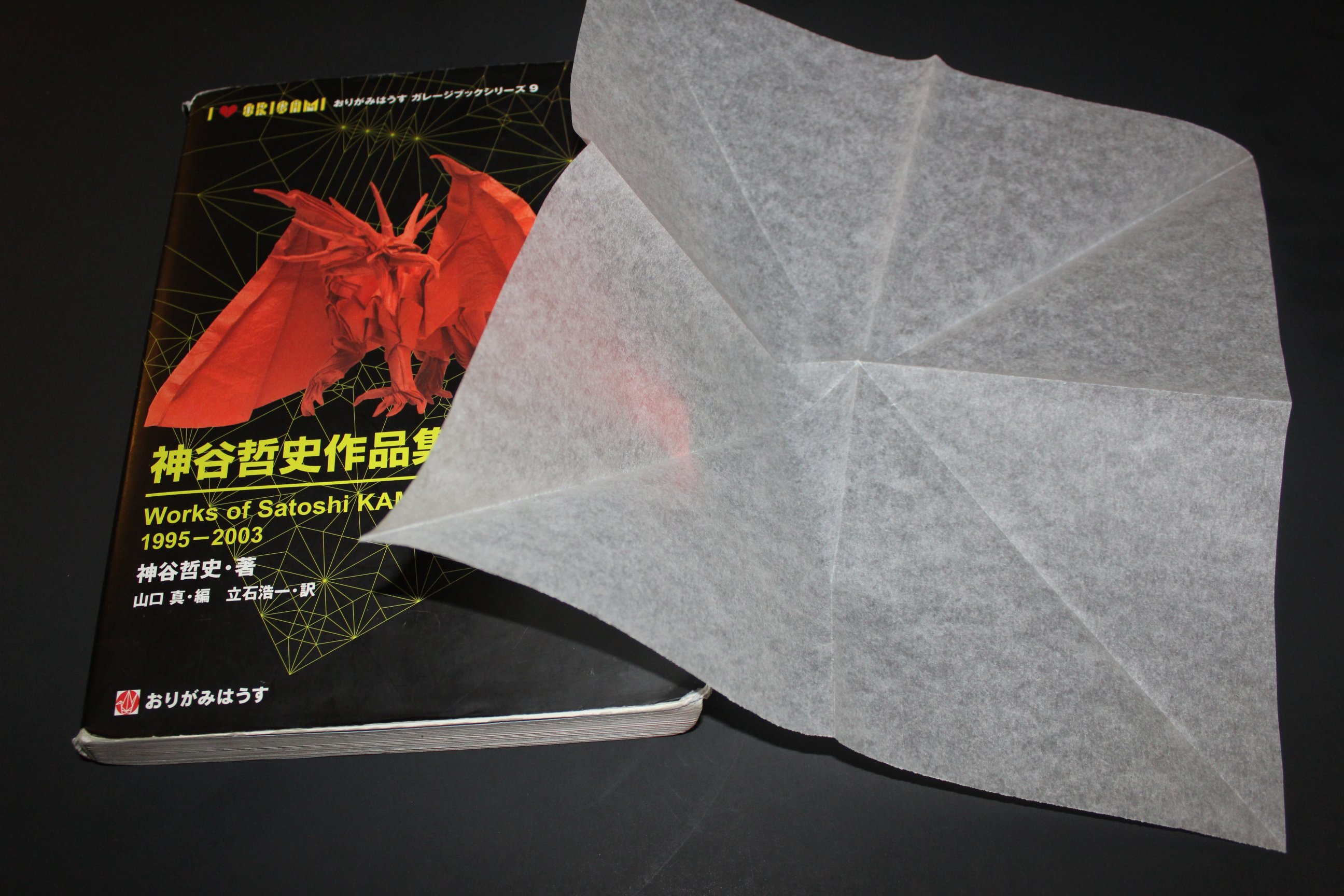
As you can tell, one of my favourite origami artists is Satoshi Kamiya. His first book, Works of Satoshi Kamiya 1995-2003, has lots of great models. I always have trouble visualizing the size difference from an initial square to model, even when it’s listed, so, in addition to folding these models, I’m folding them all with the same initial size of square. Hopefully that’s kind of interesting.

WOSK_100 - BOOK (2)

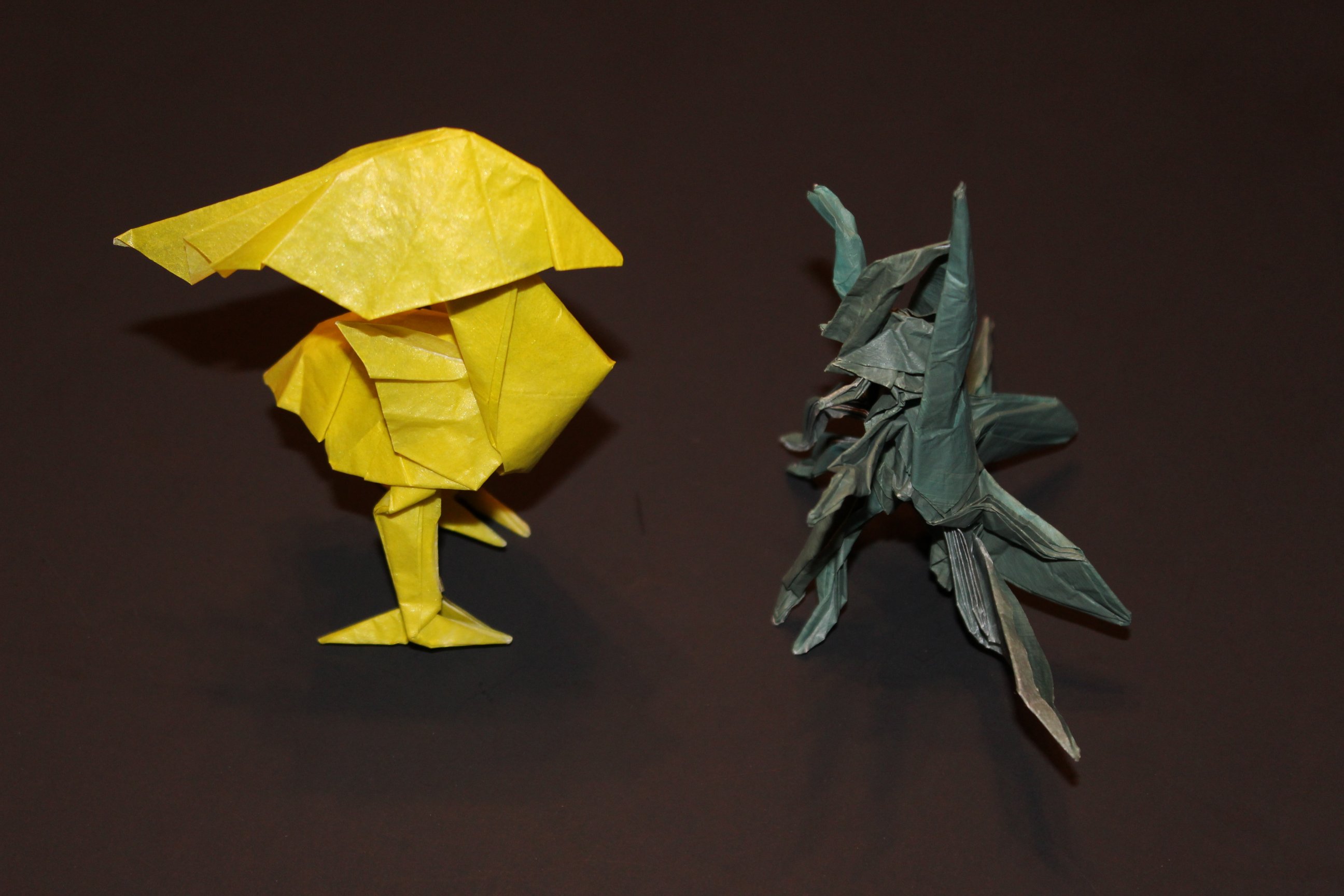
Anyway, the square size is 27.9 cm. I wanted a good way to scale the models between each other, so I just decided to scale them against model #12 in the book, “The Yellow Bird”, who stands, from the bottom of the feet to the top of the head, at about 10 cm. These first models are typically a bit easier than the later ones, so here are 3 to start off with.

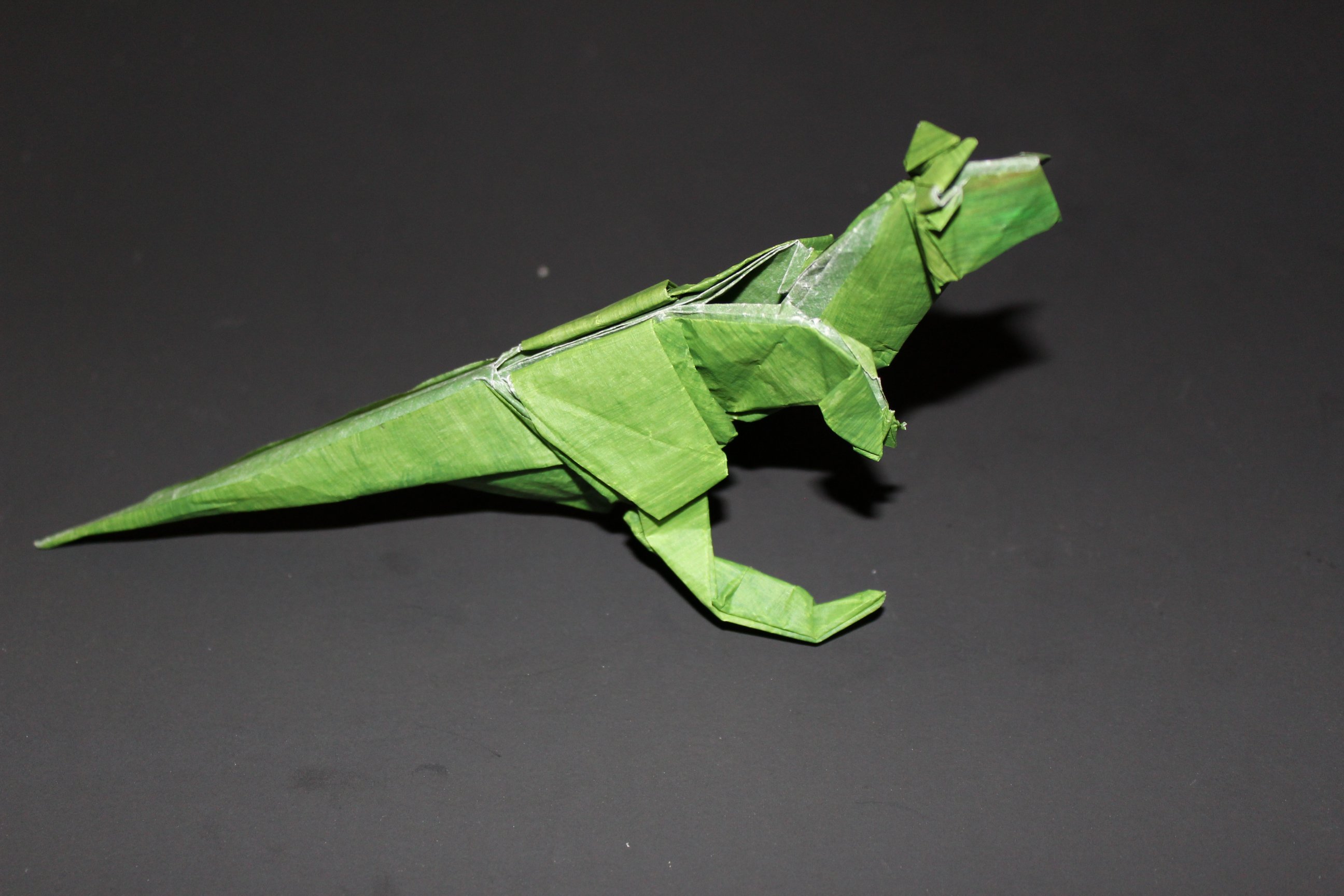
WOSK_101 - CARNOTAURUS (1)WOSK_101 - CARNOTAURUS (4)

The first is a Carnotaurus. He has a cute face. He also comes down enough in size that he makes the bird look gigantic.
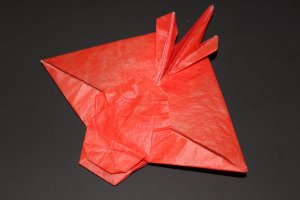
WOSK_102 - EAGLE RAY (1) WOSK_102 - EAGLE RAY (3)

While fairly simple, the Eagle Ray has a very eloquent design, with the underside (picture without bird) showing the mouth and… other ray stuff, as opposed to the sleek top side of the body (shown with bird). This time, the ray dwarfs the bird.

WOSK_103 - SPLASH (1) WOSK_103 - SPLASH (3)

Splash!, the third model, is a bit different than all the others, as it includes part of a landscape. It also captures an inherently more active scene, with a bird landing in water.

There are 19 total models in the book. I’ll keep posting them out about 2 at a time till it’s finished out.

Ryuuzin 龍神

Miscellaneous, Origami

Satoshi Kamiya has some of the best origami in the world, and his Ryuuzin (Dragon God) is one of the most well know. For the Ryuuzin and several other projects, he has version numbers for each of his major improvements to the model. The following are my attempts at folding some of the released crease patterns.

New_KAMIYA - RYUZIN 1-2 (3) New_KAMIYA - RYUZIN 1-2 (2)

Dragon of Emperor

I’m not sure if this really counts as one, but the Dragon of Emperor has a very similar head to the Ryuuzin on his website. Since all the other Ryuuzin are versions 2 or above, I always assumed this was either a prototype or version 1. There used to be a random crease pattern section on Kamiya’s website (it might still be there, just not in the same place), and this was one of those crease patterns.

New_KAMIYA - RYUZIN 2-1 (2) New_KAMIYA - RYUZIN 2-1 (9)

Ryu Jin 2.1

The 2.1 Ryuuzin shows what makes this model special. The entire body of the model is covered in scales. Both the scaled skin and length are achieved by an ingenious design. This can be seen on the crease pattern at the bottom of the above link. The top right corner is the head and the bottom right corner is the tail. The scales run across the top and bottom edges, and the middle of the model is collapsed. This means the top and bottom edges on the left side of the model meet in the middle and allow a much longer dragon.

I had though I had folded a 3.1, but now I can’t even find a crease pattern for it. If I had folded one, I’ve probably given it away by now. You can have a look at Satoshi Kamiya’s original here: Ryu Jin 3.1
New_KAMIYA - RYUZIN 3-5 (1) New_KAMIYA - RYUZIN 3-5 (6)

Ryu Zin 3.5

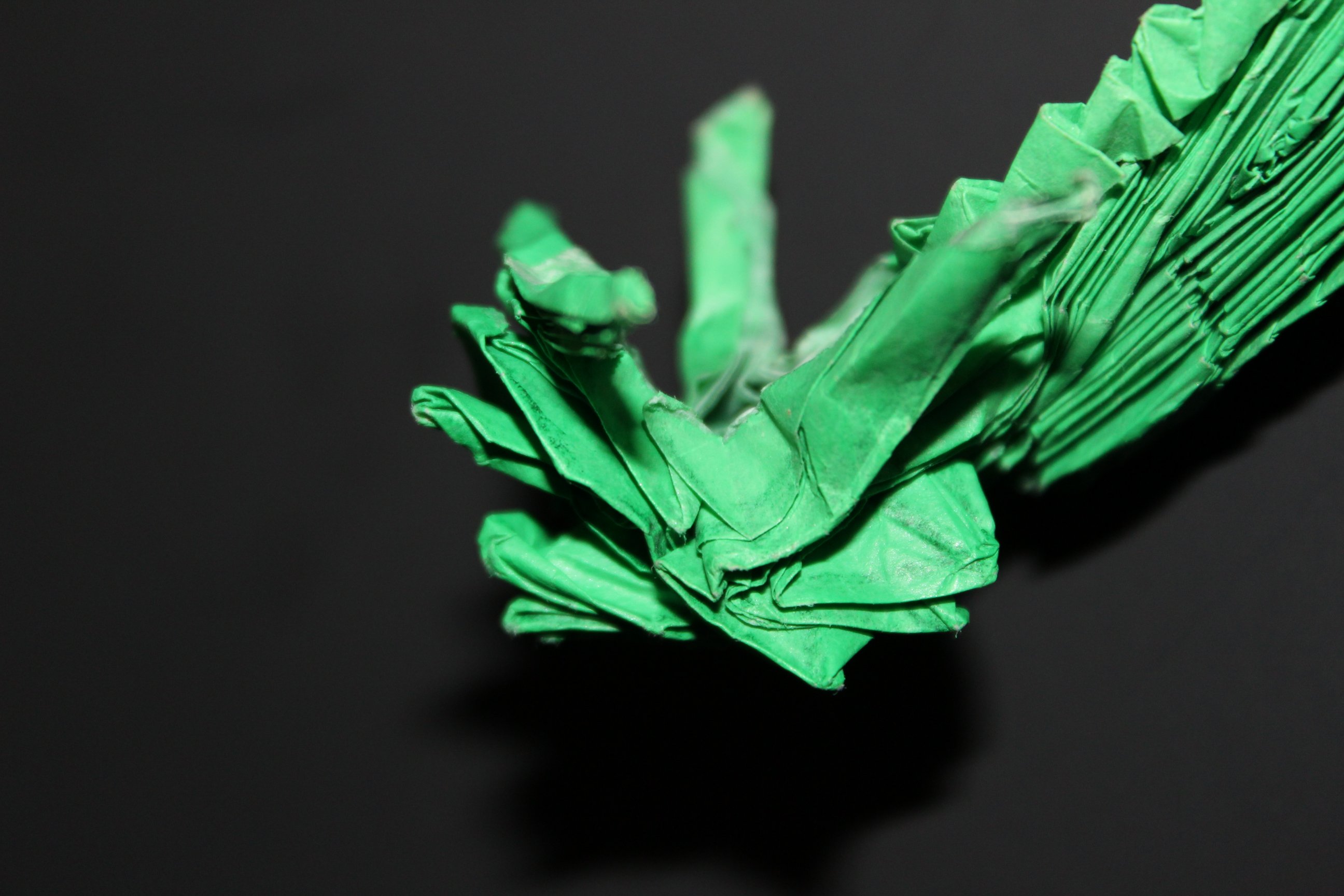
The most recent version is 3.5, and its crease pattern wasn’t released until Kamiya’s Challenge book in 2010 (not counting exhibitions). It’s quite detailed (the crease pattern had to be put on the inside of the book jacket), and the book has some tips on folding portions of the dragon, such as the scales. This model took me quite a while, and I didn’t even articulate all of the scales.

Book Links:
OrigamiHouse (Japanese)
Origami Shop (French/English/Spanish/German)

For all of these models, the most complex part is probably the head. The body is more daunting than difficult, so you just have to be patient (or very stubborn).

New_KAMIYA - RYUZIN 3-5 (4) New_KAMIYA - RYUZIN 3-5 (8)