Crease Pattern Challenge 011

Crease Pattern Challenge, Origami

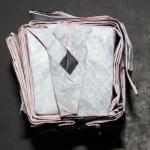
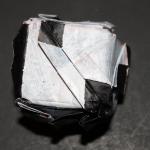
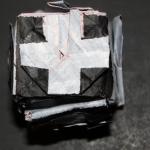
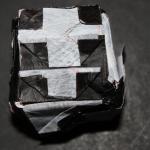
Challenge 11 is a Dice by Masashi Tanaka. It’s a very interesting model, with each face marked from 1 to 6.

OTMCP_011 - DICE - TANAKA (2) OTMCP_011 - DICE - TANAKA (3)

OTMCP_011 - DICE - TANAKA (9) OTMCP_011 - DICE - TANAKA (4) OTMCP_011 - DICE - TANAKA (5)

OTMCP_011 - DICE - TANAKA (7) OTMCP_011 - DICE - TANAKA (6) OTMCP_011 - DICE - TANAKA (8)

I used too thick of paper and kind of messed up the #1 face’s square. I didn’t put as much effort into it as some of the other models because, while I like the design, I’m just not that interested in owning the model. It’s a little hard to say. I like having dragons and animals and other things lying around in origami, but I just don’t care to have a dice. Once I figured out the crease pattern for this one, I kind of lost interest in finishing it.

This model does make me think of a couple of other interesting things. A few months back, a friend of mine brought up “The Monty Hall” problem after seeing a TV show it was in. Monty Hall hosted TV game shows in (mainly) the 1960’s and 1970’s. The most famous one he hosted was “Let’s Make a Deal”, in which he would choose a ridiculously dressed audience member, give them something, then try to “make a deal” with them for a mystery prize that may be better or worse than what they started with. Worthless prizes were called “zonks”.

The Monty Hall problem has a player buy one of three curtains or doors, with one having a prize behind it and the other two having zonks. I think the TV show considering this had a car and two goats, so we’ll use those. The problem is: You choose one of the three curtains; Monty Hall reveals one curtain has a goat, and you now have the choice to keep your initial curtain or switch to the remaining one. Do either of these choices have better odds of having a car?

This may be less intuitive than it seems. We’ll label the curtains A, B, and C. Also, for this, we’re going to say the car is behind curtain A. We could pick any curtain to put the car behind; it would only change the labels, not the probabilities.

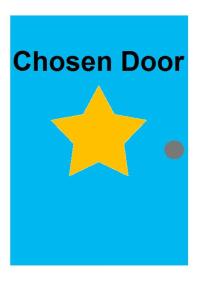
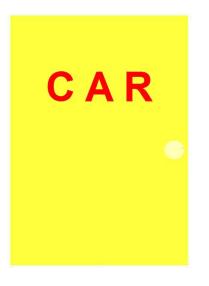
car A - Copygoat Bgoat C

So, I think this is how it goes. You have your probability of picking any curtain at an even 1/3rd for each door. We’ll represent these as the door labels.

A: You choose door A. P(A) = 1/3
B: You choose door B. P(B) = 1/3
C: You choose door C. P(C) = 1/3

The final probability of your choice between initial and remaining curtains is the product of your choice’s probability and the probability of what Monty Hall does.

X: Monty Hall opens door A.
Y: Monty Hall opens door B.
Z: Monty Hall opens door C.

Each of his probabilities is conditional: what does he do given your choice of door? Conditional probabilities are shown as P(scenario|event), probability of a scenario given an event. Since the car is behind door A, the probability of Monty Hall opening curtain A, scenario X, is always 0, regardless of your choice (P(X|any choice)=0). This gives us two options if we’ve chosen correctly and one for each wrong guess:

If we’ve chosen door A, Monty Hall might open either door with equal probability:

P(Y|A)=1/2;  P(Z|A)=1/2
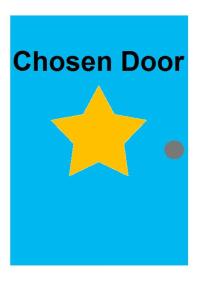
chosen doorgoat MH1goat MH2

If we’ve chosen wrong, Monty Hall will always open the other wrong door:

P(Z|B)=1
carchosen doorgoat MH3

P(Y|C)=1
cargoat MH4chosen door

The final probabilities are the products of your and Monty Hall’s choices:

The probability that you’ve chosen correctly gives one of two scenarios:
P(A)P(Y|A)=(1/3)(1/2)=1/6
P(A)P(Z|A)=(1/3)(1/2)=1/6

Therefore, the probability that your initial guess is correct is the sum of these (i.e. you’ve hit one of these two scenarios):
P(initially correct) = (1/6)+(1/6) = 1/3.

The probability of the incorrect scenarios and total probability of the initial guess being wrong is:
P(B)P(Z|B)=(1/3)(1)=1/3
P(C)P(Y|C)=(1/3)(1)=1/3
P(initially incorrect) = (1/3)+(1/3) = 2/3

So, if you switch from your initial guess, you actually have a 2/3rds chance of getting a car, as opposed to a 1/3rd chance if you stick with it.

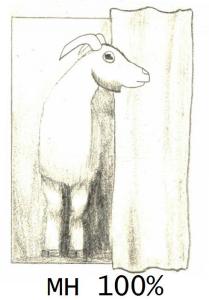
Of course, there is a more intuitive way of thinking of this problem (I just kind of wanted to draw a goat). That’s that your initial guess has only 1/3rd chance of being right and 2/3rds chance to be wrong. When one of the three is eliminated, there is 100% chance the eliminated door is a wrong door. If you had a larger chance of initially being wrong, switching can only improve your odds.

The other thing I thought of has more to do with the crease pattern. This origami dice is not weighted evenly, so I started wondering about probabilities in weighted dice. Online, most info is about distribution functions for sums of a loaded dice and an evenly weighted one, but I was wondering just about the probabilities for each side. They used an assumed probability of the side opposing the weight being increased with all the other sides being the same (say the increased face occurs 1 in 2, while the others all have a 1 in 10 chance). But would that really be true? The four faces on the sides should all have the same chance, but what about the opposing side, with the weight?
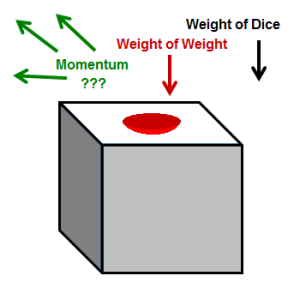
dice1

Would the weight with the momentum cause it to topple to one of the sides more often, or would the increased weight moving from an unweighted side to the weighted end cancel the force, causing the opposing face to also be more likely than the sides? How much does the direction of force matter? Would all these factors cancel, giving the other 5 faces all the same probability? I figure I’d have to get a weighted dice and throw it 1000 or so times to actually figure this out, but I’m probably not going to do that. Neat to think about though.
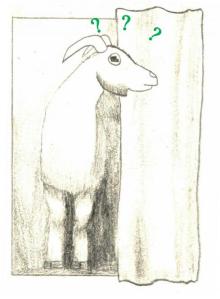
goat mystery

Scaled Works of Satoshi Kamiya 2 01-03

Origami, Scaled Works of Satoshi Kamiya

I mentioned in the last one of these that I got the book Works of Satoshi Kamiya 2, and I would continue these scaling entries (27.9 cm square paper) with those models. Rather than having a new comparison model, I’ll still show them next to The Yellow Bird for scale. I figure that’ll be easier to compare models between books, and I just like that model a lot.

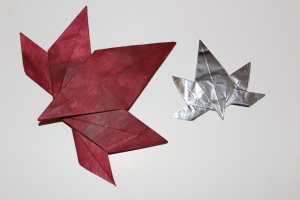
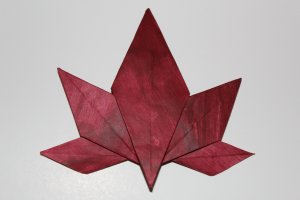
WOSK_201 - JAPANESE MAPLE LEAF (1) WOSK_201 - JAPANESE MAPLE LEAF (2) WOSK_201 - JAPANESE MAPLE LEAF (3) WOSK_201 - JAPANESE MAPLE LEAF (5)

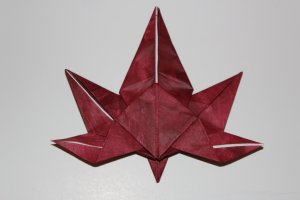
The book’s first model is a Japanese Maple Leaf. I made it out of a thicker paper (which I tried on several other models, but it wasn’t always a great idea) and out of shiny silver paper, for some reason. The red one is the scaled one. It’s a simple model but elegant on both sides

.WOSK_202 - GOLDEN RETRIEVER (1) WOSK_202 - GOLDEN RETRIEVER (2) WOSK_202 - GOLDEN RETRIEVER (3) WOSK_202 - GOLDEN RETRIEVER (4) WOSK_202 - GOLDEN RETRIEVER (6)

Second is his Golden Retriever. He’s nice, but what to say about him? I mean, I like the dogs, but Golden Retrievers don’t really have a standout feature, like a smooshed face or an antenna. He kind of reminds me of the later lion model (I’m not sure why, other than the colour), so, maybe he’s lionhearted?

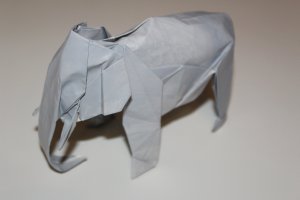
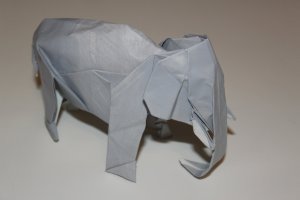
WOSK_203 - ASIATIC ELEPHANT (1) WOSK_203 - ASIATIC ELEPHANT (2) WOSK_203 - ASIATIC ELEPHANT (3) WOSK_203 - ASIATIC ELEPHANT (4)

The third one (and last today) is an Asiatic Elephant. The trunk is supposed to curve into implied eyes, but I didn’t do that too well. The reverse-coloured tusks make me think it has a happy feel to the face, but maybe it’s my imagination.


Puchi Hero

Origami, Original Designs

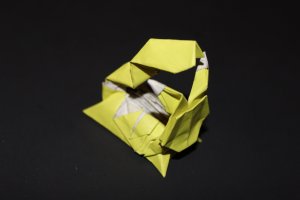
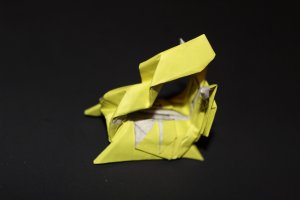
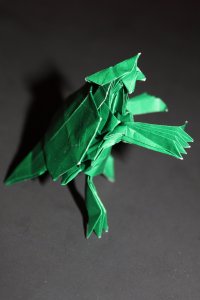
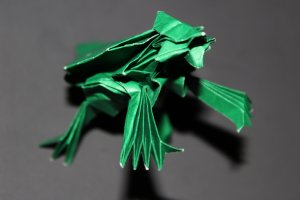
As I said, I like Dragon Quest monsters and sometimes try to make them in origami. Some of my favourite monsters are a set of leaf people introduced in Dragon Quest 7. When they remade Dragon Quest 4, 5, and 6, I got a nice surprise, as they were added to DQ5 and its monster recruitment mechanic. You could have an entire team of just leaf people!

There are 4 different monsters, with far too many names. This is because of two reasons. First, there are two pallet swaps: puchi are green and yellow and koro are blue and grey/blue. That makes 8. Since their names were puns, the names were changed when translated to English (16). Then the names were re-translated for the DQ5 remake (24). Additionally, the Puchi Hero was used for a boss (no pallet swap, but different name) in DQ7, for another 2 names. They’re also bringing DQ7’s and DQ8’s 3DS remakes to English, and, if the boss’s name is re-translated, that will probably cause it to end up having 27 total names for 8 different monsters.

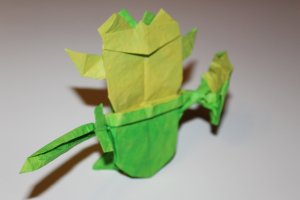
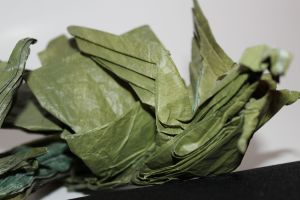
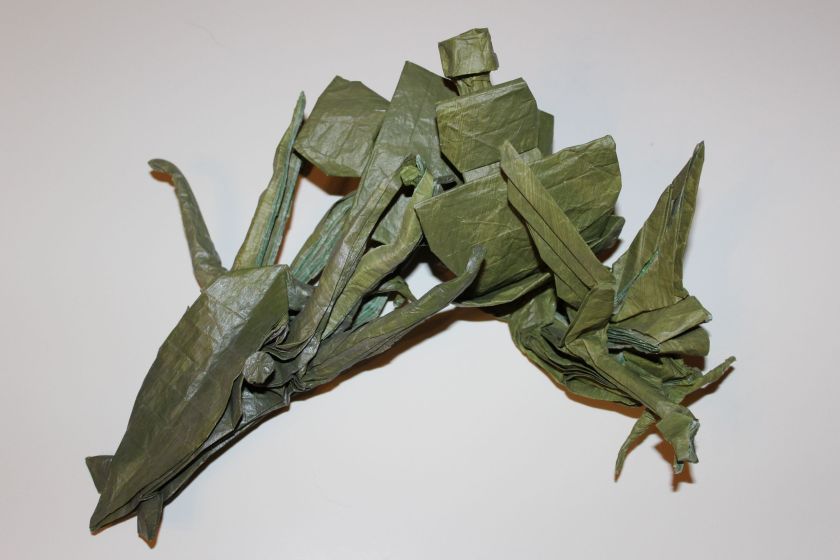
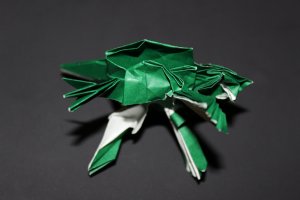
The first leaf dude I made was the プチヒーロー(Puchi Hero)/FooHero/Conkuistador. The DQ7 boss was さんぞくのカシラ (Sanzoku no Kashira: Bandit’s Leader)/BanditWig. Here he is.

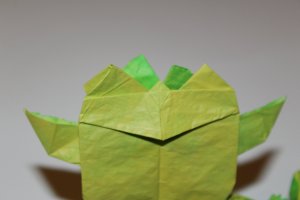
WKO_003 - PUCHI HERO (101) WKO_003 - PUCHI HERO (102) WKO_003 - PUCHI HERO (105)

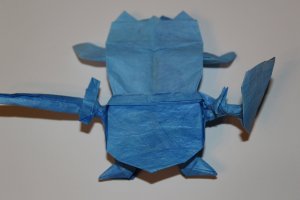
I tried to include as many prominent features as possible. He even has tiny fingers holding the sword and shield.

WKO_003 - PUCHI HERO (109) WKO_003 - PUCHI HERO (110) WKO_003 - PUCHI HERO (111)

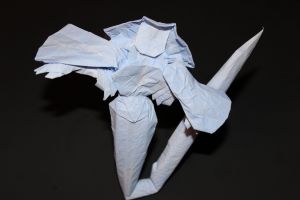
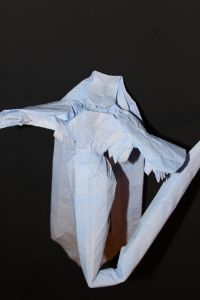
The blue pallet swap is the コロヒーロー(Koro Hero)/PodHero/Pip Fighter. I don’t know what they were thinking in the DQ5 translation here, because one of the other ones is “Fighter” in Japanese (and not as a Japanese word: phonetic English ファイター Fa-i-ta-a).

WKO_003 - PUCHI HERO (113) WKO_003 - PUCHI HERO (115)

Naturally, this one reminds me of the Journey song of the same name, “Puchi Hero”. I was going to talk more about the names, but this is long enough. So maybe next Puchi.
WKO_003 - PUCHI HERO (114)


Crease Pattern Challenge 010

Crease Pattern Challenge, Origami

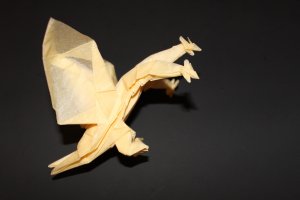
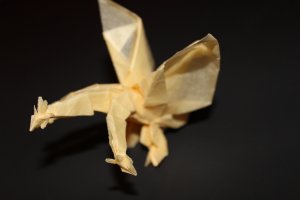
Challenge 10 is Keiichi Kozasa’s Winged Lion. I’m a big fan of Kozasa for a particular reason. He made the best model I’ve ever seen of my favorite Godzilla monster, Angiras (I’m using the Japanese spelling, as there are differing translations). If anyone knows where I can get a crease pattern or diagrams for his Angiras, please let me know.

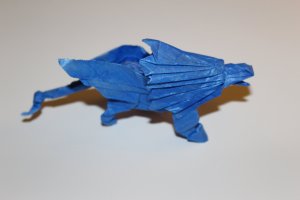
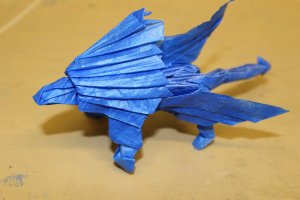
Back to the lion; I wasn’t partial to the angry face so much. So, I changed that a bit and also ended up making his mane a bit different. I think it looks futuristic, maybe like a robot lion.
OTMCP_010 - WINGED LION - KOZASA (2) OTMCP_010 - WINGED LION - KOZASA (3) OTMCP_010 - WINGED LION - KOZASA (5)

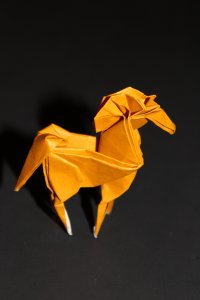
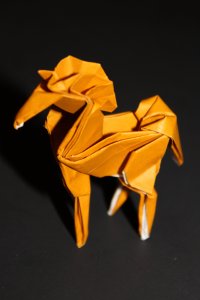
Here are some more good Kozasa models, which I think are all from out of print Tanteidan Convention books. First, his Horse is fabulous, as you can see from its hair.

KOZASA - HORSE (101) KOZASA - HORSE (102)

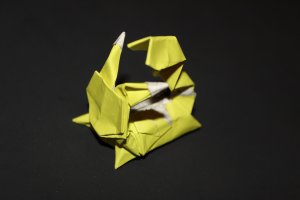
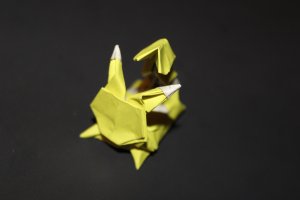
KOZASA - PIKACHU (101) KOZASA - PIKACHU (104) KOZASA - PIKACHU (102) KOZASA - PIKACHU (103)

His Pikachu is pretty nice too. I only had yellow and white paper, so I couldn’t really do him justice.

He also has other Kaiju. I probably should have used bigger paper for his Gamera. I had to leave the shell a little larger than the original because of it.

KOZASA - GAMERA (101) KOZASA - GAMERA (102) KOZASA - GAMERA (103) KOZASA - GAMERA (104)

His other Kaiju (that I’ve got) is King Gidora! In his first appearance, the three-headed golden dragon required Godzilla, Radon, and Mothra to team up to beat him. The paper version is a very good likeness.

KOZASA - GIDRA (105) KOZASA - GIDRA (106) KOZASA - GIDRA (104) KOZASA - GIDRA (101)

KOZASA - GIDRA (107) KOZASA - GIDRA (110)  KOZASA - GIDRA (111)

Scaled Works of Satoshi Kamiya 18-19

Origami, Scaled Works of Satoshi Kamiya

These are the last models in the first Works of Satoshi Kamiya books. There is a second book, and I just got it. So, I’ll also do those soon. The scaling is 27.9 cm squares for each model.

WOSK_118 - ANCIENT DRAGON (1) WOSK_118 - ANCIENT DRAGON (3)

The first is the Ancient Dragon. This was also Tanteidan Magazine’s first Crease Pattern Challenge, which I already did a post for. I only have one picture of him in that one, maybe in anticipation of this one. I think there’s a difference, but just in internal structure, so you can’t really see it here. However, you can see the eight horns much better in these pictures.

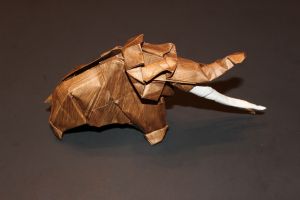
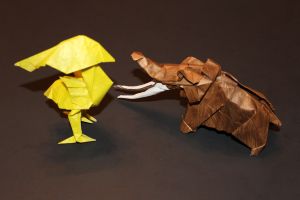
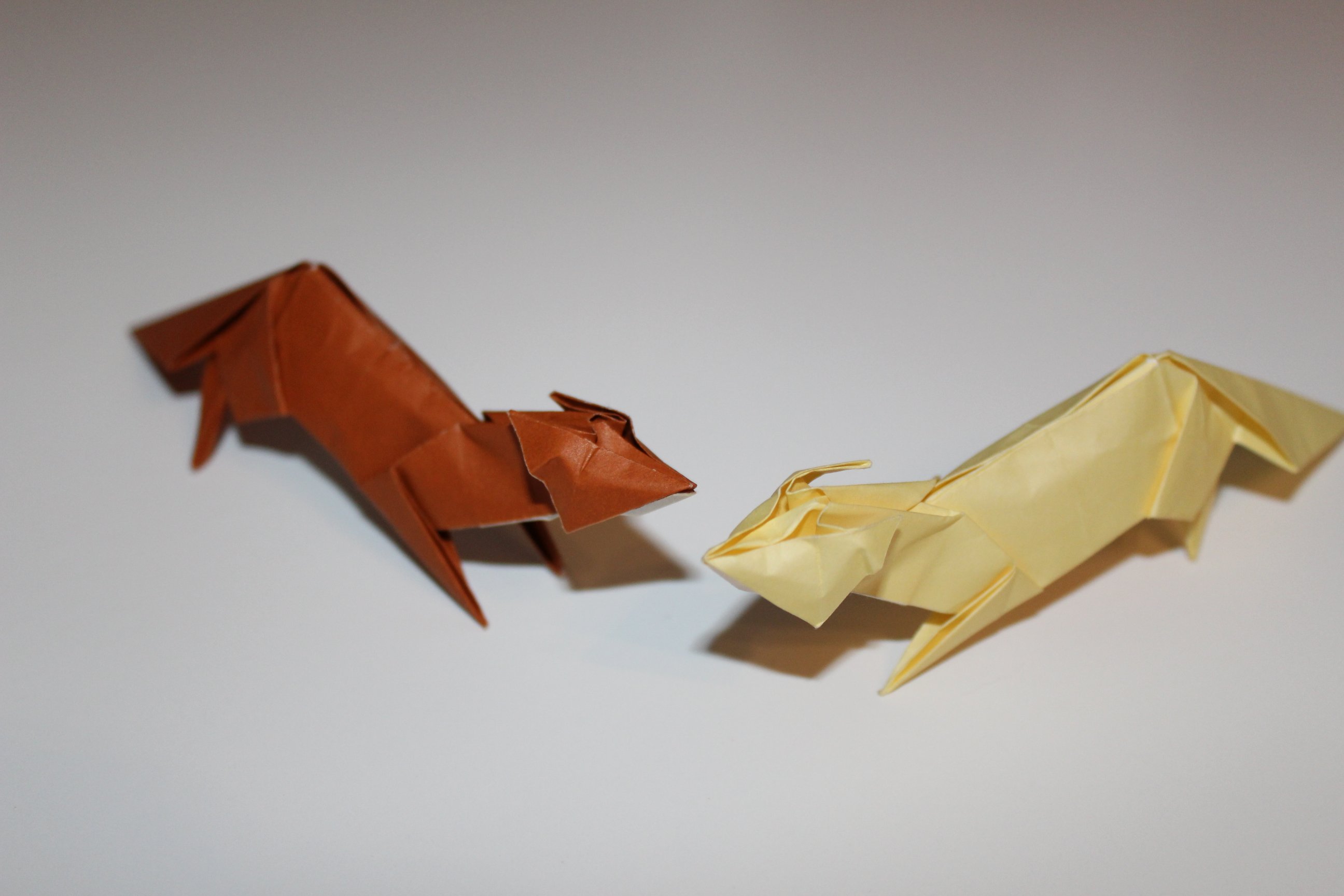
The last model is Mammuthus primigenius, a woolly mammoth. So… I thought I’d have more to say about woolly mammoths. I thought I knew more about them, but I guess I just like them because they’re like fuzzy elephants. I couldn’t remember or find much pop culture of them either, except this, which is fantastic (whole thing).
WOSK_119 - MAMMUTHUS PRIMIGENIUS (5) WOSK_119 - MAMMUTHUS PRIMIGENIUS (3)

This mammoth was done with thicker paper to help keep the shape, show the color change, and give a bit of a fur look. Usually, my detailing isn’t great, but I like how the nose came out.

Montroll’s Dragons and Other Creatures

Miscellaneous, Origami

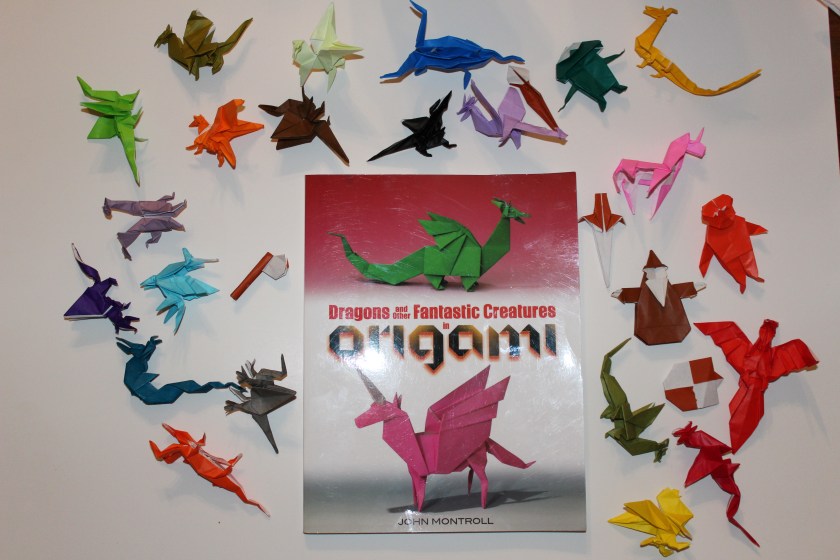
I haven’t posted in a while mainly because I was traveling, but I actually got two origami books there when I was free. The first is Works of Satoshi Kamiya 2, which means I’ll have that to do after the first one. The second one is Dragons and Other Fantastic Creatures in Origami by John Montroll. I did the models in that book in the car ride back home.

MONTROLL - DRAGONS AND ~ BOOK - (102)

John Montroll is one of my favorite artists. He has hundreds of great designs in dozens of books. His animal origami book was one of my first ones, and some of his books I have (that are great) collect models of African animals, North American animals, prehistoric animals, and mythical creatures and the Chinese zodiac. His books tend to be organized by section (with each section sorted by increasing difficulty), and this one has sections of weapons, dragons, humanoids, and creatures.

MONTROLL - DRAGONS AND ~ BOOK - (103) MONTROLL - DRAGONS AND ~ BOOK - (107)

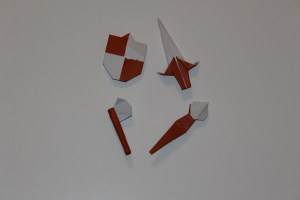
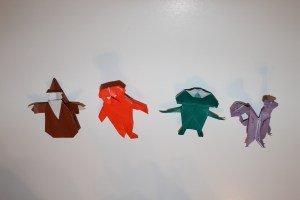
The weapon and humanoid sections only have four models each, and the weapons are much more simple, warm-up models. The two-headed martian on the right has a face on each head (it’s a little hard to see in my pictures, sorry).

MONTROLL - DRAGONS AND ~ BOOK - (104) MONTROLL - DRAGONS AND ~ BOOK - (110)

MONTROLL - DRAGONS AND ~ BOOK - (105) MONTROLL - DRAGONS AND ~ BOOK - (106)

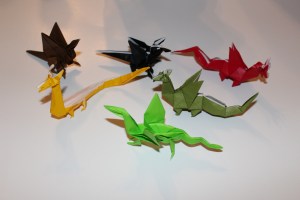
There are 10 different dragons, though some have similar bases. He has 1 to 3 headed dragons, then winged dragons, then eastern and western dragons, and then winged dragons with multiple heads.

MONTROLL - DRAGONS AND ~ BOOK - (108) MONTROLL - DRAGONS AND ~ BOOK - (109)

The creatures section includes a griffin, a unicorn (which I went a little cubic on), a wyvern, a phoenix, and various animals with wings attached. The last model is one of the best; it’s a unicorn with wings (or a pegasus with a horn).

Crease Pattern Challenge 009

Crease Pattern Challenge, Origami

Sometimes, designers choose to fold two related things with one square of paper. For instance, a previous Crease Pattern Challenge was a dude on a horse made out of the same square. Brian Chan made a Kraken (squid type) eating a boat, all with the same sheet. Similarly, Challenge #9 , by Go Kinoshita, is a sperm whale fighting a giant squid, which he titles, “A Sperm Whale vs. A Giant Squid”.

OTMCP_009 - SPERM WHALE VS GIANT SQUID - KINOSHITA (1)OTMCP_009 - SPERM WHALE VS GIANT SQUID - KINOSHITA (4)

First off, I had apparently made one of these and lost it after only taking one picture. That’s the purple and blue one. I wasn’t going to put that one’s picture here, but I think it’s interesting how much differently they came out. I traced the crease pattern on that one, so it should be more accurate. The tentacles and whale’s fins are more like the original, but the whale’s missing some face.

OTMCP_009 - SPERM WHALE VS GIANT SQUID - KINOSHITA (3)OTMCP_009 - SPERM WHALE VS GIANT SQUID - KINOSHITA (5)

OTMCP_009 - SPERM WHALE VS GIANT SQUID - KINOSHITA (6)

Upside down. Also, hey! I can do captions!

The second version has the appropriate amount of whale face and the whale’s open maw that you really can’t see very well. However, it’s missing one set of tentacles and the fins are slightly different. You can also tell that I had a lot of trouble on the whale, so he looks pretty banged up. It looks more like “head on collision” than “vs.” to me.

One of Kinoshita’s other cool designs is a western style Dragon that’s diagrammed in Origami Tanteidan Convention Book 19. As usual, I didn’t use paper big enough to do it justice. He’s a pretty nice dragon, with different coloured wings and feet claws and lots of articulated features. The wings kept angling upward for mine.

CHAN - ATTACK OF THE KRAKEN (101).jpg

Also, since it was mentioned earlier, I did fold Brian Chan’s Attack of the Kraken awhile ago, from the crease pattern on his website. I used bigger paper to make sure I wouldn’t mess up too badly, but that actually made the prow too limp. Then I went off the rails a bit.

CHAN - ATTACK OF THE KRAKEN (102)CHAN - ATTACK OF THE KRAKEN (107)

CHAN - ATTACK OF THE KRAKEN (103)CHAN - ATTACK OF THE KRAKEN (104)

CHAN - ATTACK OF THE KRAKEN (105)CHAN - ATTACK OF THE KRAKEN (106)

Instead of making it a straight up spiky prow, I made it into a figurehead of the Chimera from Greek mythology, with the goat, snake, and lion heads. I don’t know why. Putting an omen of natural disasters, including specifically shipwrecks, on the prow of a ship is probably a bad idea. This ship was just asking for kraken attacks.CHAN - ATTACK OF THE KRAKEN (110).jpg

Lamia and Owl

Origami, Original Designs

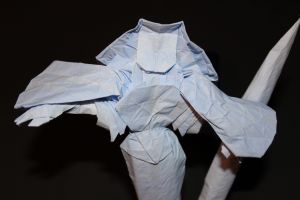
Here are a pair of models I devised (I’m quickly running out of synonyms). The first I planned out and re-fashioned by trial and error, and the second I thought of near the end of playing around with extra paper.

WKO_012 - DEIS (1)WKO_012 - DEIS (5)

I came up with this Lamia trying to make Deis from the Breath of Fire video game series. (By “Lamia”, I just mean generic snake woman, as it’s sort of come to mean in pop culture, not the original mythological character.) If you played a Breath of Fire and are going, “Who?”, she was re-named Bleu in the English versions of the first two games. The series has great characters and character design. Deis is one of my favourite characters, which is lucky, since she’s in so many games.

WKO_012 - DEIS (4)WKO_012 - DEIS (2)WKO_012 - DEIS (6)

This is actually my second design for the character. The first had scales on the lower body, but adding scales causes the model to become shorter (head to tail). That model would actually make a good mermaid. I might post it if I ever go back and fix up the end of the tail. For this version, I was trying for something else (I forget what) when I found a base with the right length and started there.

WKO_013 - OWL (2)WKO_013 - OWL (3)

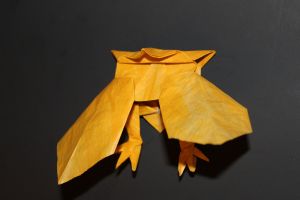
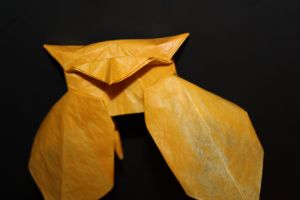
This Owl started as nothing in particular, became a suspension bridge, and finally became an owl when I backed up and looked at it. It’s kind of short but has lots of room for adjustment on the wings. To me, the Suspension Owl looks like something from a video game, so I like that.

WKO_013 - OWL (5)WKO_013 - OWL (8)

Scaled Works of Satoshi Kamiya 16-17

Origami, Scaled Works of Satoshi Kamiya

I’m almost out of models from this book. Too bad. I wonder if I should do another book. All the models in these posts are made from a square that’s 27.9 cm and are shown in a picture with the model “The Yellow Bird” for easy size comparison to each other.

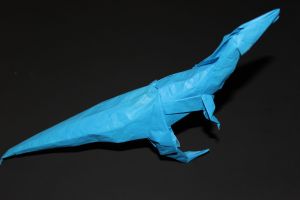
The first model is a Coelophysis, the dinosaur most likely to be crazy or curse you out for stealing its girl.

WOSK_116 - COELOPHYSIS (1) WOSK_116 - COELOPHYSIS (4) WOSK_116 - COELOPHYSIS (2)

My first thought is, “How do I not have more pictures of this one?” He’s pretty sleek though, so I suppose this few covers it. It’s a little hard to get some two legged models to stand on their own, but the Coelophysis can relax on his tail if necessary.

WOSK_117 - WIZARD (1) WOSK_117 - WIZARD (2)

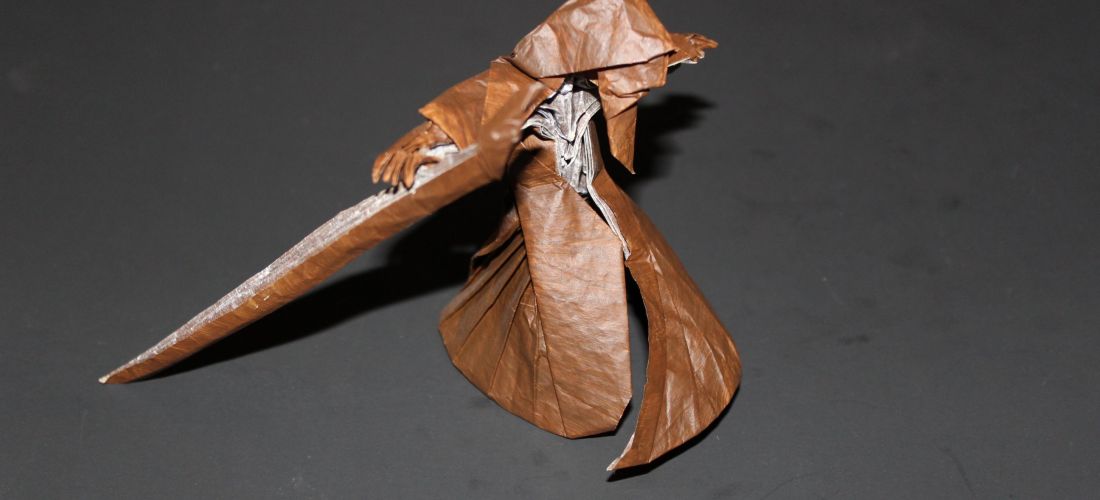
The other model is the Wizard. Besides looking cool, the model has unique asymmetry to make its different aspects. He’s quite Gandalf-ish from the one side but more whirling dervish from the other. Front on, he’s Gandalf to the max. I guess you have to learn to dance to keep sane with all that hobbit singing.

WOSK_117 - WIZARD (3)

“You cannot pass.”

Crease Pattern Challenge 008

Crease Pattern Challenge, Origami

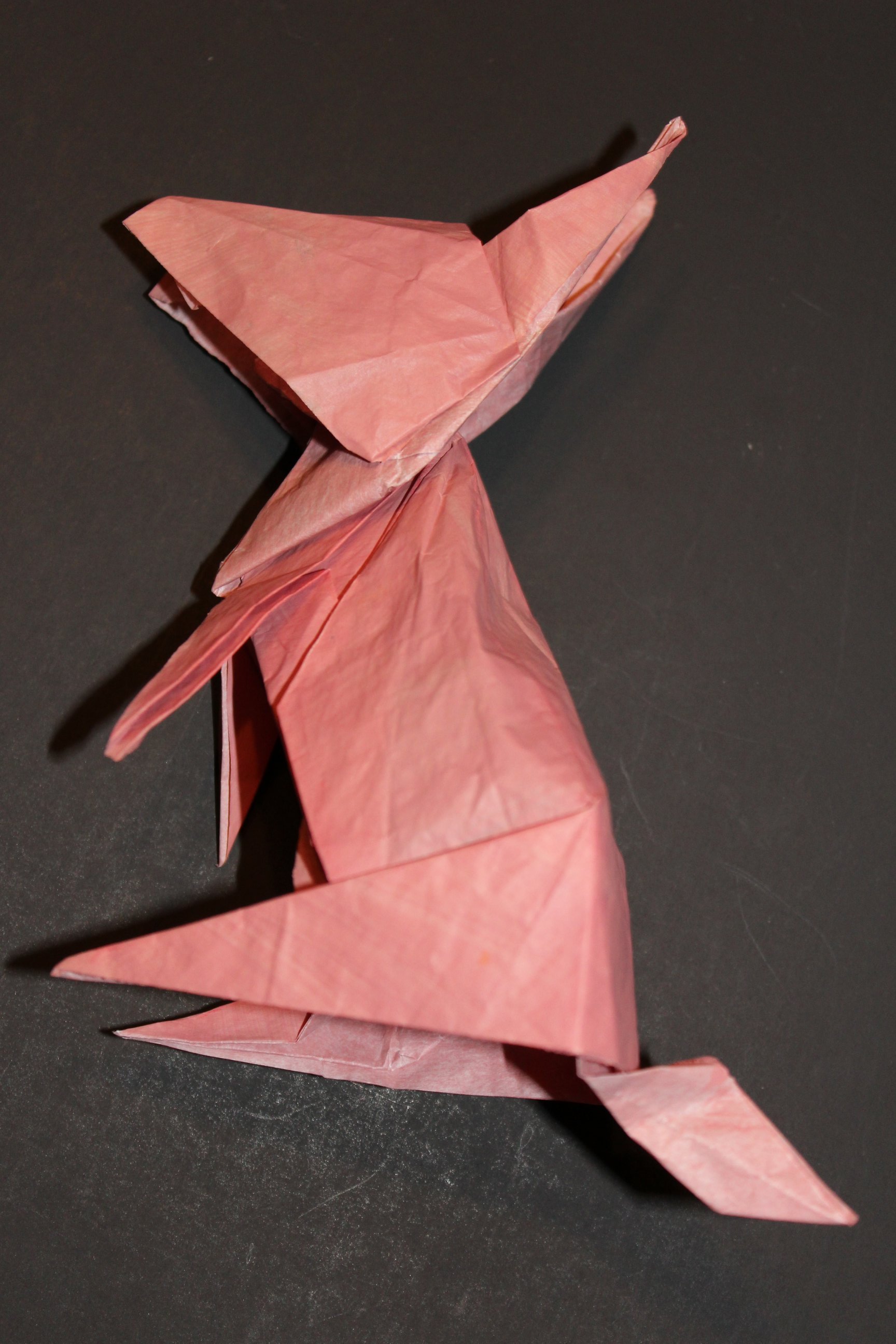
OTMCP_008 - RABBIT - KOMATSU (1) OTMCP_008 - RABBIT - KOMATSU (3)

Hideo Komatsu’s Rabbit is Tanteidan’s 8th Crease Pattern Challenge. It looks pretty simple, but there is a little puzzling out to get it to work. Some of the later Crease Pattern Challenges are clearly easier to fold through the crease pattern than diagrams, but the majority of these earlier ones could go either way. I like this one quite a bit, because it’s a good challenge but not so convoluted that it would be better served by diagramming.

OTMCP_008 - RABBIT - KOMATSU (4) OTMCP_008 - RABBIT - KOMATSU (2) OTMCP_008 - RABBIT - KOMATSU (5)

Like Seiji Nishikawa, Hideo Komatsu has an incredible number of models and an origamihouse book, Works of Hideo Komatsu. The following models are included in that book, as well as in several other publications.

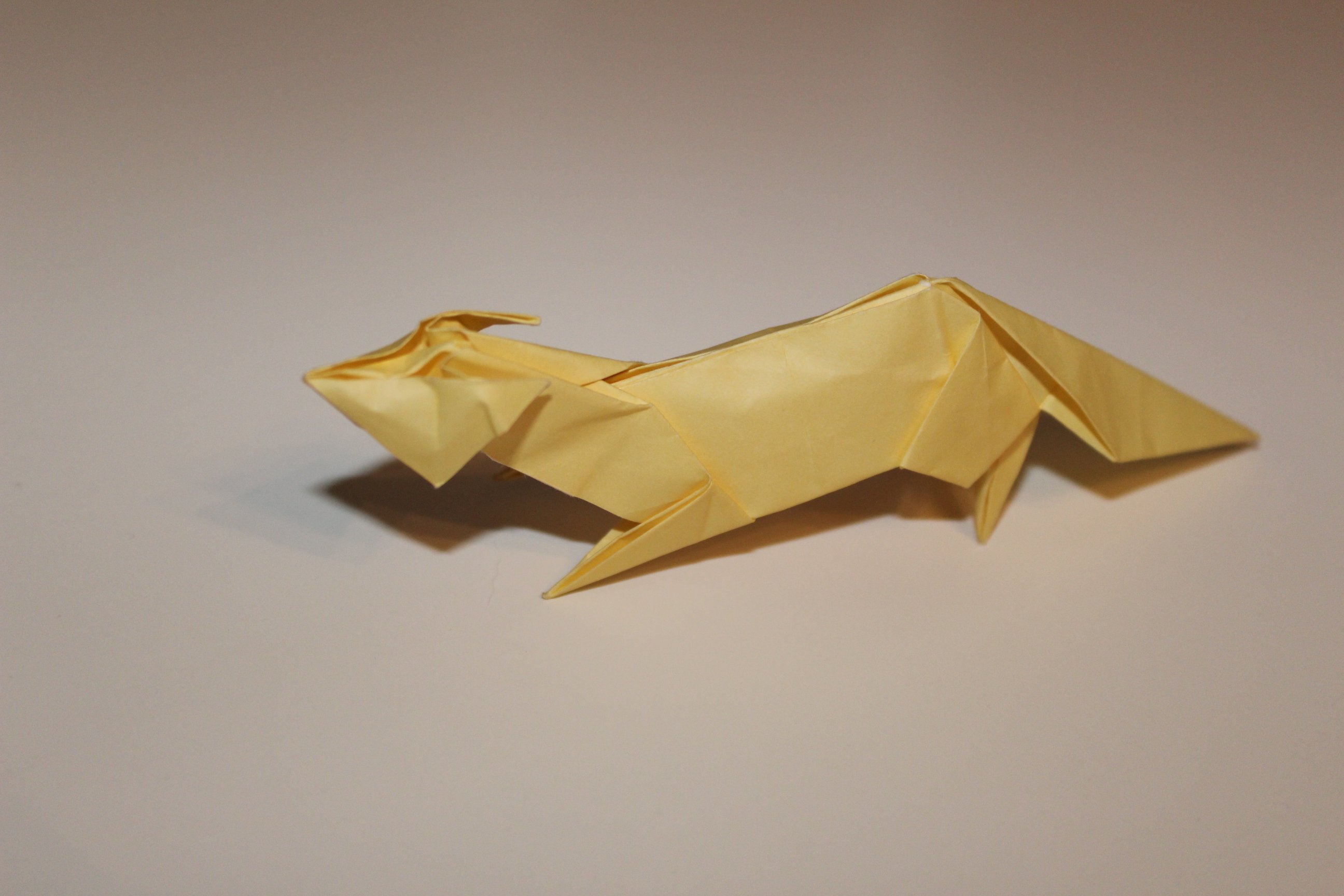
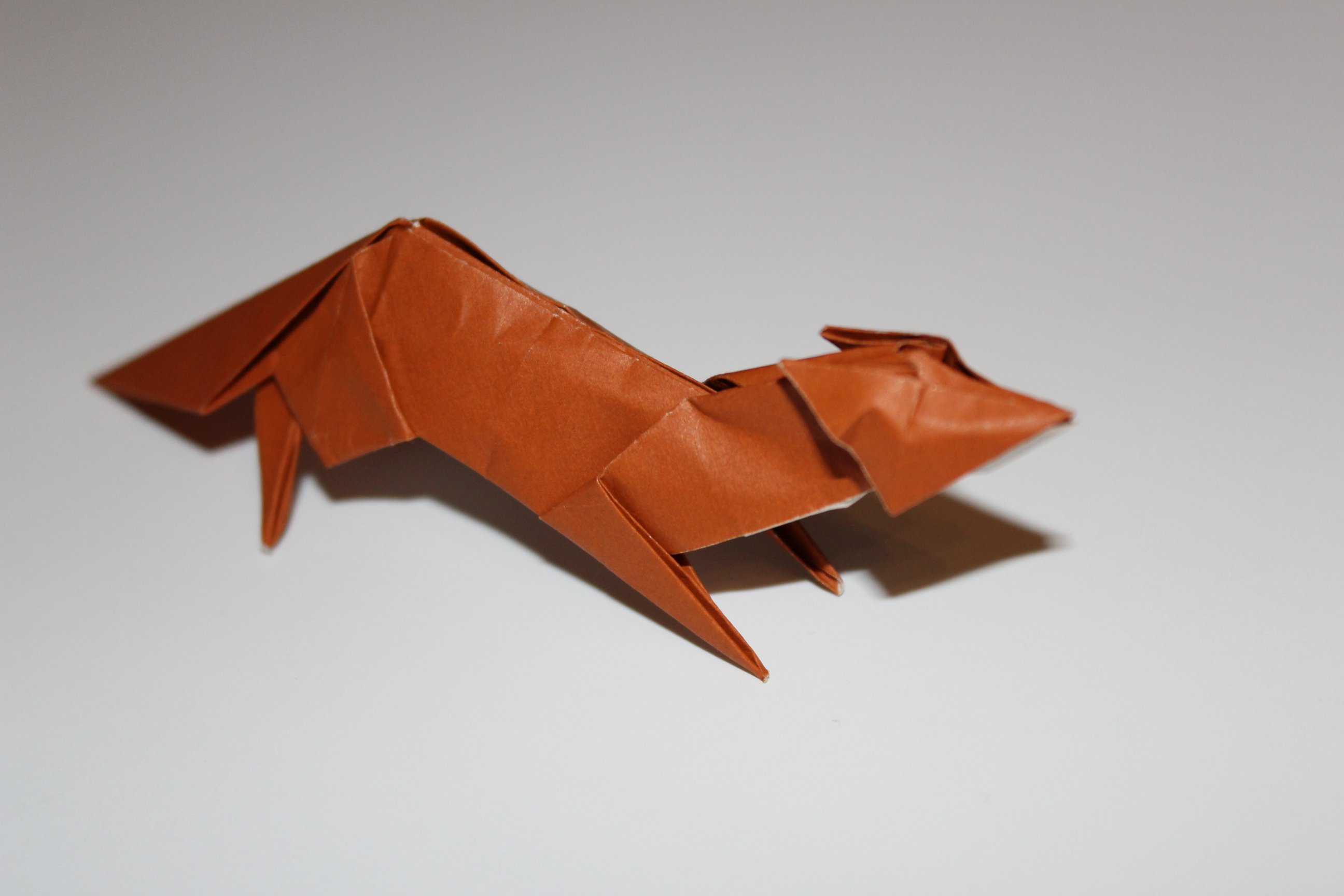
KOMATSU - FOX (2) KOMATSU - FOX (3) KOMATSU - FOX (1)

I love the shape of this Fox but couldn’t decide on a color. It doesn’t take too long to make, so I did one in brown and one in tan. I wonder which looks better.

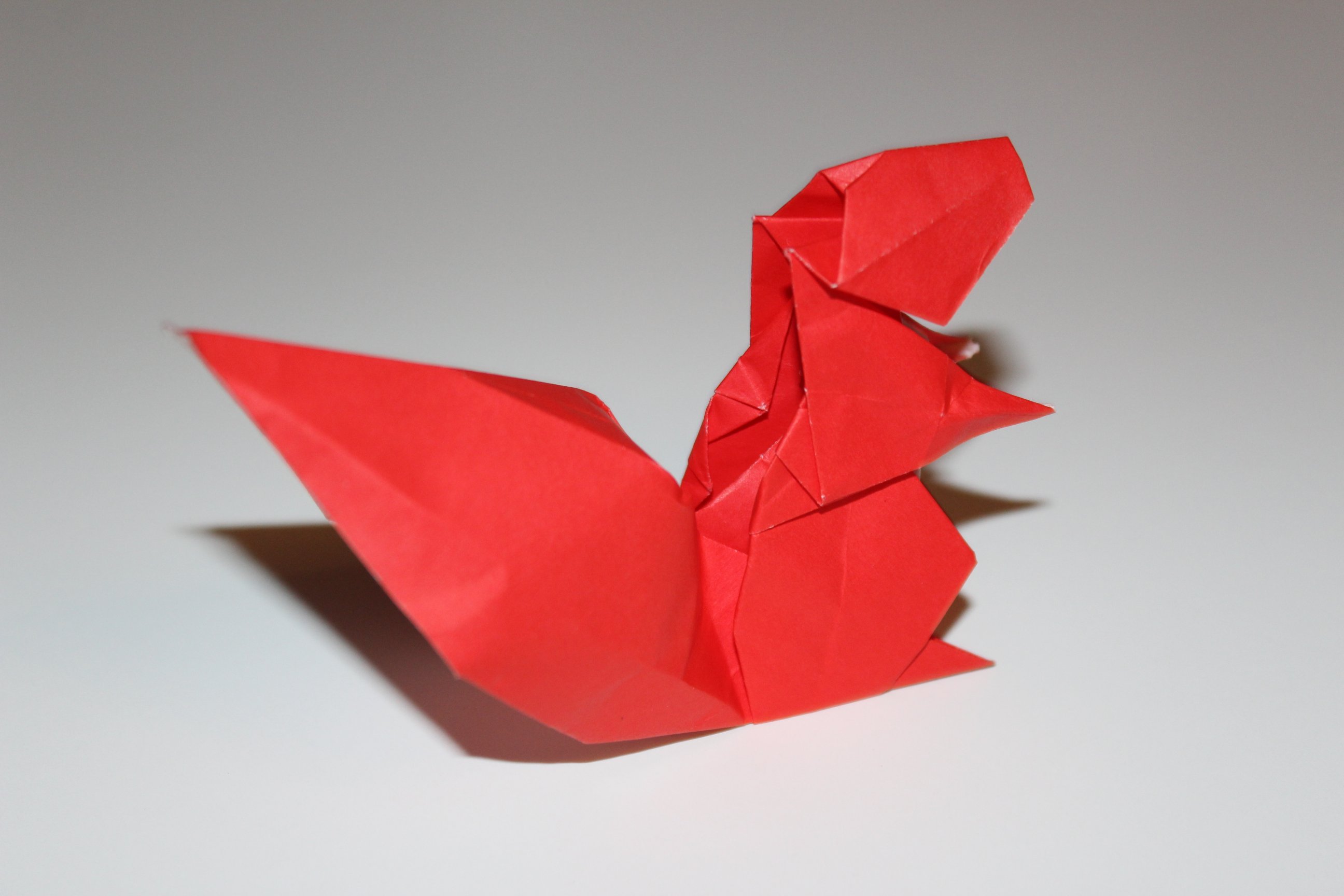
KOMATSU - SQUIRREL (1) KOMATSU - SQUIRREL (2) KOMATSU - SQUIRREL (3)

So, I didn’t match the color on the squirrel the same way. The tail has so much “pop”, I went with bright red. It also has white on its chest between his arms.

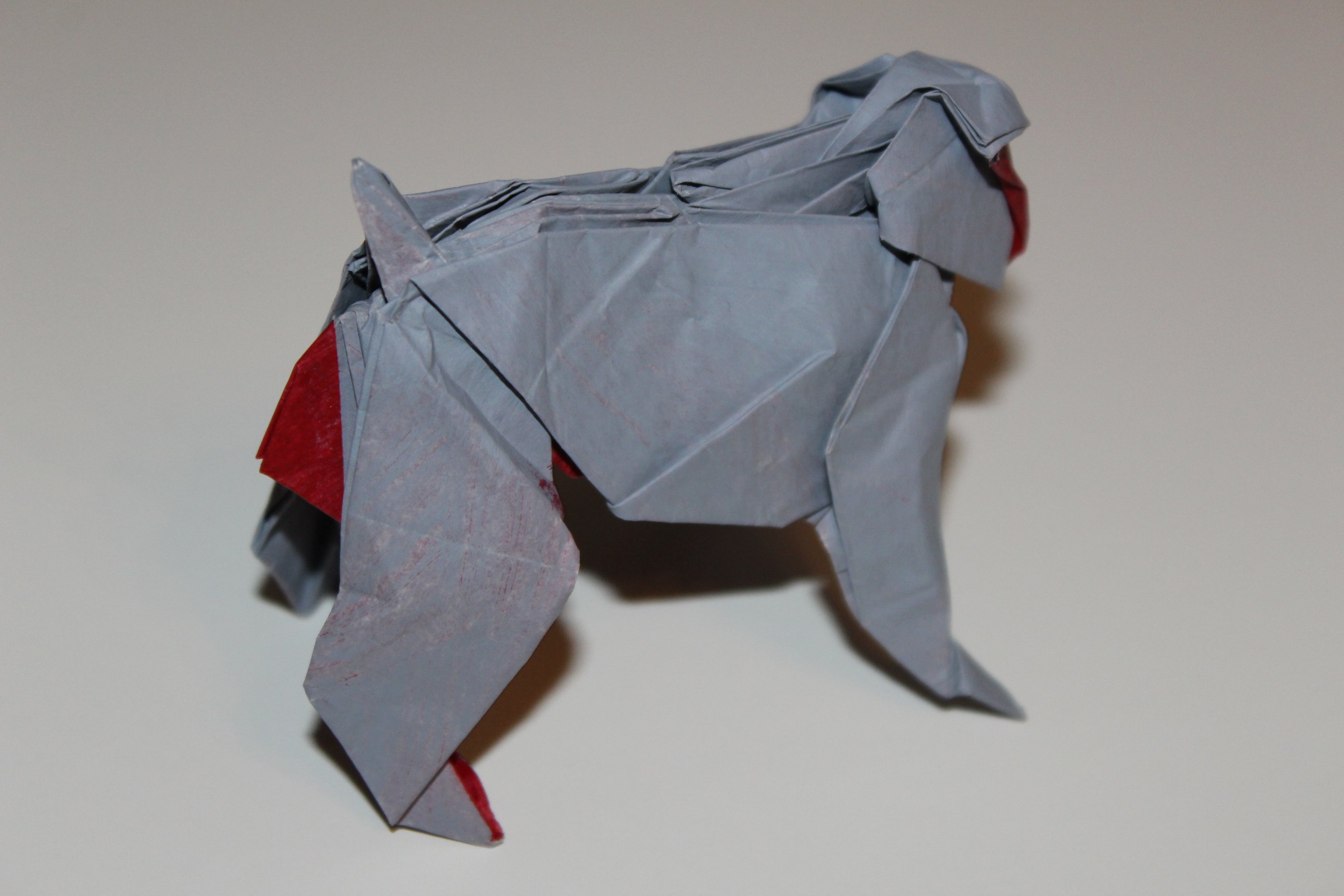
KOMATSU - MACAQUE (2) KOMATSU - MACAQUE (3) KOMATSU - MACAQUE (4) KOMATSU - MACAQUE (5)

I went a little overboard on Komatsu models for this one. His Japanese Macaque is excellent, with a red face and butt created by the paper being red on one side and grey on the other.

KOMATSU - TIGER (1) KOMATSU - TIGER (2)

The final model this week is Komatsu’s Tiger. This is one of his best models, and one of the best origami tigers designed. The face alone would merit this, but the stripes are incredible. Like the Macaque, the Tiger’s color change is created with dual colored paper: black on one side and orange on the other.

KOMATSU - TIGER (5) KOMATSU - TIGER (3)

I had some trouble on the orange color, but this one takes a bit of time to make. The color’s growing on me though.