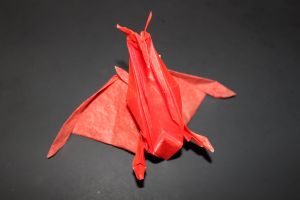
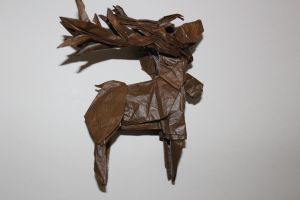
Crease Pattern Challenge 020

Crease Pattern Challenge, Origami

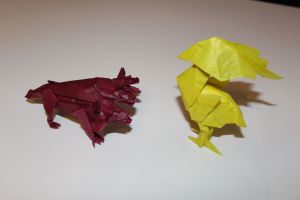
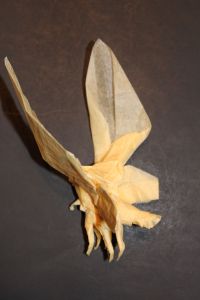
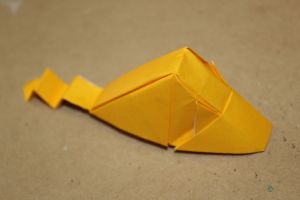
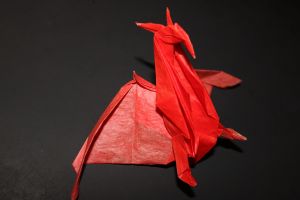
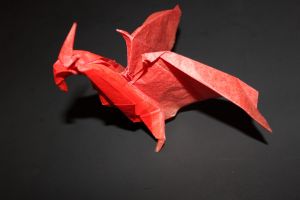
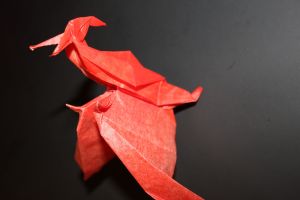
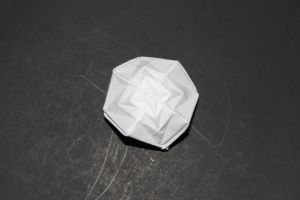
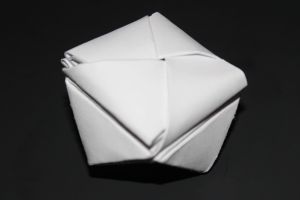
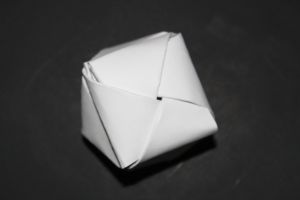
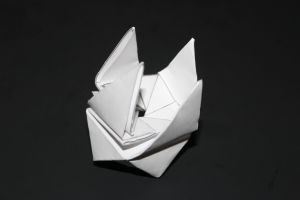
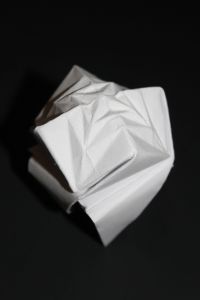
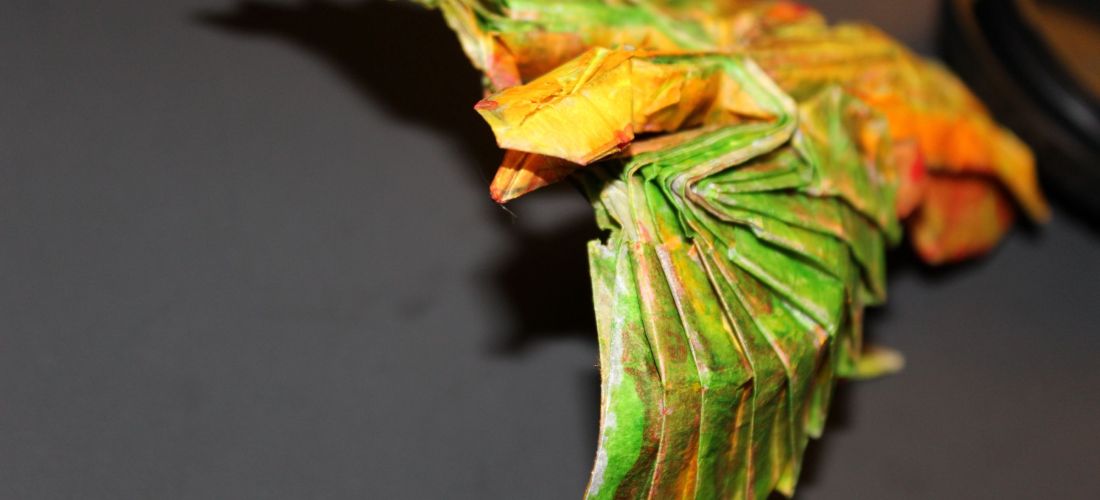
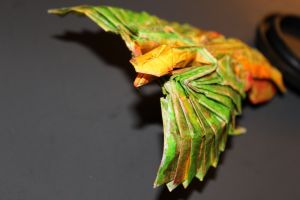
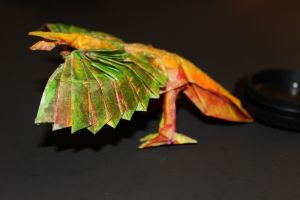
Challenge 20 in issue 74 is a Butterfly by S-Taro.

otmcp_020-butterfly-staro-1 otmcp_020-butterfly-staro-2

I hope this is discernible enough with the cream paper (I can see it, but I folded it). It’s nice, specifically the nose and fluffy ears (or whatever those are in insect). I tried to look up some of his other models, but I can’t really find him. What I think is his website has some Japanese but is mostly characters my computer can’t discern. This might be the page of his stuff, but I can’t be sure because my computer displays the text as gibberish. The insects are great (the cranes are pretty creepy though). I wonder if he goes by his full name or something now.

otmcp_020-butterfly-staro-4 otmcp_020-butterfly-staro-3

Crease Pattern Challenge 019

Crease Pattern Challenge, Origami

This is the first of several Crease Pattern Challenges in one day (see Challenge 27 here for more info). I didn’t fold them on the same day, just put them here. I think. I’m pretty sure.

This is Challenge 19: A Regular Tetrahedron with a Hyperbolic Paraboloid by Satoshi Kamiya. You may ask, “What is a tetrahedron?” Well, “tetra” means four, and “hedron” means bases or something. “Regular” implies that all the faces are the same and have the same angles when making the polygon. So it’s a pyramid.

otmcp_019-tetrahedron-kamiya-2 otmcp_019-tetrahedron-kamiya-3

That should be boring, but it was made by Satoshi Kamiya. The “hyperbolic paraboloid” is the interesting part. This is essentially a saddle-shaped surface, and he put it in the center of the square to cause it to fold in to the tetrahedron. Here it is pulled out and collapsing back.

otmcp_019-tetrahedron-kamiya-4 otmcp_019-tetrahedron-kamiya-6

otmcp_019-tetrahedron-kamiya-7 otmcp_019-tetrahedron-kamiya-8 otmcp_019-tetrahedron-kamiya-9

While it initially looks boring, it’s pretty interesting and a little trippy.

Gothmog

Origami, Original Designs

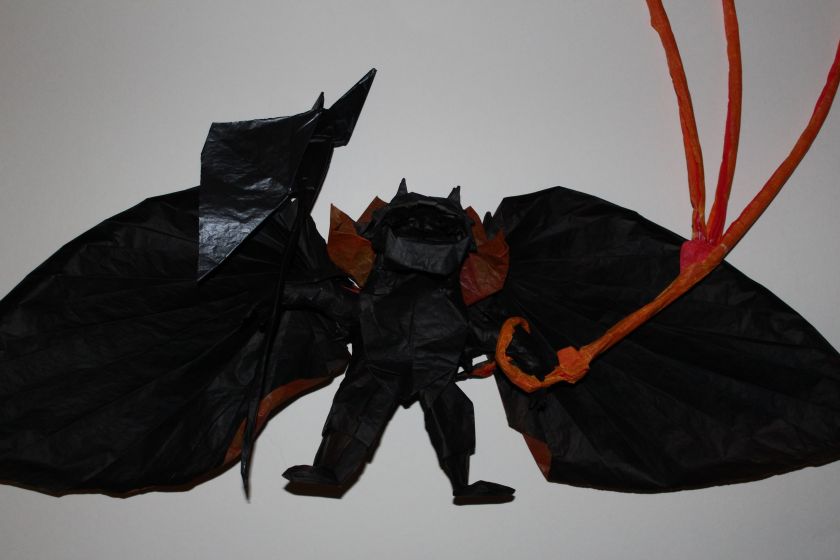
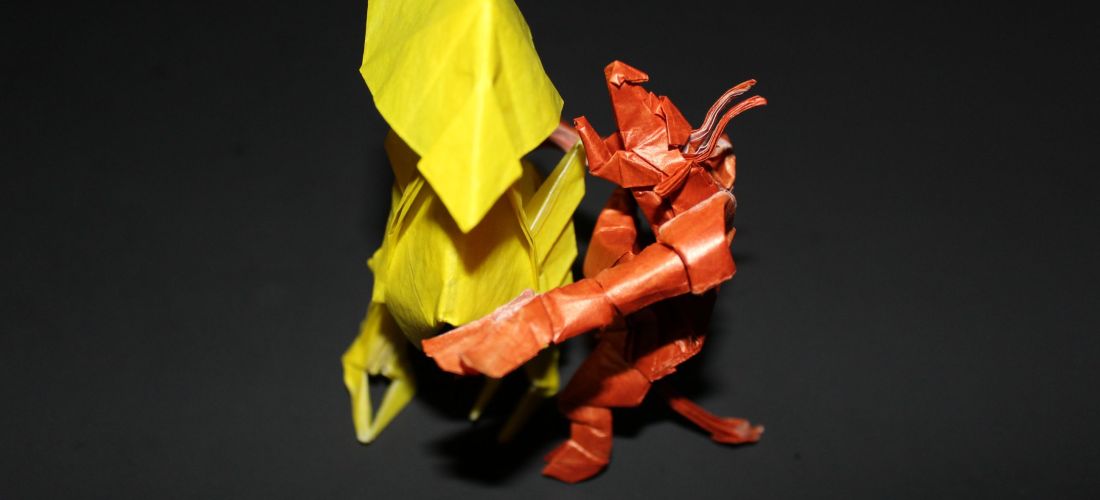
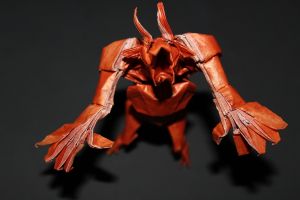
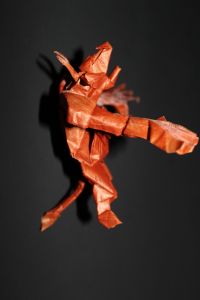
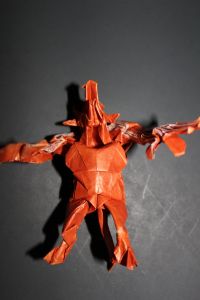
I thought this would be a nice one for Halloween. While I was making orks, I thought it would be fun to try and make Gothmog. Here he is.

wko_019-gothmog-101

Gothmog is the king of the Balrogs in the Silmarillion (from the Lord of the Rings universe). There’s another Gothmog in the Return of the King who’s an ork or something. So not that guy. Gothmog (more or less) killed Fëanor, the elf dude who made the Silmarils. He’s my favourite character in the whole that stuff (although I did kind of only skim the Silmarillion).

Balrogs aren’t exactly well described in any of the books. They’re probably man-sized, unless they just look that way from a distance, and may have wings, as long as they don’t just cause shadows that look like wings. They all have fire whips and may have swords, except Gothmog, who has a big black axe.

wko_019-gothmog-104

wko_019-gothmog-125 wko_019-gothmog-124

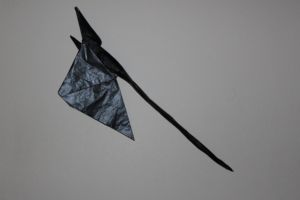
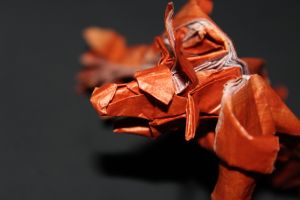
He got a little complicated, so I made the whip and axe out of different squares of paper. He has some pretty large wings, hands with fingers, and a little tail (mainly because I had some extra paper there). The main feature is the head. He has two large teeth/tusks on the bottom of his mouth, four on the upper part, and a large tongue. He also has a mane of fire and 12 horns (6 on each side). I think he ended up pretty good.

wko_019-gothmog-122 wko_019-gothmog-118

wko_019-gothmog-127

Scaled Works of Satoshi Kamiya 2 15-16

Origami, Scaled Works of Satoshi Kamiya

I been pretty busy recently.

These are the last 2 models from Satoshi Kamiya’s second book “Works of Satoshi Kamiya 2”, folded with 27.9 cm squares.

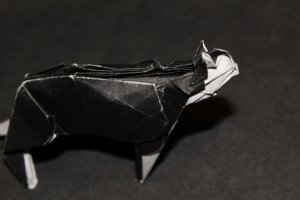
The first is the Minotaur, from Greek mythology. He’s really more of a prop, but I’ve always thought of him as a tragic dude. He’s half bull, because Poseidon cursed Minos, king of Crete, for not sacrificing his best bull. At least he should have, but he cursed the king’s wife to fall in love with the bull. I suppose making the king fall in love with the bull is more of a limerick than a myth.

wosk_215-minotaur-105 wosk_215-minotaur-109

wosk_215-minotaur-108 wosk_215-minotaur-111

Kamiya’s minotaur seems to have some body aspects in common with the Bahamut. His head and arms are very distinct.

wosk_215-minotaur-112 wosk_215-minotaur-101

wosk_216-phoenix-105 wosk_216-phoenix-107 wosk_216-phoenix-108 wosk_216-phoenix-103 wosk_216-phoenix-101

The final model is the Phoenix. This is actually his 3.5 version of his phoenix models. He also has the 3.0 version’s crease pattern on his website. I like both models, but, while they have distinct tails, he only included one because they are so similar. It’s a fun model to fold by both diagrams and crease pattern.

wosk_216-phoenix-109 wosk_216-phoenix-110

That’s all for this book, and he doesn’t have another one (yet, he has many more models). I wonder if I should do another book to scale.

wosk_215-minotaur-102 wosk_215-minotaur-103


Crease Pattern Challenge 018

Crease Pattern Challenge, Origami

Tanteidan’s 18th crease pattern challenge is a little different and pretty neat. Masashi Tanaka made four variations of the traditional orizuru crane model. The first two, labeled “A” and “B”, have squared backs, with B having twice as tall a back as A. B also makes me think it would make a good hat, but I have no idea why.

otmcp_018-orizurus-tanaka-103 otmcp_018-orizurus-tanaka-102

otmcp_018-orizurus-tanaka-104 otmcp_018-orizurus-tanaka-105

N is more complex than the others (I still like C more), with a normal crane back but cubes for wings.

otmcp_018-orizurus-tanaka-106 otmcp_018-orizurus-tanaka-107

C is my favourite of these. Its back is a cube. My folding of these last two didn’t end up as well locked into place as the examples, so I also have this one’s base clamped to show how the cube should look. I let the bases do whatever because I liked how it looked, but Tanaka’s examples seem to have shorted bases. I wonder if that would help lock them.

otmcp_018-orizurus-tanaka-108 otmcp_018-orizurus-tanaka-109

otmcp_018-orizurus-tanaka-110 otmcp_018-orizurus-tanaka-111

I also have a couple more Tanaka models: his Cat from diagrams in Tanteidan magazine #95 and Rat from Tanteidan #106.

otm_095-cat-tanaka-1 otm_095-cat-tanaka-3

I had trouble with the cat’s face, but it’s an interesting way to make it, with the sides seeming to imply whiskers from the nose. For some reason, feline faces are pretty hard to do well in origami. My main problem was if the bottom flap was for a mouth and how to shape it.

otm_106-nezumi-dash-tanaka-2 otm_106-nezumi-dash-tanaka-1

Tanaka’s Nezumi DASH! has a pretty unique starting step to help keep the model free of random creases. Some of the initial precreases are done on an alternate square (of the same size) then transferred to the model square by lining the two up. I was surprised. The DASH! is because if you squeeze his tail up to his body and let go, his tail will propel him forward.

Scaled Works of Satoshi Kamiya 2 13-14

Origami, Scaled Works of Satoshi Kamiya

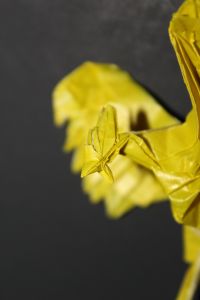
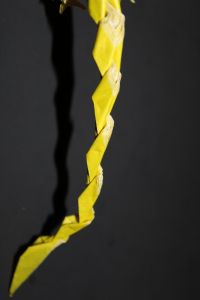
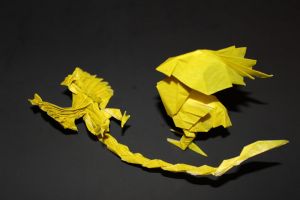
Kamiya’s next two models (from Works 2; square 27.9 cm) are both mythological creatures. Actually, the next four are, but I have to space these posts out. I’ve always liked all kinds of mythologies, and, apparently, so does Mr. Kamiya.

The first is Sleipnir, Odin’s eight legged horse from Norse mythology. Sleipnir is traditionally grey, but I think I should have added some silver, or gone with a different grey, or something. Now he seems kind of normal, in spite of having eight legs. Sleipnir is supposed to be the fastest horse ever, but I always thought all those legs would get in the way. Maybe he rotates them or something.

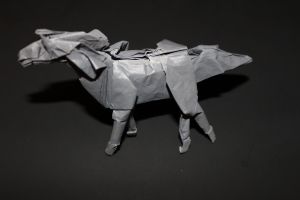
WOSK_213 - SLEIPNIR (2) WOSK_213 - SLEIPNIR (3) WOSK_213 - SLEIPNIR (4) WOSK_213 - SLEIPNIR (6)

Norse myths are great. Sleipnir came about from a complicated story, which I’ll try to abridge. Early on, the gods wanted to make Asgard great, so they found some random dude to build a wall. They agreed that if he finished on time they’d give him all the things (they didn’t have many things at the outset, so these were the sun, moon, and Freya). Loki brokered this deal, setting an impossible time limit. However, the dude could use his horse, Svadilfari, to help. The horse basically did everything (imagine hooves placing masonry blocks at lightning speed), and the gods were going to have to pay. So, Loki turned into a horse and seduced Svadilfari away. In the end, they went racist (or specist? He wasn’t god or human) and had Thor kill him anyway. Later, Loki gave birth to Sleipnir. Loki was a female horse “at the time”, but did he have to stay a horse the whole time? Anyway, I can’t wait for the Marvel movie of this.
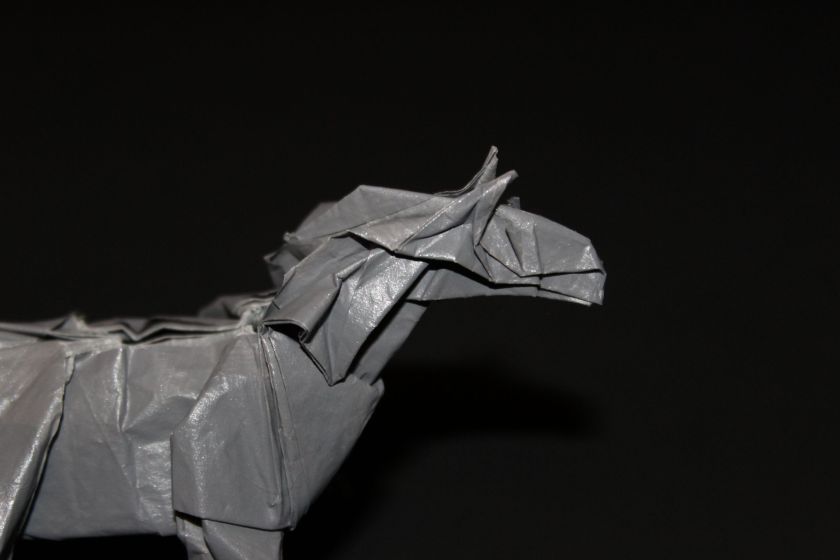
WOSK_213 - SLEIPNIR (8)

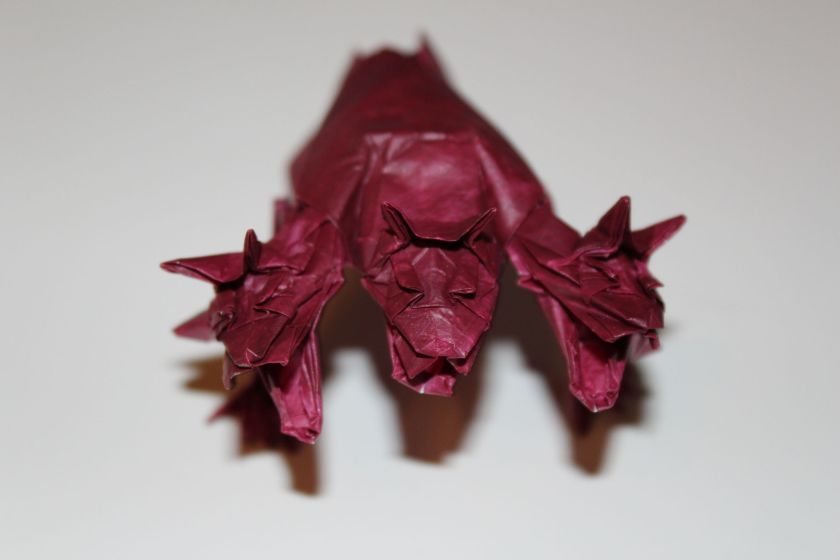
The other model is Cerberus, the three-headed dog from Greek mythology. Not to be confused with Cerebus the aardvark, who is an aardvark and not a three-headed dog. Everyone knows bringing Cerberus up from the underworld was Heracles’ last task, but Heracles also encountered Cerberus’ brother, Orthus the two-headed dog, while stealing cattle, one of his earlier, heroic (?) tasks.

WOSK_214 - CERBERUS (2) WOSK_214 - CERBERUS (6) WOSK_214 - CERBERUS (5) WOSK_214 - CERBERUS (8)

I had made this Cerberus model before when the crease pattern came out in Tanteidan Magazine. Either I got a little better or there are some subtle locks holding this in shape, because the previous one kept flattening out (like cartoon road kill). By the book, Cerberus is properly 3D and looks like the middle head is trying to stay professional, while both side heads want to party/get belly rubs.
WOSK_214 - CERBERUS (4)

Crease Pattern Challenge 017

Crease Pattern Challenge, Origami

The 17th Challenge is a Suppon designed by Shinji Sasade. This is another in the growing list of models I took only a couple of pictures of and then promptly lost. Unlike some of the others, I think 2 pictures give a pretty good idea of this model.

OTMCP_017 - SUPPON - SASADE (1) OTMCP_017 - SUPPON - SASADE (2)

This is because the model is extremely well designed. While you could argue that this model is more simple than some of the more complex challenge models, it’s so ingenious that it’s hard to tell where the edges are. With both the shell and belly so well developed, this is a great 3D model.

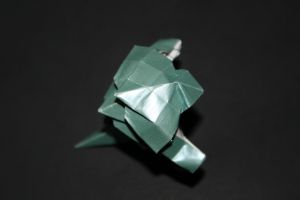
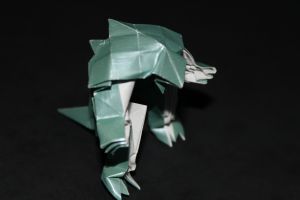
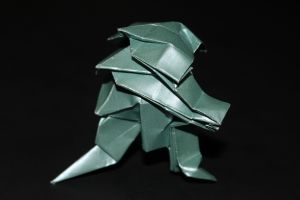
He also likes to make kaijuu origami. Among them, Sasade has made Radon (diagrammed in Origami Tanteidan Convention Book 5) and Gamera (listed as Turtle-Kaijuu in Convention Book 10).

SASADE - RADON (103) SASADE - RADON (104) SASADE - RADON (101) SASADE - RADON (105) SASADE - RADON (102)

I like Radon, but he kind of looks like a parrot to me. I guess he always has though. Also, about that link: 1) looks like he didn’t skip leg day in the recent movies, and 2) he’s “Rodan” in English now? Like, the sculptor? Has he always been Rodan in English?

SASADE - KAME-KAIJUU (104) SASADE - KAME-KAIJUU (103)  SASADE - KAME-KAIJUU (107) SASADE - KAME-KAIJUU (111)

I made Gamera from paper that is too small (again), so I had to improvise some of the details to be less complicated. But I had this really nice shiny paper that I wanted to use. It kind of worked out, because it helped the strong, round shell design.

SASADE - KAME-KAIJUU (105) SASADE - KAME-KAIJUU (106) SASADE - KAME-KAIJUU (102)

Puchi Mage

Origami, Original Designs

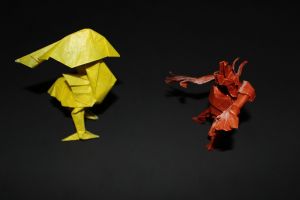
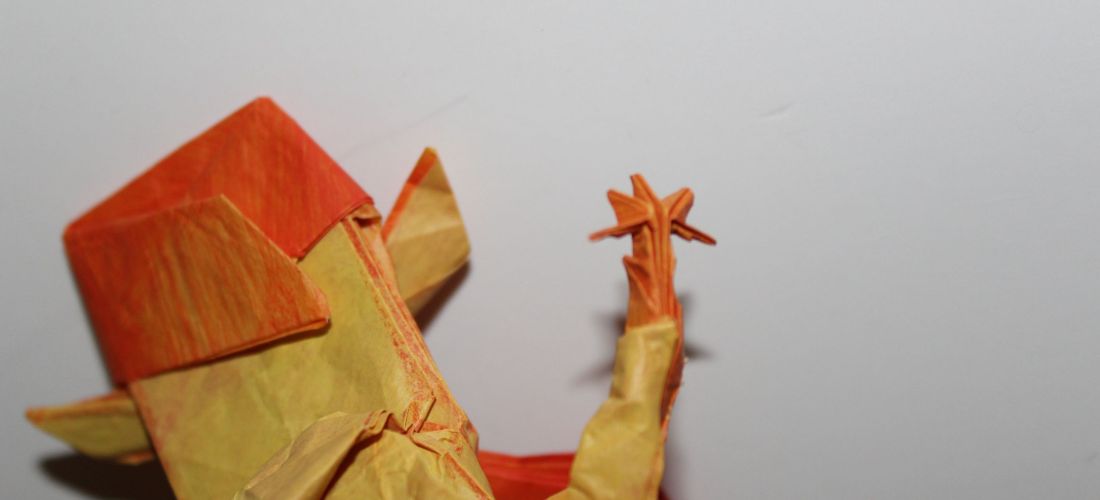
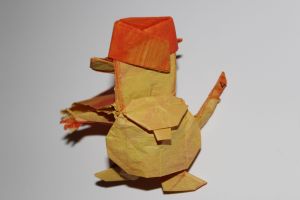
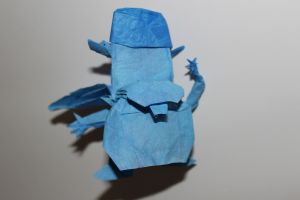
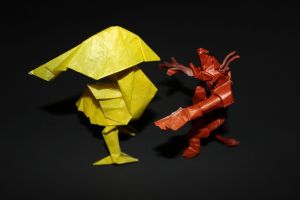
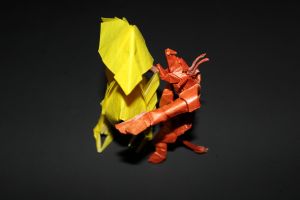
This is the fourth and last of the Dragon Quest leaf bros. He’s the mage/black magician.
WKO_005 - PUCHI MAGE(101) WKO_005 - PUCHI MAGE(103)

His yellow versions are プチマージ (Puchi Mage), FooMage, and Conkjurer, while his blue variations are コロマージ (Koro Mage), PodMage, and Wiz Pip.

WKO_005 - PUCHI MAGE(104) WKO_005 - PUCHI MAGE(106)

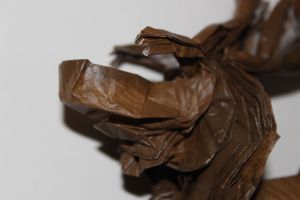
I think this one came out the best of the designs. He has colour change on his hat, cape, and wand, has a leaf collar, and has fingers and a wand. The collar and cape should be the same colour (they are probably the same leaf in the original concept), but I couldn’t figure out how to do that. I’m really proud of the wand with the little star.
WKO_005 - PUCHI MAGE(105) WKO_005 - PUCHI MAGE(107)

WKO_005 - PUCHI MAGE(109)

Crease Pattern Challenge 016

Crease Pattern Challenge, Origami

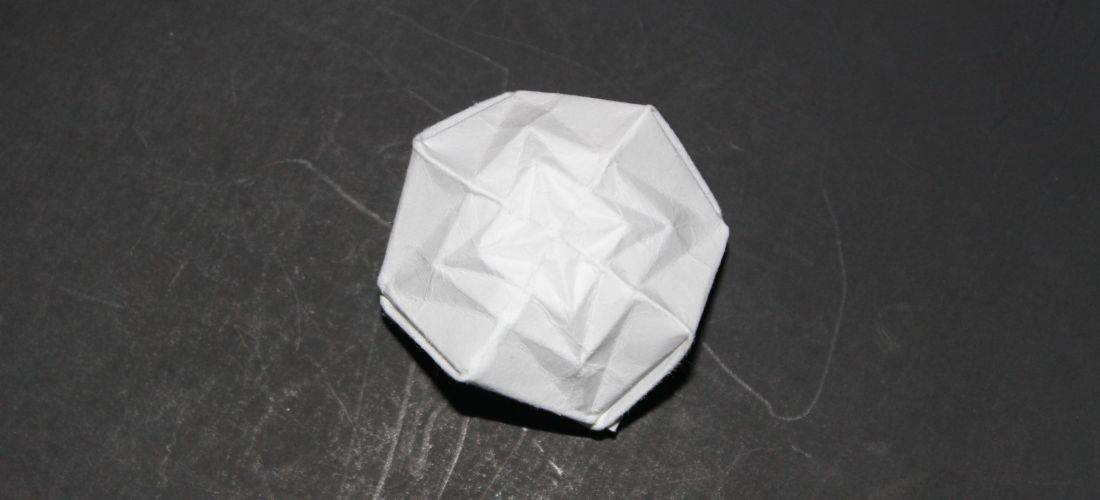
This one is a little bit outside of what I normally make. Challenge 16 is King PolyPouches by Chris Palmer. He has his own website and a book that show some of his work. He typically uses inscribed geometries to bend paper into different neat objects. This can require thicker paper (which is why I shy away from it) for the structures to hold their shapes. The style can give you some beautiful and fascinating objects.

OTMCP_016 - KING POLYPOUCHES - PALMER (101) OTMCP_016 - KING POLYPOUCHES - PALMER (103) OTMCP_016 - KING POLYPOUCHES - PALMER (105) OTMCP_016 - KING POLYPOUCHES - PALMER (106)

For the model, I used cardstock and drew the crease pattern on the inside. Cardstock may have been too thick for this scale, but you can still see the geometric pattern that rounds the base. A benefit of using paper that’s too thick turned out to be that it can stand on its own closing flaps and looks kind of like a jellyfish that way. It’s even elegant as a jellyfish.

OTMCP_016 - KING POLYPOUCHES - PALMER (107) OTMCP_016 - KING POLYPOUCHES - PALMER (111) OTMCP_016 - KING POLYPOUCHES - PALMER (113)

OTMCP_016 - KING POLYPOUCHES - PALMER (112)

Crease Pattern Challenge 015

Crease Pattern Challenge, Origami

Origami Tanteidan’s 15th Crease Pattern Challenge in issue #69 is Satoshi Kamiya’s Archaeopteryx. It’s a fun model to fold, and another I like to make a lot. It does tend to be top heavy though (which is why its tail is pinned down in the pictures).

OTMCP_015- ARCHAEOPTERYX - KAMIYA (1) OTMCP_015- ARCHAEOPTERYX - KAMIYA (2) OTMCP_015- ARCHAEOPTERYX - KAMIYA (3)

I mentioned before that Satoshi Kamiya has a really nice website, but the Archaeopteryx isn’t in his gallery (it’s only found buried in his bibliography page). I’m pretty sure this is an oversight, but I kind of wonder if Origami Tanteidan has some sort of exclusive (they have a page for his archaeopteryx here).

He also has a page of random crease patterns. A fairly long time ago (back when his website looked completely different), I noticed something pretty cool about the patterns here. Some of them are already associated with models. If you use “Copy Image Location”, the web address you get is similar to his gallery pages, just with “_c.jpg” at the end of the model number. If you delete that part, some (not all) will lead you to the gallery page of the model. For instance, the first one is his Unicorn 2.0.

I also found that this can work both ways. For instance, his Caribus (2.1 and 2.2) have the crease patterns stored at his website. You can find them by going to those pages, deleting “.html”, and adding “_c” to the end of the address (you don’t need the “.jpg”, which is good, because some of the crease patterns are saved as pngs).

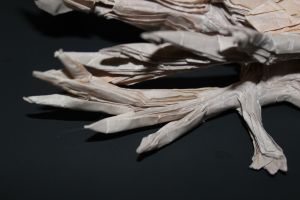
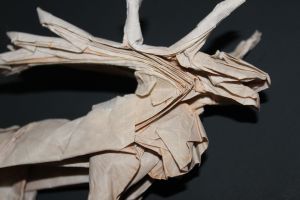
I tried the 2.2 Caribu a while ago. I had some problems with the face, but I think the hooves and antlers came out pretty good.

KAMIYA - CARIBU 2-2 (104) KAMIYA - CARIBU 2-2 (106) KAMIYA - CARIBU 2-2 (108) KAMIYA - CARIBU 2-2 (107)

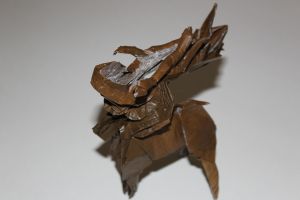
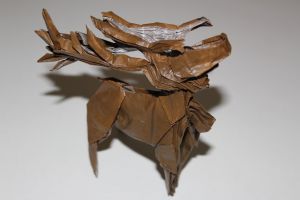
I just recently tried the 2.1 Caribu, which also yielded odd results. I think I somehow flipped the head, or something. But there were parts I already liked that I had done, so I just improvised.

KAMIYA - CARIBU 2-1 (102) KAMIYA - CARIBU 2-1 (104) KAMIYA - CARIBU 2-1 (103) KAMIYA - CARIBU 2-1 (107) KAMIYA - CARIBU 2-1 (111) KAMIYA - CARIBU 2-1 (109)

He got a much dopier head and nose, then a bigger body because I liked how he had kind of cascading fur, and finally the hooves got axed as they would have shortened the legs too much with the bigger body.

Also, this web logging thing is pretty interesting. I just figured out the “set featured image” thing and went back doing that a bit. Yay! I still can’t get the pictures in this post to arrange well with the different dimensions. Oh well.